
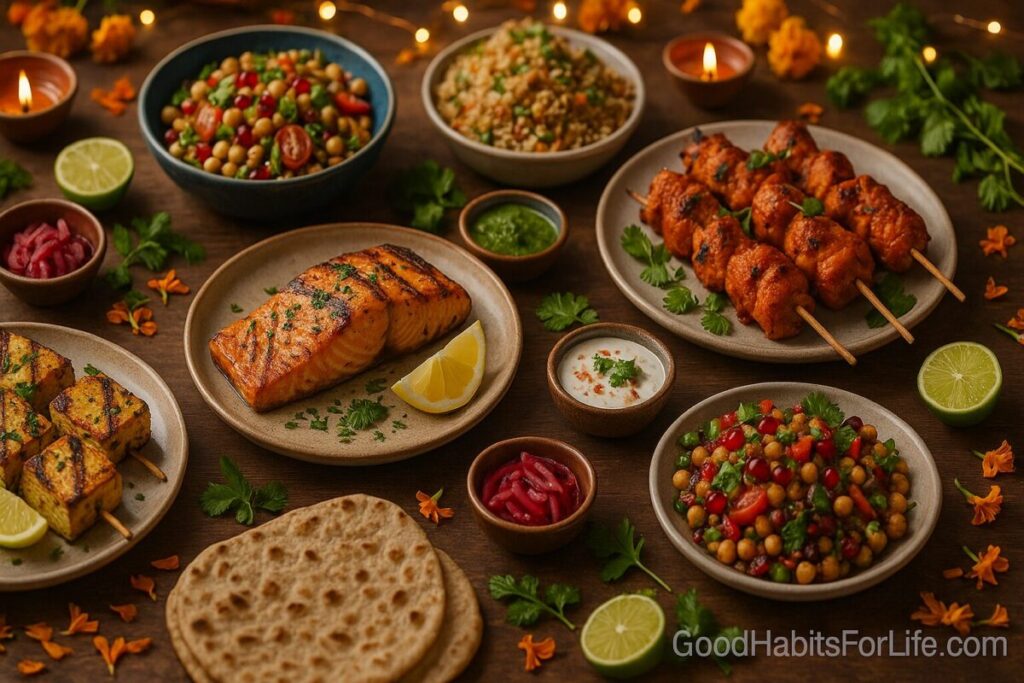
Festive Menus, Lighter Touch: Flavor First: Protein-Forward Plan (2025)
Protein-Forward Festive Menus (2025): Flavor First
Table of Contents
🧭 What This “Protein-Forward, Flavor-First” Approach Means
Protein-forward means you plan the menu around high-quality protein (animal or plant) and then build flavor layers—spices, herbs, acidic hits, and crunchy textures—so dishes feel festive and satisfying without relying on heavy cream, sugar, or deep-fried prep. It pairs well with the healthy plate pattern promoted by major guidelines: half the plate fruits/vegetables, one quarter protein, one quarter whole grains or smart carbs. This balance helps satiety, preserves muscle, and moderates blood sugar.¹²⁷
Evidence snapshot
-
Adequate protein supports satiety and healthy body composition.²
-
Dietary patterns emphasizing vegetables, whole grains, healthy fats, and lean/plant proteins align with chronic-disease risk reduction.¹
-
Lower sodium and added sugars improve cardiometabolic health; bold herbs/spices boost flavor without the salt/sugar load.³⁴
Goal for festive meals:
-
Taste first via spice, citrus, char, umami.
-
Lighter touch via lean cuts, legumes, tofu/tempeh, seafood, yogurt-based sauces, grilling/roasting/air-frying.
-
Flexible service (bars, boards, bowls) so mixed audiences (kids, teens, veg, non-veg, gluten-free) all eat happily.
✅ Quick Start Today
-
Pick your protein anchors (2–3):
-
Veg: chana kebabs, paneer tikka, tofu skewers, rajma galouti sliders.
-
Non-veg: tandoori chicken thighs, grilled fish with lemon-herb rub, lean lamb seekh.
-
-
Choose a cooking method: roast/air-fry/grill/sauté with minimal oil.
-
Commit to a plate pattern: 50% colorful veg, 25% protein, 25% smart carbs (millets, brown rice, quinoa, sweet potato).¹
-
Pre-mix one hero spice blend + one sauce: e.g., garam masala + mint-yogurt; ras el hanout + lemon-tahini; za’atar + labneh; chaat masala + coriander-lime chutney.
-
Build a DIY bar: wraps, tacos, or bowls. Lay out proteins, veg, sauces, pickles, and crunch. Guests assemble; you keep it simple.
-
Salt-smart: season early with spices; finish with citrus. Keep sodium in check.³
-
Food safety: hit safe internal temps (e.g., poultry 74 °C/165 °F).⁵
🗓️ 30-60-90 Festive Season Plan
Day 30 (Discovery & Pantry)
-
Set a theme (e.g., “Tandoori Night,” “Mediterranean Mezze,” “Pan-Asian Bowls”).
-
Stock protein bases: dry/canned legumes, paneer, tofu, eggs, frozen fish/chicken.
-
Make and freeze flavor bases: ginger-garlic paste, coriander-mint chutney, arrabbiata, chimichurri, zhug.
-
Test one hero dish each weekend. Note prep time and crowd feedback.
Day 60 (Rehearse & Batch)
-
Standardize portions (see table below).
-
Batch-cook staples (roasted veg, cooked grains, pickled onions) and freeze.
-
Choose two make-ahead desserts that are portion-controlled (e.g., mini yogurt saffron pots, date-nut truffles).
-
Finalize shopping lists for 10, 20, or 30 guests.
Day 90 (Event Week & Serve)
-
T-2 days: marinate proteins; prep sauces; chop hardy veg.
-
T-1 day: cook grains; par-roast veg; chill.
-
Event day: finish high-heat items, set up the DIY bar, label allergens, check temps, garnish at the pass.⁵
🧠 Techniques & Flavor Frameworks
-
Protein Priority, Veg Volume: Start menu planning with protein, but double down on veg for color, fiber, and fullness.¹²
-
Dry Spice + Acid: Toast spices; finish with lemon/lime or vinegar. Big flavor, less salt/oil.³
-
Char & Contrast: Grill/roast for smoky notes; add fresh herb salads, pickles, or pomegranate arils for pop.
-
Yogurt & Pulses for Creaminess: Swap heavy cream with strained yogurt or blended white beans; maintain body without heaviness.¹
-
Healthy Fats as Finisher: Use extra-virgin olive or mustard oil in small, post-cook drizzles.
-
Portioning Rule of Thumb (per adult):
-
Cooked legumes 150–200 g (≈12–16 g protein)
-
Paneer 100 g (≈18–20 g protein)
-
Firm tofu 150 g (≈12–15 g protein)
-
Cooked chicken/fish 120–150 g (≈24–35 g protein)
-
Greek-style yogurt 170 g (≈15–17 g protein)
-
Eggs 2 (≈12 g protein)
-
🛠️ Mix-and-Match Menus (Veg & Non-Veg)
Veg-Forward Protein Boards
Anchor proteins
-
Paneer Tikka Bites (tandoori rub, charred capsicum)
-
Tofu Hariyali Skewers (coriander-mint-yogurt marinade)
-
Chana Kebabs (spiced chickpea patties, air-fried)
Sides & bases
-
Millet pilaf with toasted nuts and raisins
-
Rainbow kachumber (cucumber-tomato-onion) with chaat masala
-
Roasted cauliflower with tahini-lemon and sesame
Sauces & toppers
-
Green chutney, lemon-tahini, pomegranate molasses drizzle
-
Crunch: roasted chana, crushed peanuts, sev (sparingly), or toasted seeds
Lean Non-Veg Grill-Out
Anchor proteins
-
Tandoori Chicken Thighs (skinless, yogurt-spice marinade)
-
Grilled Fish (lemon-garlic-herb)
-
Lamb Seekh (lean)—served in small skewers with lots of herbs
Sides & bases
-
Warm whole-wheat rotis or mini pitas
-
Quinoa-cucumber-dill salad
-
Charred peppers, onions, cherry tomatoes
Sauces & toppers
-
Gremolata, smoked chili-yogurt, tamarind-date chutney
Pan-Asian Bowls Bar
-
Proteins: baked tofu cubes; miso-ginger salmon; sesame chicken strips
-
Bases: brown rice, soba, or cauliflower “rice”
-
Veg add-ins: edamame, shredded carrots, bok choy, scallions, cucumber ribbons
-
Sauces: ponzu-lime, peanut-ginger, chili-garlic (light sodium)
-
Finishes: toasted sesame, crushed roasted peanuts, nori shreds
🧰 Smart Sides, Sauces & Toppers
Sides that pull weight
-
Legume-rich salads: chana-avocado, black-eyed pea chaat, lentil-pomegranate tabbouleh.
-
Roasted trays: carrots with cumin & orange; broccoli with chili flakes & lemon zest.
-
Grain upgrades: millet with saffron & almonds; brown-rice pulao with peas & mint.
Sauces (make ahead, fridge-friendly)
-
Mint-Yogurt Raita: yogurt, mint, cucumber, roasted cumin.
-
Lemon-Tahini: tahini, lemon, garlic, warm water, pinch of salt.
-
Green Chili-Coriander Chutney: coriander, chili, lime, ginger, a touch of jaggery.
-
Chimichurri/ Zhug: fresh herb punch for grilled items.
Crunch & Color
-
Pickled onions, pomegranate, toasted seeds, roasted chana, crushed wasabi peas (sparingly). Small hits = big joy.
🧑🤝🧑 Audience Variations
-
Kids & Teens: hand-helds (mini wraps, sliders), mild spice options, fruit platters with yogurt-honey dip.
-
Students: budget-friendly legumes, eggs, canned fish; DIY taco/wrap bars.
-
Professionals: protein boxes for potlucks; sparkling water bar; low-effort sauces.
-
Parents: one-tray roasts, freezer-ready kebabs; allergy labels and nut-free options.
-
Seniors: soft textures (fish, dal, yogurt), lower sodium³, easy-chew veg, extra herbs for flavor.
⚠️ Mistakes & Myths to Avoid
-
“Protein-forward = only meat.” Plant proteins are excellent anchors (lentils, chickpeas, tofu, paneer, tempeh).²⁷
-
Over-salting to chase flavor. Use acid, spice, and char; keep sodium modest.³
-
Deep-frying everything “for guests.” Grill/roast/air-fry; save oil for finishing.
-
Sauce sugar traps. Balance with fruit, spice, or vinegar instead of extra sugar.⁴
-
Skipping food safety. Holiday rush ≠ undercooked poultry or fish. Use a thermometer.⁵
🗣️ Real-Life Scripts & Hosting Examples
Menu Card Labels (copy-paste)
-
Tandoori Chicken (yogurt-marinated, grilled | contains dairy)
-
Chana Kebabs (air-fried | vegan, gluten-free)
-
Paneer Tikka (high-protein | contains dairy)
-
Mint-Yogurt Raita (light | contains dairy)
-
Lemon-Tahini Sauce (vegan | contains sesame)
Invite Note (WhatsApp/Email)
“We’re doing a protein-forward, flavor-first menu—lots of grilled/roasted mains, vibrant veg, and fresh sauces. Tell me any allergies or diet needs (vegan, gluten-free, Jain, no garlic/onion). There’ll be a DIY wraps & bowls bar so you can build your own plate.”
At the Table (host script)
“Start with half your plate veg, then add your favorite protein, and finish with a smart carb. Try the lemon-tahini or mint-yogurt to keep it bright and light.”
📚 Tools, Apps & Resources
-
Digital scales & probe thermometer for consistency and safety.⁵
-
Meal-tracking (optional): Cronometer or MyFitnessPal for macronutrient checks.
-
Spice grinder for fresh garam masala/pepper blends.
-
Air-fryer for kebabs, patties, and crisp veg with minimal oil.
-
Label set + color stickers for allergens/diet tags.
🔑 Key Takeaways
-
Plan around protein anchors, then build veg volume and flavor layers.
-
Use grill/roast/air-fry to keep the menu lively yet lighter.
-
Keep sodium and sugar in check—use herbs, acids, heat for excitement.³⁴
-
Offer DIY assembly so everyone can eat according to their needs.
-
Prepare in waves: sauces and marinades ahead; hot items at service; label and temp-check.
❓ FAQs
1) What does “protein-forward” mean in practice?
Your mains are built around protein (animal or plant). Each plate aims for roughly 25% protein, 50% veg/fruit, 25% smart carbs.¹
2) How much protein per adult at a festive meal?
Plan 12–35 g protein from the anchor item per serving (legumes/tofu at the low end; fish/chicken at the high end), plus yogurt/egg sides if offered.²
3) Can this be fully vegetarian or vegan?
Absolutely. Use legumes, tofu/tempeh, paneer (vegetarian), nut/seed toppings, and high-protein grains (quinoa, amaranth).²⁷
4) How do I keep sodium low without losing flavor?
Toast spices, bloom aromatics, and finish with citrus or vinegar. Offer salt at the table instead of loading it in the kitchen.³
5) What about desserts?
Go for mini portions and fruit-forward endings: yogurt saffron pots, citrus granita, baked pears with nuts. Keep added sugars modest.⁴
6) Are air-fryers really healthier?
They reduce oil compared with deep-frying while delivering crisp textures—great for kebabs and veg chips.
7) What are safe temperatures for meats/fish?
Use a thermometer. Poultry 74 °C (165 °F); fish about 63 °C (145 °F) until flaky; reheat leftovers to 74 °C (165 °F).⁵
8) How do I accommodate allergies?
Label dairy, nuts, sesame, gluten, soy. Keep dedicated serving spoons. Offer nut-free chutneys and tahini-free raita variants.
9) Are cured meats OK for “protein-forward”?
Use sparingly; they’re often high in salt/saturated fat. Focus on legumes, fish, poultry, tofu, eggs, and paneer.³⁴
10) What about alcohol at festive tables?
Provide inclusive options (sparkling water, spiced coolers). If serving alcohol, follow moderation guidance and offer plenty of alcohol-free choices.⁶
📚 References
-
U.S. Department of Agriculture & HHS. Dietary Guidelines for Americans, 2020–2025. https://www.dietaryguidelines.gov
-
Harvard T.H. Chan School of Public Health — The Nutrition Source: Protein. https://www.hsph.harvard.edu/nutritionsource/what-should-you-eat/protein/
-
World Health Organization — Salt reduction fact sheet. https://www.who.int/news-room/fact-sheets/detail/salt-reduction
-
American Heart Association — Added sugars & Saturated fats guidance. https://www.heart.org/en/healthy-living/healthy-eating/eat-smart/sugar/how-much-sugar-is-too-much ; https://www.heart.org/en/healthy-living/healthy-eating/eat-smart/fats/saturated-fats
-
FoodSafety.gov — Safe Minimum Internal Temperatures. https://www.foodsafety.gov/food-safety-charts/safe-minimum-cooking-temperature
-
National Institute on Alcohol Abuse and Alcoholism — Rethinking Drinking (moderation guidance). https://www.rethinkingdrinking.niaaa.nih.gov/
-
NHS — Beans, pulses, fish, eggs, meat and other proteins. https://www.nhs.uk/live-well/eat-well/food-types/beans-pulses-fish-eggs-meat-and-other-proteins/
Disclaimer
This guide is educational and is not a substitute for personalized medical or nutrition advice; consult a qualified professional for individual needs.