
Picky Eaters: Gentle Exposure & Tiny Wins: Protein-Forward Plan (2025)
Picky Eaters: Gentle Exposure + Protein Plan (2025)
Table of Contents
🧭 What This Guide Covers & Why It Works
“Picky eating” peaks in early childhood and usually improves with time. It’s not a behavior to “fix” overnight but a skill set to coach—calmly. Two pillars make the biggest difference:
-
Division of Responsibility (DOR): adults decide what, when, where; children decide if and how much. This shifts meals from power struggles to shared roles. Ellyn Satter Institute
-
Gentle, repeated exposure: new foods often require 8–10+ neutral exposures. Tiny, pressure-free bites and regular visibility build familiarity, which reduces neophobia (fear of new foods). MyPlateNCBI
Pair those with a protein-forward base (a small portion of dependable protein at every meal/snack) to keep energy and mood steadier while variety grows. Children’s protein needs are modest but important; meeting them consistently is protective while you work on acceptance. Health.govPMC
✅ Quick Start: Today → This Week
Today (10–20 minutes):
-
Reset roles (DOR): You choose the menu and times; avoid pressuring, bribing, or commenting on bites. Serve one “safe” food alongside one “learning” food. Ellyn Satter Institutenhs.uk
-
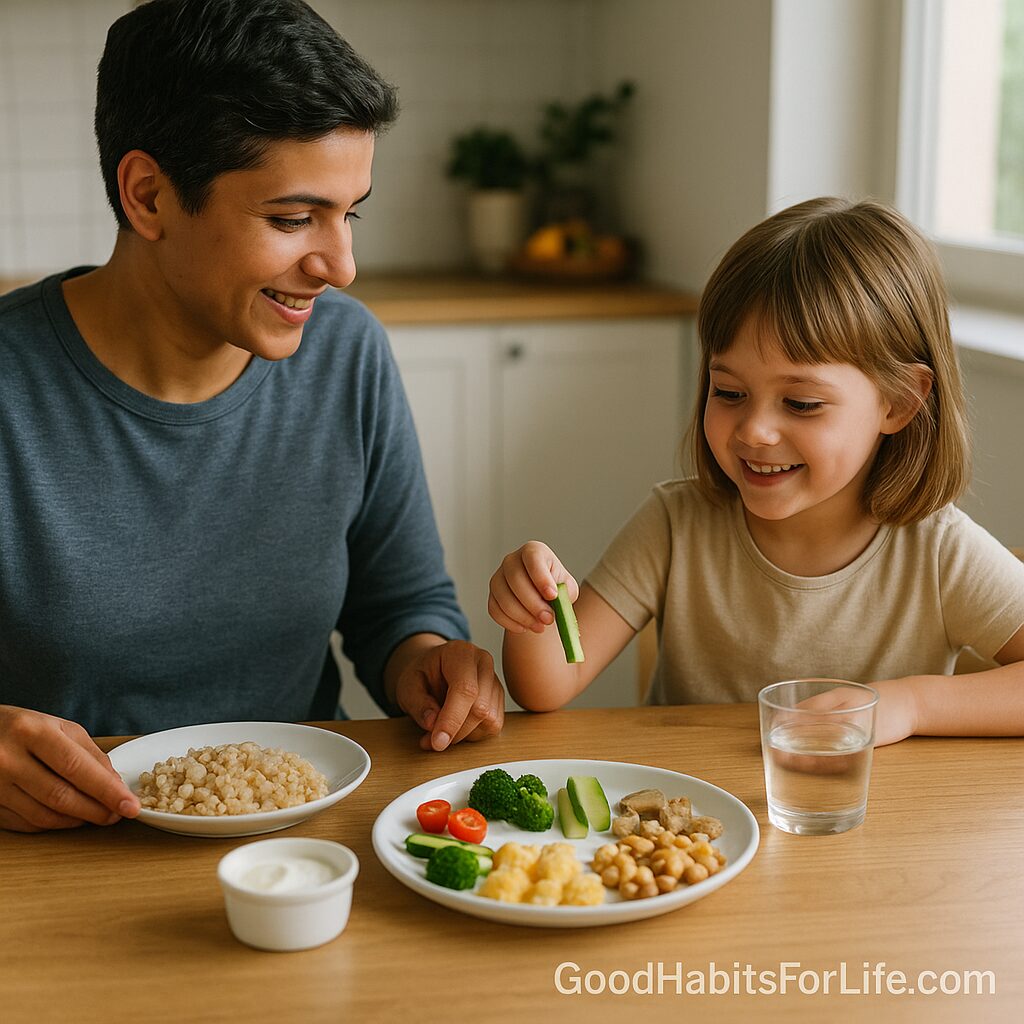
Create a “taste plate”: A small side plate for a pea-sized bite of the learning food. If it’s not eaten, no problem; clear it without drama. nhs.uk
-
Add protein to the plate: Include a reliable protein (e.g., egg, yogurt, dal/lentils, paneer/tofu, chicken/fish/beans). Even two bites count. Health.govPMC
-
Cap meal length: 20–30 minutes; end calmly. NHS Fife
This Week (repeatable routine):
-
Learning food of the week: Offer one new or disliked food 4–6 times in tiny amounts (steam-sautéed carrot coins, cucumber sticks, dal with a new tadka, etc.). Rotate shapes and temperatures to widen sensory acceptance. NCBI
-
Model, don’t sell: Eat the learning food yourself; avoid health lectures. PMC
-
Snack timing: 2 predictable snacks; water between meals. Arrive at meals “pleasantly hungry.” nhs.uk
-
Language: “You don’t have to eat it,” “You can spit it into the napkin,” “Maybe next time.” (Scripts below.)
🛠️ 30-60-90 Roadmap: Tiny Wins, Big Momentum
Days 1–30 (Foundation):
-
DOR, every meal. Remove pressure and commentary; end meals on time. Ellyn Satter Institute
-
Taste plate habit: Serve pea-sized “learning bites” of the week’s food at 4–6 meals. Celebrate trying, not swallowing. Sticker or high-five is fine; dessert is not a reward. PMC
-
Protein-forward baseline: Ensure a small, dependable protein at each eating occasion (see list below). Aim for 3 main meals + 2 snacks rhythm. Health.gov
-
Menu scaffolding: Build meals as “safe base + learning side + color.” Example: roti + paneer bhurji (safe) + 1 carrot coin (learning) + sliced mango (color).
Days 31–60 (Expansion):
-
Food chaining: Bridge from a safe food to a similar new one (nuggets → baked chicken strips → grilled chicken; plain roti → chapati with ghee → chapati with dal dip).
-
Texture stepping: Move gradually (smooth → slightly lumpy → soft chunks).
-
Serving style: Use “build-your-own” (taco, wrap, bowl) to grant autonomy without short-order cooking.
-
Two learning foods/week offered 4+ times each; keep portions tiny.
Days 61–90 (Confidence):
-
Rotate proteins: Make a 10-item protein roster (e.g., egg, yogurt/curd, paneer, tofu, lentils, chickpeas, fish, chicken, soy nuggets/tempeh, peanuts/peanut butter if safe).
-
Social practice: Picnics, cousin dinners, school lunch practice—new contexts reinforce skills.
-
Review red flags: If there’s weight loss, growth faltering, distress, or very limited variety, consult a pediatrician/feeding team (possible ARFID). NCBI
🧠 Techniques That Work (Backed by Research)
-
Division of Responsibility: Adults: what/when/where; child: whether/how much. Reduces battles; supports self-regulation. Ellyn Satter Institute
-
Repeated, varied exposure: Expect 8–10+ exposures; more for strong neophobia. Vary shapes, temperatures, and serving contexts. MyPlateNCBI
-
Positive modeling: Children copy what they see—calmly eat the learning food yourself. PMC
-
Structured timing: Limit snacks and end meals at ~20–30 minutes to reduce grazing and pressure. nhs.ukNHS Fife
-
Non-food rewards (stickers, praise) for brave tastes: Evidence supports small, immediate, non-food incentives for tasting. PMC
-
Zero pressure: Forcing or bribing can backfire and increase resistance. nhs.uk
🍽️ Protein-Forward Building Blocks & Easy Swaps
Why protein forward? Helps steady appetite and mood, supports growth and tissue repair, and keeps plates satisfying while variety grows. Children’s recommended intakes (RDA) rise with age; typical ranges are achievable with ordinary foods. Health.govPMC
Everyday protein adds (mix & match, small amounts):
-
Eggs: hard-boiled wedges, omelette strips, egg bhurji, egg dosa.
-
Dairy/Alternatives: plain Greek yogurt/curd, paneer cubes, milk; calcium-set tofu; fortified soy milk.
-
Pulses/Legumes: masoor/moong/chana dal, rajma, chole, hummus; lentil pancakes (moong chilla), dhokla.
-
Meat/Fish: baked chicken strips, salmon/tuna patties, mutton keema with peas.
-
Nuts/Seeds: peanut butter, almond powder, sesame/til chutney, seed mixes (as age-appropriate for choking safety).
-
Grains + boosters: whole-wheat chapati + dal dip; oats + peanut butter swirl; idli + sambar.
Simple protein-forward swaps:
-
Replace plain buttered pasta → pasta + dal “cheese” sauce or yogurt-parmesan toss.
-
Replace fries → crispy baked chana/soy nuggets; sweet-potato wedges with hummus.
-
Replace sugary cereal → oats porridge with milk + peanut butter + banana slices.
-
Replace plain paratha → paneer or egg-stuffed paratha; dosa + egg.
Label check tip: For packaged items (yogurts, plant milks), pick options with meaningful protein (≥6–8 g/serving) and minimal added sugar. For exact nutrient numbers, check USDA FoodData Central. fdc.nal.usda.gov
👶👧🧑 Variations by Age & Needs
-
Toddlers (1–3): Expect mess and mood swings; keep pieces soft and pea-sized. Offer 8–10 calm exposures; one learning bite per meal is plenty. MyPlate
-
Preschool (3–5): Use build-your-own bowls/wraps; add dip pairings (yogurt-cucumber, hummus).
-
School-Age: Involve kids in shopping/cooking; use lunchbox “safe base + learning bite + color” template.
-
Teens: Link food to function (sports, concentration). Encourage autonomy with a weekly “try-one” rule.
-
Neurodivergent/Sensory-sensitive: Keep predictability high; adjust textures slowly; use occupational-therapy strategies like food play away from mealtimes. berkshirehealthcare.nhs.uk
-
Red-flag situations (possible ARFID): Very limited repertoire, distress at meals, weight loss, nutrient deficiency, growth faltering—seek a clinician/feeding team. NCBI
⚠️ Mistakes & Myths to Avoid
-
Myth: “If I don’t insist, they’ll never eat it.”
Reality: Pressure often makes intake worse and damages trust. nhs.uk -
Myth: “Hide veggies so they don’t know.”
Reality: Blends are fine as additions, but visibility and repeated exposure are what teach acceptance. NCBI -
Mistake: Grazing all day.
Fix: Predictable meals/snacks; water between. nhs.uk -
Mistake: Short-order cooking.
Fix: One family meal with a safe side for the picky eater (bread, rice, fruit), plus the learning bite.
🗣️ Real-Life Examples & Parent Scripts
Breakfast
-
Moong dal chilla triangles + yogurt dip + 1 pea-sized tomato square (taste plate).
-
Oats with milk + peanut butter swirl + 1 thin apple slice (learning).
Lunch
-
Chapati + paneer bhurji + cucumber sticks + 1 carrot coin (learning).
-
Dal-rice bowl + chicken strip + raw mango sliver (learning).
Dinner
-
Egg dosa roll + peas + 1 red capsicum strip (learning).
-
Baked fish patty + lemon rice + 1 broccoli floret (learning).
Snack
-
Hummus + khakhra chips; peanut-curd dip + fruit; lassi (low sugar).
Scripts that reduce pressure:
-
“You can try it if you want. You don’t have to.”
-
“It’s okay to spit into the napkin.”
-
“Maybe next time.”
-
“You noticed it’s crunchy—great observation!”
-
“Your job is to listen to your tummy; my job is to choose the menu.”
🧰 Tools, Apps & Resources
-
USDA FoodData Central — authoritative nutrition data to sanity-check protein and nutrients. fdc.nal.usda.gov
-
MyPlate (Toddlers/Preschoolers) — short, parent-friendly tips on repeated exposure and meal rhythms. MyPlateMyPlate
-
Ellyn Satter Institute — deep dives on the Division of Responsibility; articles and handouts. Ellyn Satter Institute+1
-
Stanford Children’s Health tips — quick overview on exposures and calm, varied offerings. Healthier, Happy Lives Blog
-
Local pediatric dietitian/OT — for sensory-based strategies or complex feeding concerns.
🧾 Key Takeaways
-
Keep mealtimes calm and time-bound; stick to roles (DOR). Ellyn Satter Institute
-
Offer tiny, repeated, pressure-free tastes—expect 8–10+ exposures. MyPlateNCBI
-
Anchor every plate with a protein-forward element while variety grows. Health.gov
-
Use food chaining, texture steps, and parent modeling to expand safely. PMC
-
If there are growth/nutrition concerns or high distress, screen for ARFID with your care team. NCBI
❓ FAQs
1) How much protein do kids actually need?
It varies by age and body size. RDAs can be met with ordinary foods (e.g., dairy/curd, eggs, pulses, tofu, fish, chicken). Use your pediatrician’s guidance and tools like the DRI calculator for specifics. Health.govNational Agricultural Library
2) My child screams at new foods—what do I do?
Serve a safe base + a pea-sized learning bite on a separate taste plate. No pressure; clear it after 20–30 minutes. Repeat calmly throughout the week. NHS Fifenhs.uk
3) How many times should I offer a disliked food?
Plan for at least 8–10 exposures, sometimes more for strong neophobia. Vary the form (steamed coin, crunchy stick, warm, chilled). MyPlateNCBI
4) Should I hide vegetables?
It’s fine to add purées to sauces, but visible, repeated exposure teaches acceptance. Keep the tiny visible piece on the plate. NCBI
5) What’s the difference between picky eating and ARFID?
Picky eating is common and improves; ARFID involves restrictive intake that leads to weight loss/nutrient deficits or marked distress/impairment—seek professional help. NCBI
6) Is it okay to use desserts as rewards?
Best to avoid food as reward; use non-food praise or stickers for brave tastes to avoid creating pressure or special status for sweets. PMC
7) How do I handle snacks at school/day care?
Send a protein-plus snack (curd/yogurt, chana, paneer cubes, egg sandwich) and coordinate with teachers so “learning bites” are tiny and pressure-free.
8) We’re vegetarian—can we still go protein forward?
Yes. Rotate dairy/curd, paneer, tofu/tempeh, dals/beans, nuts/seeds (age-appropriate). Check FoodData Central for protein amounts. fdc.nal.usda.gov
📚 References
-
Ellyn Satter Institute. The Division of Responsibility in Feeding. https://www.ellynsatterinstitute.org/the-division-of-responsibility-in-feeding/ Ellyn Satter Institute
-
USDA MyPlate. Nutrition Information for Toddlers. https://www.myplate.gov/life-stages/toddlers MyPlate
-
USDA NESR (2025 DGAC). Repeated Exposure & Food Acceptance: Systematic Review. https://nesr.usda.gov/2025-dietary-guidelines-advisory-committee-systematic-reviews/repeated-exposure_acceptance Nutrition Evidence Systematic Review
-
Stanford Children’s Health. Tips for Helping Your Picky Eater. https://healthier.stanfordchildrens.org/en/tips-for-helping-your-picky-eater/ Healthier, Happy Lives Blog
-
CDC. Tips to Help Your Picky Eater. https://www.cdc.gov/nutrition/features/help-picky-eater.html CDC
-
Health.gov (DGA Appendix). Macronutrient RDAs/AMDR. https://health.gov/sites/default/files/2019-09/Appendix-E3-1-Table-A4.pdf Health.gov
-
Hudson JL, et al. Dietary Protein Requirements in Children. Nutrients. 2021. https://pmc.ncbi.nlm.nih.gov/articles/PMC8147948/ PMC
-
StatPearls (NIH Bookshelf). Avoidant/Restrictive Food Intake Disorder. 2024. https://www.ncbi.nlm.nih.gov/books/NBK603710/ NCBI
-
Taylor CM, et al. Picky eating in children: causes and consequences. Appetite. 2018. https://pmc.ncbi.nlm.nih.gov/articles/PMC6398579/ PMC
-
USDA. FoodData Central. https://fdc.nal.usda.gov/ fdc.nal.usda.gov
⚖️ Disclaimer
This guide is educational and not a substitute for personalized medical or nutritional advice. Consult your pediatrician or a registered dietitian for individual concerns.