
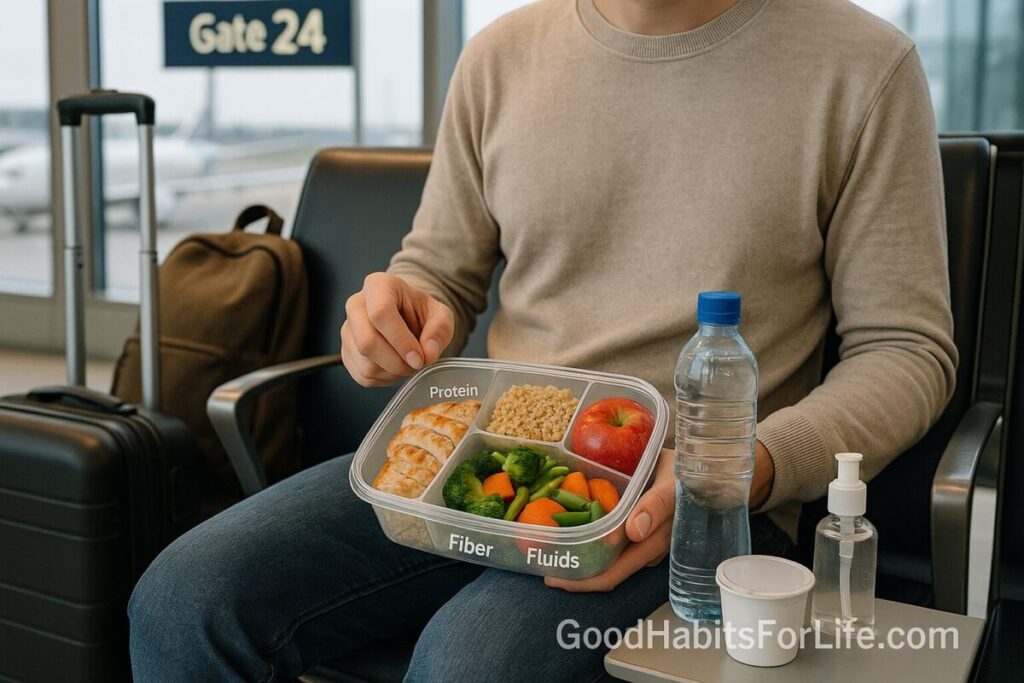
Travel Day Eating: Airports, Trains & Road
Travel Day Eating: Airports, Trains & Road
Table of Contents
🧭 What & Why
“Travel day eating” means choosing foods and timing that maintain energy, attention, and digestion while moving through airports, stations, and highways. The winning formula is PFF: Protein + Fiber + Fluids. Protein supports satiety and steady energy; fiber stabilizes blood sugar and digestion; fluids prevent dehydration that can impair concentration. Favor hot/boiled foods, sealed items, and steady sipping over big, sugary meals. Government and university guidance consistently promotes whole-grains, fruits/veg, lean proteins, and limiting excess sodium/sugar for health and performance.
✅ Quick Start (Do This Today)
-
Pack a flat, empty bottle for water; refill after airport security or at stations.
-
Assemble one PFF snack per 2–3 hours of travel (e.g., nuts + apple + Greek yogurt or roasted chana + banana + milk).
-
Order with a script: “Grilled protein, double veg, whole-grain, sauces on the side.”
-
Time caffeine: use a coffee/tea early in the travel window, avoid within 6 hours of intended sleep.
-
Safety basics: sanitize hands; keep chilled foods cold (use ice packs or finish within 2 hours if unrefrigerated).
-
Plan stops: set reminders for water and stretch breaks every 90–120 minutes.
🛠️ Build Your Travel Day Menu (Pack & Buy Lists)
Pack (solids travel best):
-
Protein: roasted chickpeas/chana, nuts, seeds, jerky/biltong, hard cheese sticks, shelf-stable tuna packs, boiled eggs (if you can keep cool), protein bars (≤8–10 g added sugar).
-
Fiber/carbs: whole-grain wraps/crackers, oats packets, dates, bananas, apples, carrots, snap peas.
-
Fluids/electrolytes: empty bottle + electrolytes/salts if sweating; herbal tea bags.
-
Extras: peanut/almond butter squeeze packs (airports: count as a “spread”), dark chocolate (small piece), hummus cups (train/road easier than air).
Buy (decision rules at terminals/rest stops):
-
Breakfast: oatmeal + milk/yogurt + nuts; egg wrap; idli/poha/upma; fruit + yogurt.
-
Lunch/Dinner: grain bowl (brown rice/quinoa) + grilled chicken/fish/tofu + double veg; dal + roti + salad; sushi rolls + edamame; burrito bowl (no fried shell).
-
Snacks: fresh fruit cup, yogurt, milk, unsalted nuts, roasted legumes, veggie sticks.
The 3-item rule: choose 1 protein + 1 fiber/produce + 1 fluid each stop.
🛫 Airports: Security-Proof Choices
-
Liquids rule: In most countries following aviation security norms, carry-on liquids/gels/aerosols must be in containers ≤100 ml (3.4 oz) inside a 1 L (quart-size) bag. Solids are generally allowed. Pack an empty bottle and refill post-security at water stations.
-
Spreads & soft foods (yogurt, hummus, nut butters) may be treated as liquids/gels—buy them after security to avoid confiscation.
-
Boarding-gate buys: look for grilled over fried, whole-grain over refined, and ask for sauces on the side; avoid oversized combo meals heavy in sodium/sugar (common in fast food).
-
On-board: prioritize water; skip or limit alcohol, which worsens dehydration and sleep.
Airport PFF combos:
-
Grain bowl + grilled chicken/tofu + extra vegetables + water.
-
Egg-and-veg wrap + fruit cup + yogurt.
-
Sushi rolls + edamame + unsweetened tea.
🚆 Trains: Smart, Safe Selections
-
Prefer hot/boiled items (e.g., rice + dal, idli, soups, boiled eggs) or factory-sealed foods from reputable vendors.
-
Keep perishables <2 hours without chilling; use a small soft cooler + ice packs for longer rides.
-
Hydrate steadily; carriages can be dry and warm.
-
For overnight trains, pack two full PFF sets so you’re not stuck with late-night junk.
Train PFF combos:
-
Dal + roti + salad + water.
-
Veg pulao + curd (kept cold) + fruit.
-
Whole-grain crackers + tuna pouch + cut veg.
🚗 Road Trips: Cooler Strategy & Driver Focus
-
Cooler plan: top with ice packs. Store dairy/meat/eggs inside; keep ready-to-eat PFF snack bags up front.
-
Stop rhythm: every 2–3 hours for restroom, water refill, stretch, and a PFF snack.
-
Driver alertness: pair moderate caffeine (coffee/tea) with a 10–20 min rest if needed; avoid heavy, greasy meals that induce sleepiness.
-
Share portions: split large fast-food portions; add a side salad/fruit cup to balance.
-
Trash/cleanup kit: zip bags, napkins, hand gel, wet wipes.
Road PFF combos:
-
Whole-grain sandwich (grilled chicken/tofu) + salad + water.
-
Greek yogurt (in cooler) + berries + nuts.
-
Bean burrito bowl + extra veg + sparkling water.
🗺️ 30-60-90 Habit Roadmap for Frequent Travelers
Days 1–30 (Foundations):
-
Build a travel food go-bag (cutlery, napkins, sanitizer, zipper bags, tiny spice/salt, tea bags).
-
Create 3 favorite PFF sets you can always pack/buy fast.
-
Practice airport security packing: solids in one pouch; liquids/spreads ≤100 ml.
Days 31–60 (Consistency):
-
Standardize a pre-travel grocery list (nuts, fruit, wraps, yogurt/milk, tuna).
-
Schedule water/stretch alarms every 90–120 minutes during trips.
-
Track how you feel after meals; adjust portions to avoid post-meal dips.
Days 61–90 (Optimization):
-
Add electrolyte plan for hot climates/long days.
-
Build city-by-city “safe picks” notes for terminals/routes you use often.
-
Prep a jet-lag routine: lighter meals, caffeine earlier in day, high-fiber breakfast next morning.
🧠 Techniques & Frameworks
-
PFF heuristic: At each decision point, choose Protein + Fiber + Fluids.
-
Plate method (travel edition): ½ vegetables/fruit, ¼ protein, ¼ whole-grain/starchy veg.
-
Sodium-smart swaps: choose grilled/roasted; request no extra salt; pick sauces on the side.
-
Sugar-smart drinks: water, sparkling water, unsweetened tea/coffee; keep sugary sodas/juices occasional.
-
Jet-lag eating: earlier caffeine, lighter meals near bedtime, fiber-rich breakfast on arrival; hydrate.
-
Food safety: keep cold foods ≤4 °C (≤40 °F), hot foods ≥60 °C (≥140 °F); limit time in the “danger zone.”
👥 Audience Variations
Students: pack budget PFF (roasted chickpeas + banana + milk); bring a collapsible bottle; avoid energy-drink overload.
Parents with kids: pre-portion snacks; include fruit pouches, cheese sticks, mini sandwiches; time stops with bathroom breaks.
Busy professionals: default to bowl + grilled protein + extra veg; book seats near water stations if possible; prep calendar reminders to eat.
Seniors: prioritize hydration; choose softer proteins (yogurt/curd, lentils, fish); keep meds accessible and take with food as prescribed.
⚠️ Mistakes & Myths to Avoid
-
Myth: “Skipping meals keeps me sharp.”
Reality: it often leads to energy crashes and overeating later. -
Mistake: counting hummus/nut butter as a “solid” at airports—it’s a spread and may be confiscated pre-security.
-
Mistake: storing perishables without cooling for hours.
-
Myth: “Sugary drinks hydrate better.”
Reality: water (plain or sparkling) is best; keep sugary drinks occasional. -
Mistake: alcohol for sleep on flights—it dehydrates and disrupts rest.
💬 Real-Life Scripts You Can Copy
-
At a fast-casual counter: “Could I have grilled chicken/tofu on brown rice, double vegetables, and dressing on the side, please?”
-
At a bakery/café: “An egg-and-veg whole-grain wrap, a fruit cup, and water, thanks.”
-
With kids: “We’ll share one large meal and add a salad + milk, please.”
📱 Tools, Apps & Resources
-
Packing: PackPoint (lists), Apple/Google Reminders (water/stretch alerts).
-
Food logging (optional): MyFitnessPal or Cronometer to check protein/fiber.
-
Hydration: WaterMinder or phone timer every 60–90 min.
-
Rail catering (where available): official rail apps/web (e.g., IRCTC eCatering in India).
Pros: structure and accountability. Cons: can be fiddly; don’t over-optimize—stick to PFF.
📌 Key Takeaways
-
Build every meal from Protein + Fiber + Fluids.
-
Airports: solids OK; liquids/spreads ≤100 ml; refill bottle after security.
-
Trains/Road: keep cold foods cold with ice packs; finish unrefrigerated perishables within 2 hours.
-
Use scripts to order better fast food.
-
For jet lag, eat lighter, drink water, and time caffeine earlier in the day.
❓ FAQs
1) What foods can I carry through airport security?
Solid foods (sandwiches, whole fruit, nuts, bars) are generally allowed. Liquids/gels/spreads must be ≤100 ml each in a 1-litre bag. Buy yogurts, soups, or hummus after security.
2) How do I stay full without a big meal?
Use the PFF combo every 2–3 hours: a protein (nuts, yogurt, tuna), a fiber source (fruit, veg, whole-grain), and water.
3) Is caffeine good or bad on travel day?
Moderate caffeine can aid alertness. Have it earlier and avoid within ~6 hours of planned sleep.
4) How long can boiled eggs or yogurt sit out?
Keep chilled foods at ≤4 °C (≤40 °F) and limit time at room temperature to ≤2 hours unless you have ice packs.
5) Are protein powders allowed in carry-on?
Powders are typically allowed; large quantities may require extra screening. Keep them in original packaging or labeled containers.
6) What should I eat before an early-morning flight?
A light PFF breakfast: oatmeal + milk/yogurt + nuts, or an egg-and-veg wrap + fruit, plus water.
7) How do I avoid bloating on flights?
Go lighter on carbonated/salty foods, keep sipping water, and walk/stretch when you can.
8) What about alcohol?
If you drink, keep it minimal; alcohol dehydrates and can worsen jet lag and sleep quality.
📚 References
-
U.S. Department of Agriculture, MyPlate (healthy plate guidance). https://www.myplate.gov/
-
USDA FSIS, Keep Food Safe on the Road (cooler temps, 2-hour rule). https://www.fsis.usda.gov/food-safety/safe-food-handling-and-preparation/food-safety-basics/keep-food-safe-road
-
USDA FSIS, The “Danger Zone” 40 °F–140 °F (4 °C–60 °C). https://www.fsis.usda.gov/food-safety/safe-food-handling-and-preparation/food-safety-basics/danger-zone-40f-140f
-
Transportation Security Administration, 3-1-1 Liquids Rule (carry-on limits). https://www.tsa.gov/travel/security-screening/liquids-rule
-
U.S. FDA, Caffeine: How Much Is Too Much? (≈400 mg/day guidance for most adults). https://www.fda.gov/consumers/consumer-updates/spilling-beans-how-much-caffeine-too-much
-
NHS, Jet lag (sleep/caffeine timing tips). https://www.nhs.uk/conditions/jet-lag/
-
American Heart Association, Sodium and Salt (limit high-sodium choices on the go). https://www.heart.org/en/healthy-living/healthy-eating/eat-smart/sodium/sodium-and-salt
-
CDC Travelers’ Health, Food & Water Safety (hygiene and safe choices). https://wwwnc.cdc.gov/travel/page/food-water-safety
Disclaimer: This article is educational and not a substitute for personalized medical or nutrition advice; consult your clinician if you have specific health conditions or dietary needs.