
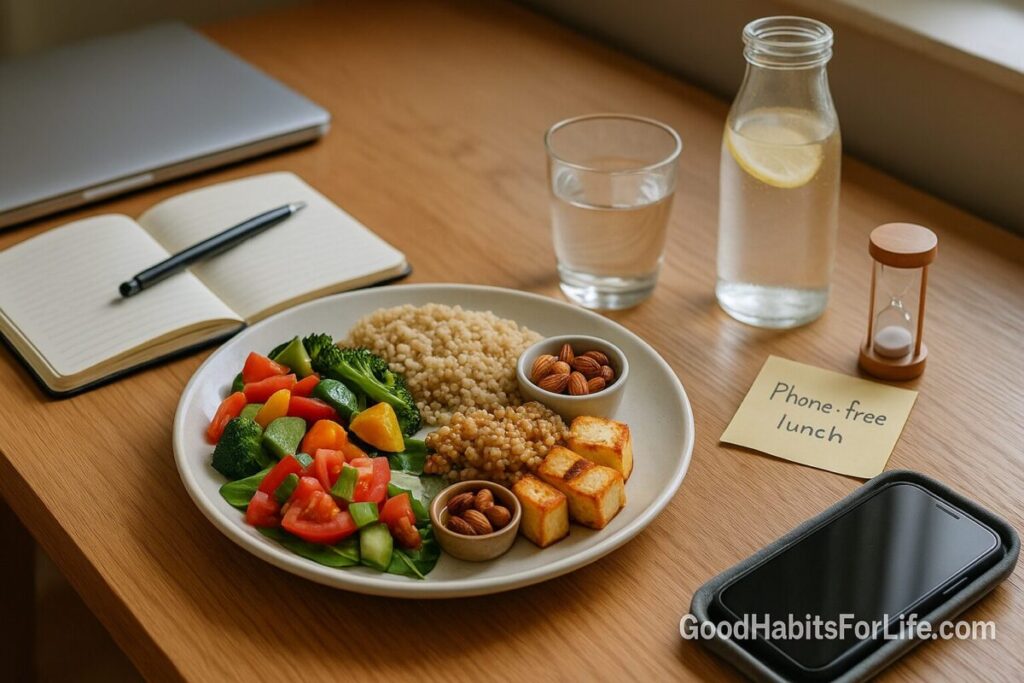
WFH Lunch Templates: Fast, Filling, PhoneFree: AI workflows (2025)
WFH Lunch Templates 2025: Fast, Filling & Phone-Free
Table of Contents
🧭 What & Why
WFH lunch templates are repeatable meal “blueprints” you can assemble in minutes with pantry/freezer staples. They remove decision fatigue, keep nutrition consistent, and protect a phone-free mid-day reset that improves appetite regulation and afternoon performance.
-
Better nutrition with less thinking. Use a simple visual like the Harvard Healthy Eating Plate—½ veg/fruit, ¼ whole grains/legumes, ¼ protein, plus healthy fats—to guide portions and food quality. The Nutrition Source
-
Phone-free helps appetite & attention. Eating while distracted (e.g., screens) increases immediate and later food intake; mindful/undistracted meals help you tune hunger/fullness signals. PMC
-
Micro-breaks boost performance. A meta-analysis shows short breaks (micro-breaks) improve vigor and performance—make lunch a real break, not a scroll. PMC
-
Hydration protects cognition. Even mild dehydration impairs attention and reaction time; rehydration improves short-term memory and fatigue. PMC
✅ Quick Start (Do This Today)
-
Pick 3 templates (e.g., high-protein bowl, soup-and-toast, wrap).
-
Batch-prep 2 proteins + 2 carbs + 3 veg on Sunday (or any prep day).
-
Set a 25-minute phone-free lunch block in your calendar (Focus/Do Not Disturb).
-
Hydrate: 300–500 mL water with lunch; keep a 1 L bottle on desk. European Food Safety Authority
-
Reheat safely: leftovers to 74 °C (165 °F); refrigerate within 2 hours. fsis.usda.gov
🛠️ The Core Templates (Plug-and-Play)
Each template targets ~25–40 g protein and 8–15 g fiber for steady energy (adjust portions to your needs).
1) Protein-Veg Grain Bowl (7–10 min)
-
Base (1 cup cooked): brown rice, quinoa, millet (jowar/bajra), or whole-wheat couscous.
-
Protein (1 palm): grilled chicken/tofu/paneer/eggs/tempeh/chana/rajma.
-
Veg (2 cups): roasted mix or quick-sauté (capsicum, broccoli, carrots, beans).
-
Sauce (1–2 Tbsp): tahini-lemon, yogurt-mint, peanut-ginger.
-
Why it works: mixed fiber + protein flattens glucose spikes and increases satiety; low-GI bases (e.g., legumes, intact grains) blunt post-meal peaks. FAOHomedietaryguidelines.gov
2) Speedy Wrap or Roti Roll (5–7 min)
-
Wrap: whole-wheat tortilla or 2 rotis.
-
Fill: leftover tandoori chicken or paneer bhurji + salad + hummus.
-
Add crunch: cabbage, cucumber, sprouts.
-
Tip: pre-portion fillings in reusable containers.
3) Soup-&-Toast Combo (10 min)
-
Soup: tomato-dal, minestrone, or chicken-veg (frozen portions defrost fast).
-
Side: whole-grain toast with cottage cheese (paneer) or avocado.
-
Safety: thaw in fridge and reheat to 74 °C (165 °F). fsis.usda.gov
4) Stir-Fry Kit (9–12 min)
-
Pan: garlic + mixed frozen veg.
-
Protein: tempeh, egg, shrimp, tofu.
-
Carb: pre-cooked rice/millets; toss with soy/tamari + sesame oil.
-
Batch trick: cook grains once; chill portions for 3–4 days or freeze. FoodSafety.gov
5) Salad-Jar + Add-On (5 min)
-
Jar layers: dressing → beans → crunchy veg → greens.
-
Add-on: boiled eggs, grilled paneer, tuna, or leftover chicken.
-
Plate it at lunch so the meal still feels “fresh.”
6) Leftovers Remix (5 min)
-
Idea: yesterday’s dal + sautéed spinach + poached egg over rice; or roasted veg + hummus + seeds in a bowl.
-
Check storage times: most cooked leftovers are best within 3–4 days refrigerated. FoodSafety.gov
Protein target per meal: a practical range is ~0.4 g/kg/meal distributed across the day (≈20–40 g for many adults). BioMed Central
🧠 Techniques & Frameworks
The 4-Part Plate: Veg volume → Protein anchor → Slow carbs → Flavor fat. The Nutrition Source
Phone-Free Protocol (PFP-10):
-
2-min “arrive” breath;
-
8-min mindful eating (no screens);
-
5-min walk/stretch.
-
Distracted meals increase intake; mindful attention reduces impulsive eating. PMC+1
-
Micro-breaks and brief movement benefit vigor and performance. PMC
Macros that steady energy:
-
Protein: 25–40 g. BioMed Central
-
Fiber: 8–15 g (from veg, legumes, whole grains). dietaryguidelines.gov
-
Carbs: prefer low-GI or minimally processed; pair with protein/fat to smooth post-meal glucose. FAOHome
-
Water: keep sipping; dehydration impairs attention and reaction time. PMC
Food Safety Mini-Framework: 2-Hour Chill → 74 °C Reheat → 3–4-Day Rule. fsis.usda.govFoodSafety.gov
📅 30-60-90 Habit Plan
Days 1–30 (Foundation):
-
Choose 3 templates; stock your Always On Hand list (eggs, paneer/tofu, beans, frozen veg, whole grains, yogurt).
-
Block a 25-min phone-free lunch on your work calendar daily.
-
Batch-prep Sundays: cook 2 proteins (e.g., chana + chicken), 2 carbs (quinoa + millet), roast 2 trays of veg.
-
Track water (aim ≈2.0 L women / 2.5 L men across the day). European Food Safety Authority
Days 31–60 (Consistency):
-
Expand to 5–7 templates; rotate cuisines (Indian/Med/Asian).
-
Add a 5–10-min post-lunch walk most days (also reduces sedentary time). PMC
-
Review leftovers twice weekly; freeze extras using FoodKeeper guidance. FoodSafety.gov
Days 61–90 (Automation):
-
Lock weekly grocery + prep slots; use AI to generate shopping lists and prep plans (workflow below).
-
Set default lunch “combos” in a note/app; aim for <10 min assembly on workdays.
-
Evaluate energy focus 2–4 pm; adjust protein/fiber/hydration as needed (see macros above). BioMed Centraldietaryguidelines.govEuropean Food Safety Authority
👥 Audience Variations
-
Students/Interns: microwavable grains + canned beans + frozen veg + yogurt-tahini = complete meal in dorm/PG setups; prep once, portion all week.
-
Parents at Home: make a base pot (dal/soup) + “protein toppers” (egg/paneer/chicken) so adults/kids customize quickly.
-
Busy Professionals: favor wraps, jar salads, and reheatable bowls; protect PFP-10 block for a true mental reset. PMC
-
Seniors: prioritize hydration and softer textures (soups, stews, kichdi-style bowls). European Food Safety Authority
-
Teens: build fiber-rich wraps and bowls; teach safe reheating and storage rules. fsis.usda.govFoodSafety.gov
⚠️ Mistakes & Myths to Avoid
-
“Smartphone check is harmless.” Screen distraction at meals is linked with higher intake; protect phone-free meals. PMC+1
-
“Protein can wait till dinner.” Distribute protein across meals; ~0.4 g/kg/meal is a solid target. BioMed Central
-
“Any carb is fine if calories fit.” Favor intact grains/legumes to blunt spikes and sustain energy. FAOHome
-
“Leftovers are safe indefinitely in the fridge.” Most cooked leftovers: 3–4 days refrigerated; reheat to 74 °C/165 °F. FoodSafety.govfsis.usda.gov
🗣️ Real-Life Examples & Scripts
-
Calendar note: “12:45–1:10 Lunch PFP-10 (DND on).”
-
Boundary script (chat ping at 12:50):
“On lunch break—back at 1:10. If urgent, call. Otherwise, I’ll reply after.”
-
Self-check (before second helping):
“On a 0–10 fullness scale, where am I? If ≥7, pause 5 minutes.”
-
Batch-prep formula:
“Cook 2 proteins + 2 carbs + 3 veg → portion into 6–8 boxes → freeze half.”
🧰 Tools, Apps & AI Workflows
Food Safety & Storage
-
FoodKeeper (USDA) to check storage times and set reminders for perishables. FoodSafety.gov
Nutrition Tracking (optional)
-
Cronometer offers detailed macro/micronutrient tracking; comparative validity vs. nutrient analysis software is promising (still not perfect). jandonline.org
Focus & Breaks
-
Phone Focus/Do Not Disturb, website blockers, and a 5–10-min post-meal walk support micro-break benefits. PMC
🤖 AI Workflows (2025)
Workflow A — Weekly Menu & Grocery List (10–15 min planning)
-
Prompt an AI writer:
“Create 7 WFH lunch templates for two adults, 25–40 g protein, 8–15 g fiber, 500–700 kcal, Indian + Mediterranean mix. Use pantry-friendly items. Provide a table with Prep Time, Ingredients (metric), Protein/Fiber, Assembly Steps.”
-
Ask for a condensed grocery list grouped by aisle + quantities for 7 lunches.
-
Request a batch-prep checklist (“done in 90 minutes”) that preps proteins, grains, sauces, and chopped veg.
Workflow B — Leftovers Optimizer
-
Paste your fridge inventory; ask for 5 remixes that hit your protein/fiber targets and include exact reheating instructions to 74 °C (165 °F). fsis.usda.gov
Workflow C — Build-Your-Own Bowl Generator
-
Prompt:
“Give me 10 bowl combinations (veg, protein, grain, sauce, topper) with macros, focusing on low-GI carbs and legumes.” FAOHome
Workflow D — Phone-Free Habit Coach
-
Ask AI for daily lunch reflection prompts (2–3 questions) to reinforce mindful eating and break routines supported by evidence. PMC+1
📚 Key Takeaways
-
Templates + batch-prep make WFH lunches fast, repeatable, and nutritious.
-
Phone-free, mindful eating curbs distracted overeating and protects a true break. PMC
-
Aim per lunch: ~25–40 g protein + 8–15 g fiber, low-GI carbs, and water. BioMed Centraldietaryguidelines.govFAOHomeEuropean Food Safety Authority
-
Reheat safely and manage leftovers with FoodKeeper and the 2-hour/74 °C/3–4-day rules. fsis.usda.govFoodSafety.gov+1
-
Use AI to automate planning, shopping, and prep—so lunch assembly takes <10 minutes.
❓FAQs
1) How much protein should a WFH lunch have?
~0.4 g/kg/meal (often 25–40 g for adults) is a practical target, spread across your day. BioMed Central
2) What’s a quick vegetarian template that still hits protein?
Chana-quinoa bowl: 1 cup cooked chana + ¾ cup quinoa + 2 cups veg + yogurt-mint sauce (≈30–35 g protein, 12–15 g fiber). dietaryguidelines.gov
3) Does using my phone at lunch really matter?
Screen distraction increases food intake and undermines awareness—go phone-free for 10–15 minutes. PMC
4) Are low-GI carbs necessary?
They’re not mandatory, but they help reduce post-meal glucose spikes and support steady energy; pair carbs with protein and fat. FAOHome
5) How long can I keep cooked leftovers?
Generally 3–4 days in the fridge; freeze for longer. Always reheat to 74 °C (165 °F). FoodSafety.govfsis.usda.gov
6) How much water should I drink with lunch?
No single “right” amount per meal; aim for steady intake across the day (≈2.0 L women / 2.5 L men total water from beverages + foods). European Food Safety Authority
7) Do lunch breaks really improve afternoon performance?
Yes—micro-breaks support vigor and performance; keep the lunch break real (no scrolling). PMC
References
-
Harvard T.H. Chan School of Public Health — Healthy Eating Plate. The Nutrition Source
-
Robinson E, et al. Eating attentively: a systematic review & meta-analysis. Am J Clin Nutr (2013). PMC
-
La Marra M, et al. Using Smartphones When Eating Increases Caloric Intake. Nutrients (2020). PMC
-
Albulescu P, et al. “Give me a break!” Micro-breaks meta-analysis. PLOS ONE (2022). PMC
-
USDA FSIS — Leftovers and Food Safety (2020). fsis.usda.gov
-
foodsafety.gov — Cold Food Storage Chart (2023). FoodSafety.gov
-
FAO — Role of the Glycemic Index in Food Choice. FAOHome
-
Schoenfeld BJ & Aragon AA. Protein distribution & meal dosing. J Int Soc Sports Nutr (2018). BioMed Central
-
U.S. Dietary Guidelines 2020–2025 — Food Sources of Fiber. dietaryguidelines.gov
-
EFSA — Dietary Reference Values for Water (2010). European Food Safety Authority
-
Zhang N, et al. Effects of Dehydration and Rehydration on Cognitive Performance. Nutrients (2019). PMC
-
USDA/FSIS + partners — FoodKeeper App. FoodSafety.gov
Disclaimer
This article provides general nutrition and habit guidance for healthy adults and is not a substitute for personalized medical advice—consult a qualified professional for individual needs.