
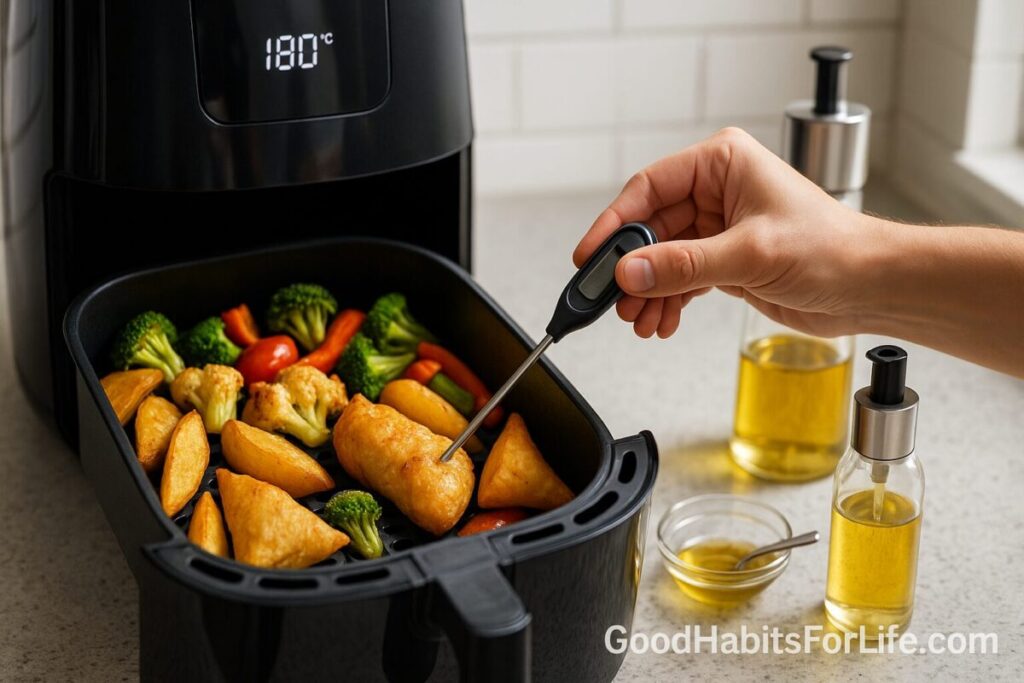
Air Fryer Essentials 2025: Crispy Without Chaos
Air Fryer Essentials 2025: Crispy Without Chaos
Table of Contents
🧭 What It Is & Why It Works
Definition. An air fryer is a compact convection oven: a powerful fan circulates hot air (typically 150–220 °C / 300–430 °F) around food to create a crisp surface with a fraction of the oil of deep frying.
Benefits (evidence-aligned).
-
Less fat overall than deep frying because you’re not submerging in oil.
-
Faster cooking vs. a large oven due to smaller cavity and intense airflow.
-
Great texture on leftovers—better than microwave reheating for pizza, fries, samosas, nuggets, roasted veg.
-
Food safety visibility: easy to insert a thermometer and check doneness (see USDA temps in References).
-
Lower browning risk management: you control color; aim for golden, not dark to minimize acrylamide formation in starchy foods (see FDA/EFSA guidance).
✅ Quick Start: Tonight
Goal: Make a single tray of crisp, evenly cooked food with minimal smoke.
-
Pick one food: frozen fries, broccoli florets, chicken thighs, salmon fillet, paneer cubes, or tofu.
-
Preheat 3–5 min (unless your model heats instantly).
-
Prep lightly. Pat food dry. Toss with 1–2 tsp oil per 400 g (≈1 lb). Salt/pepper.
-
Load properly. One layer, finger-width gaps. Don’t stack.
-
Set time & temp (see cheat settings below). Start at the low end of the range.
-
Shake/flip halfway. This is crucial for even browning.
-
Check doneness with a thermometer for meats/fish:
-
Poultry: 74 °C (165 °F)
-
Fish: 63 °C (145 °F)
-
Pork/whole cuts of beef/lamb/veal: 63 °C (145 °F) + rest 3 min
-
Ground meats: 71 °C (160 °F)
-
-
Rest 2–3 min for juicier results; finish with acid (lemon/vinegar) and herbs.
Cheat Settings (start-here ranges).
-
Frozen fries/wedges: 200 °C / 392 °F, 12–18 min
-
Broccoli/cauliflower: 190 °C / 374 °F, 10–14 min
-
Chicken thighs (boneless): 190 °C / 374 °F, 18–25 min, to 74 °C
-
Salmon 2–3 cm thick: 200 °C / 392 °F, 7–10 min, to 63 °C
-
Paneer/tofu cubes: 200 °C / 392 °F, 10–12 min (shake twice)
🗺️ 7-Day Starter Habit Plan
Outcome: By the end of the week, you’ll have reliable, repeatable results for meals and reheats.
-
Day 1 — Setup & Seasoning. Run the unit empty at 200 °C for 10 min to burn off residues (check manual). Wash basket/drawer.
-
Day 2 — Vegetables. Roast a tray (400–500 g) of broccoli or carrots. Focus on drying + spacing. Note time that hit “your golden.”
-
Day 3 — Protein Basics. Cook chicken thighs or tofu. Practice thermometer use and resting.
-
Day 4 — Starches. Do potatoes/sweet potatoes. Learn shake timing (at 40–50% of total time).
-
Day 5 — Marinades & Crusts. Try yogurt-spice chicken, paneer tikka, or miso-glazed salmon. Pat dry before cooking to avoid steaming.
-
Day 6 — Leftovers Mastery. Reheat pizza/samosas/fritters: 170–180 °C for 3–6 min.
-
Day 7 — Batch + Clean Routine. Cook two trays back-to-back; between batches, dump crumbs and wipe. Soak basket after dinner.
🛠️ Techniques & Frameworks
🔄 The C.R.I.S.P. Framework
-
Choose the right cut/size (similar thickness).
-
Remove surface moisture (pat dry).
-
Interval move (shake/flip halfway).
-
Season + small oil (1–2 tsp per 400 g).
-
Probe for doneness (thermometer; follow USDA temps).
📏 Oven→Air Fryer Conversion
-
Reduce temperature by ~15 °C (25 °F).
-
Reduce time by ~20% and check early; airflow browns faster.
-
Foods that fling crumbs/batter (wet-battered fish, ultra-flaky pastries) still prefer the oven or pan.
🧪 Browning Without Burn
-
Starchy foods (potatoes, breads) can form acrylamide at dark brown/black stages. Aim for light-to-medium golden; toss with par-boiled potatoes or soak/raw-rinse and dry thoroughly to reduce sugars on the surface.
🧯 Smoke & Smell Control
-
Empty fat/crumb tray between batches.
-
Wipe drawer walls when warm (not hot).
-
For very fatty items (bacon), add a tablespoon of water to the drawer under the basket to catch drips.
-
Avoid aerosol propellant sprays; use refillable oil misters.
🧽 Cleaning & Care
-
Cool, unplug, disassemble.
-
Soak basket/drawer 10–15 min in warm soapy water; use non-abrasive sponge.
-
Check heating-coil area for crumbs (when cold).
-
Keep vents unblocked; give the unit air space on the counter.
📦 Sizing & Power (2025 snapshot)
-
2–3 L baskets suit 1–2 people/snacks; 3.5–5.5 L works for families of 3–5.
-
1200–1700 W typical; higher wattage = faster preheats and better crisping.
-
Dual-zone models help cook two foods at once; single-zone = simpler and cheaper.
🍽️ Seasonings That Love Air Frying
-
Dry rubs: paprika, garlic powder, cumin, pepper, chilli.
-
Coatings: panko + grated hard cheese; cornflour/cornstarch for extra crunch.
-
Finishes: lemon juice, chaat masala, malt vinegar, hot honey.
👥 Audience Variations
-
Students & Busy Pros: Pre-portion 400–500 g bags of cut veg and marinated protein on Sunday; cook directly from fridge in 10–15 min.
-
Parents: Choose boneless cuts and finger-sized veg for faster, even cooking; avoid sticky sugary marinades that smoke.
-
Seniors: Prioritize easy-read dials, lighter baskets, and an instant-read thermometer with a big display.
-
Teens Learning to Cook: Start with veg and frozen items; practice shake timing and safe basket handling.
-
Health-Focused Cooks: Use oil misters; finish with herbs, citrus, and yogurt sauces instead of heavy mayo.
⚠️ Mistakes & Myths to Avoid
-
Myth: “No oil needed.”
Reality: A tiny amount helps browning and flavor. -
Mistake: Overcrowding.
Fix: Cook in batches; single layer with gaps. -
Myth: “Preheating is pointless.”
Reality: A short preheat improves crust and timing accuracy. -
Mistake: Relying on color for doneness.
Fix: Use a thermometer; follow safe minimum temperatures. -
Myth: “Air fryers are just deep fryers without oil.”
Reality: They’re mini convection ovens; think roast/crisp, not batter-fry. -
Mistake: Using aerosol cooking sprays with propellants.
Fix: Use a refillable oil mister to protect nonstick coatings.
📝 Real-Life Examples & Scripts
1) 15-Minute Weeknight Chicken & Veg
-
Prep: 300 g boneless chicken thigh strips + 300 g broccoli florets.
-
Season: 2 tsp olive oil, 1 tsp paprika, ½ tsp garlic powder, ½ tsp salt.
-
Cook: Preheat 190 °C. Basket single-layer; cook 10 min, shake, then 6–8 min more to 74 °C.
-
Finish: Squeeze lemon; add chilli flakes.
2) Paneer Tikka (Air-Fryer)
-
Marinade (20 min): 200 g paneer cubes with 3 tbsp yogurt, 1 tsp tandoori masala, ½ tsp cumin, ½ tsp salt.
-
Cook: 200 °C for 10–12 min; shake twice.
-
Serve: With onion, lemon, mint chutney.
3) Leftover Pizza Rescue
-
Method: 170–180 °C for 3–5 min. Check at 3. Cheese re-melts; base crisps without drying out.
4) Breakfast Hash (Potatoes + Peppers)
-
Par-boil 2 small potatoes 5–6 min; drain and dry.
-
Toss: 2 tsp oil, ½ tsp paprika, salt.
-
Cook: 200 °C 10–12 min; add peppers/onions in last 5 min.
🧰 Tools, Apps & Resources
-
Instant-read thermometer — fastest way to safe, juicy proteins. Pros: accuracy. Con: small learning curve.
-
Refillable oil mister — thin, even coat; preserves nonstick. Pros: portion control. Con: needs cleaning.
-
Silicone tongs & parchment liners (perforated) — easy flips, less sticking. Pros: cleaner basket. Con: liners can slow browning slightly.
-
Meal/recipe apps:
-
Paprika (organize, scale, grocery lists).
-
Yummly (smart timers, recipe ideas).
-
Cronometer (nutrition tracking for macros/micros if desired).
-
📌 Key Takeaways
-
Treat your air fryer like a mini convection oven.
-
Dry + small oil + spacing + shake + probe = consistent crisp.
-
Convert oven recipes by –15 °C (–25 °F) and –20% time; check early.
-
Keep it golden (not dark) for flavor and to reduce over-browning risks.
-
Build the habit with the 7-day plan; record times that hit your preferred color.
❓ FAQs
1) Do I need to preheat?
Often yes. A 3–5 minute preheat gives a crisper crust and more predictable timing. Some smart models auto-preheat—check your manual.
2) Can I use foil or parchment?
Use perforated parchment sized to your basket and only under food so it doesn’t lift into the fan. Foil is fine for fatty drips, but leave air paths clear.
3) How do I stop smoke?
Clean crumbs, avoid sugary sauces until the last minutes, and add a spoonful of water to the drawer for very fatty foods.
4) Are air fryers “healthy”?
They help you cook with less oil and more vegetables. Health still depends on ingredients and portions. For starchy foods, aim for light-golden rather than dark.
5) Can I cook wet-battered items?
Wet batter drips and burns. Use dry coatings (panko/cornstarch) or cook battered foods in a skillet or deep fryer.
6) What size should I buy?
For 1–2 people, 2–3 L works. Families often prefer 3.5–5.5 L. Higher wattage heats quicker.
7) How do I reheat fries or samosas?
170–180 °C for 3–6 min; shake once. Start low and check early.
8) Is nonstick coating safe?
Use silicone/wood tools, avoid abrasives, and keep temps within the manufacturer’s guidance. Replace baskets with peeling or damaged coating.
9) Can I stack food?
Single layer is best. For wings or tofu, cook in batches or use a rack designed for your model.
10) What’s the safest way to check doneness?
Use an instant-read thermometer and follow USDA safe minimum internal temperatures.
📚 References
-
USDA Food Safety & Inspection Service. Safe Minimum Internal Temperature Chart. https://www.fsis.usda.gov/food-safety/safe-food-handling-and-preparation/food-safety-basics/safe-minimum-internal-temperature-chart
-
U.S. FDA. Acrylamide and Diet. https://www.fda.gov/food/chemicals/acrylamide-and-diet
-
European Food Safety Authority (EFSA). Acrylamide in Food. https://www.efsa.europa.eu/en/topics/topic/acrylamide-food
-
National Cancer Institute (NIH). Acrylamide and Cancer Risk. https://www.cancer.gov/about-cancer/causes-prevention/risk/diet/acrylamide-fact-sheet
-
Harvard T.H. Chan School of Public Health. Fats and Cholesterol – The Nutrition Source (cooking method impacts). https://www.hsph.harvard.edu/nutritionsource/fats/
-
Utah State University Extension. Air Fryers: Tips for Success (home equipment guidance). https://extension.usu.edu
-
National Fire Protection Association. Cooking Safety Tips. https://www.nfpa.org/Public-Education/Fire-causes-and-risks/Top-fire-causes/Cooking