
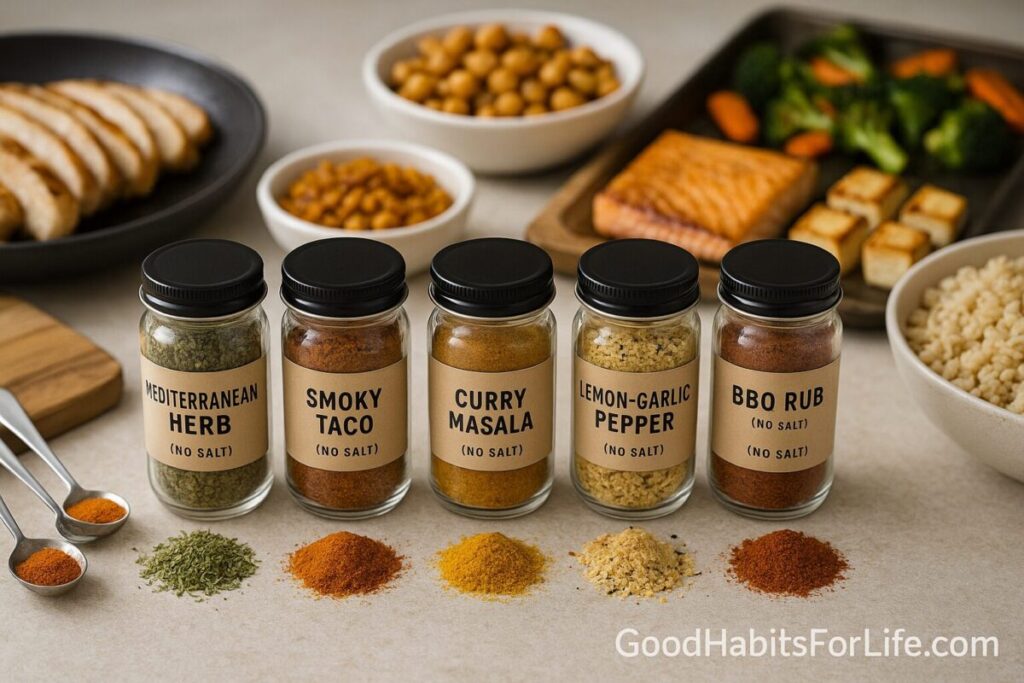
Spice Blends that Save Time: 5 Jars, 50 Meals: Protein-Forward Plan (2025)
Spice Blends that Save Time: 5 Jars, 50 Meals (2025)
Table of Contents
🧭 What This Plan Is (and Why It Works)
This is a simple system: mix five versatile, salt-optional spice blends once, then use them to season proteins and vegetables in minutes. The goal is consistency (habit), speed (fewer decisions), and nutrition (protein forward, moderate sodium).
Why “protein-forward”? Protein supports satiety, muscle repair, and healthy aging. For most adults, the RDA is ~0.8 g/kg/day; older adults often benefit from 1.0–1.2 g/kg/day. Practically, many people do well targeting ~25–35 g protein per main meal (adjust to your body size & activity). www.heart.orgPubMed+1
Why spice blends? Herbs and spices make low-salt, vegetable-rich cooking taste great. Studies show spiced dishes can increase liking and, in some contexts, intake of vegetables and acceptability of lower-salt foods. PMCScienceDirectMDPI
Why salt-optional? Most sodium comes from packaged foods, not the salt shaker. Using blends lets you keep flavor high while staying under recommended sodium limits—<2,300 mg/day for adults, with an ideal target of ~1,500 mg for many. WHO recommends <2,000 mg sodium (≈5 g salt). www.heart.orgWorld Health Organization
Shelf life tip: For best quality, store ground spices ~2–3 years; whole spices ~2–4 years, in airtight jars away from heat/light. USDA Ask
✅ Quick Start: Blend, Batch, Build
-
Blend (30 min): Make the five blends below; label jars.
-
Batch proteins (60–90 min): Roast/grill/pan-sear 3–4 proteins for the week (e.g., chicken, paneer, chickpeas, boiled eggs).
-
Build meals (10–15 min): Combine 1 protein + 1 blend + 1 veg + 1 carb/healthy fat.
-
Season smart: Add salt at the table only if needed; taste first.
-
Track protein: Aim ~25–35 g per main meal; older adults may target the higher end. www.heart.orgPubMed
🛠️ The 5 Blends (salt-optional, yields ~1 small jar each)
Measurements given in both grams and spoons; use a scale for consistency. “Salt-optional” means the mix is delicious without salt—add a pinch at plating if needed.
1) Smoky Tandoori-Style Rub (warm & versatile)
-
Sweet paprika 20 g (4 Tbsp)
-
Coriander, ground 14 g (2 Tbsp)
-
Cumin, ground 14 g (2 Tbsp)
-
Garlic powder 12 g (2 Tbsp)
-
Ginger powder 8 g (1 Tbsp)
-
Turmeric 6 g (2 tsp)
-
Cayenne 2–4 g (½–1 tsp), to heat
-
Optional: crushed kasuri methi 2 g (2 tsp)
-
Use: Poultry, paneer, eggs, chickpeas, cauliflower.
2) Mediterranean Lemon-Herb
-
Oregano 10 g (3 Tbsp)
-
Thyme 8 g (3 Tbsp)
-
Rosemary, finely crushed 6 g (2 Tbsp)
-
Garlic powder 12 g (2 Tbsp)
-
Black pepper, fine 6 g (1 Tbsp)
-
Lemon zest powder* 6 g (2 Tbsp) (*or fresh zest at cook time)
-
Use: Fish, chicken, white beans, zucchini, potatoes.
3) Chili-Lime Tex-Mex
-
Chili powder 16 g (4 Tbsp)
-
Cumin 12 g (2 Tbsp)
-
Smoked paprika 12 g (2 Tbsp)
-
Oregano (Mexican if available) 6 g (2 Tbsp)
-
Garlic powder 12 g (2 Tbsp)
-
Lime zest powder 6 g (2 Tbsp)
-
Use: Eggs, prawns, tofu, black beans, corn.
4) Golden Curry Base
-
Turmeric 16 g (4 Tbsp)
-
Coriander 16 g (4 Tbsp)
-
Cumin 12 g (2 Tbsp)
-
Fenugreek (ground) 4 g (2 tsp)
-
Cinnamon 2 g (1 tsp)
-
Cardamom (ground) 2 g (1 tsp)
-
Black pepper 6 g (1 Tbsp)
-
Use: Lentils, chickpeas, paneer, fish, mixed veg.
5) Ginger-Garlic Stir-Fry Boost
-
Garlic powder 20 g (3 Tbsp + 1 tsp)
-
Ginger powder 14 g (2 Tbsp)
-
White pepper 6 g (1 Tbsp)
-
Chili flakes 3 g (1 Tbsp)
-
Five-spice or toasted sesame seeds 6 g (2 Tbsp)
-
Use: Tofu, eggs, chicken, mushrooms, green beans.
How much to use? Start with ~1 tsp (3–4 g) blend per 150 g cooked protein; double for sheet-pan meals or lots of veg.
🧠 50 Meals Matrix: 10 Proteins × 5 Blends
Pair any row with any column = one tasty meal idea (50 combos). Add veg + carb/healthy fat to complete.
| Protein (aim ~125–175 g cooked) | Tandoori-Style | Med Lemon-Herb | Chili-Lime | Golden Curry | Stir-Fry Boost |
|---|---|---|---|---|---|
| Chicken thighs/breast | Sheet-pan tandoori | Lemon-garlic grill | Skillet fajita | Coconut-light curry | Ginger-garlic stir-fry |
| Eggs (3–4) | Masala omelet | Herby egg bake | Huevos revueltos | Curried egg salad | Egg-veg scramble |
| Paneer (150 g) | Tandoori paneer | Herb-lemon pan-sear | Chili-lime skewers | Paneer curry | Paneer-veg toss |
| Tofu (firm) | Spiced bake cubes | Herby crust tofu | Chili-lime crispy tofu | Curry tofu & peas | Wok-tossed tofu |
| Chickpeas | Roasted chana bowls | Greek-ish salad | Chili-lime tacos | Chana masala-lite | Stir-fry with greens |
| Lentils (red/brown) | Spiced dahl | Lemon-herb lentil salad | Taco lentils | Golden lentil soup | Lentils & veg sauté |
| Fish (white/salmon) | Tandoori fish | Lemon-herb bake | Chili-lime fish | Curry fish stew | Ginger-garlic fish |
| Prawns/Shrimp | Tandoori prawns | Herb-citrus sauté | Chili-lime grill | Curry prawn bowls | Garlic-ginger prawns |
| Mushrooms | Tandoori trays | Herby roast caps | Chili-lime tacos | Curry mushrooms | Quick stir-fry |
| Black/Red beans | Warm spiced beans | Lemon-herb bean salad | Chili-lime bowls | Curry bean stew | Garlic bean toss |
🗓️ 7-Day Protein-Forward Starter Plan
Target ~25–35 g protein per main meal. Adjust portions to your energy needs. Older adults may benefit from 1.0–1.2 g/kg/day overall. www.heart.orgPubMed
Day 1
-
Lunch: Lemon-herb chicken + quinoa + roasted zucchini.
-
Dinner: Golden lentil soup + cucumber-yogurt.
Day 2
-
Lunch: Chili-lime tofu bowl (brown rice, peppers, corn).
-
Dinner: Tandoori fish + tomato-cucumber salad + roti.
Day 3
-
Lunch: Stir-fry eggs & broccoli with ginger-garlic; whole-grain toast.
-
Dinner: Paneer curry + steamed greens + small rice.
Day 4
-
Lunch: Chickpea Greek-ish salad (lemon-herb) + feta (optional).
-
Dinner: Fajita-style chili-lime prawns + onions/peppers + tortillas.
Day 5
-
Lunch: Curry bean stew + mixed veg.
-
Dinner: Tandoori chicken traybake + sweet potatoes.
Day 6
-
Lunch: Herby lentil salad + olive oil & lemon.
-
Dinner: Ginger-garlic mushroom-tofu stir-fry + noodles.
Day 7
-
Lunch: Chili-lime egg scramble + avocado + salsa.
-
Dinner: Curry fish stew + brown rice.
Snacks (pick 1–2/day): Greek yogurt; cottage cheese/paneer cubes; roasted chana; milk or soy beverage; protein smoothie; cheese & fruit.
🧪 Techniques & Frameworks
-
One-pan bias: Sheet-pan or wok first to keep weeknights fast.
-
Flavor last: Bloom blend in a teaspoon of oil for 30–60 sec, or sprinkle at the end to keep aromas bright.
-
Protein anchors: Batch-cook 2 animal + 2 plant proteins weekly; rotate blends daily.
-
Sodium strategy: Season with blends during cooking; if needed, add a light pinch of salt at the table to control total intake. AHA: keep <2,300 mg/day, ideal ~1,500 mg for many adults; WHO: <2,000 mg. www.heart.orgWorld Health Organization
-
Storage: Airtight jars, cool & dark; refresh ground spices every ~2–3 years for best quality. USDA Ask
-
Veg acceptance: Spices can increase liking and acceptability of lower-salt dishes—use them to hit veg targets. PMCMDPI
🧑🍳 Audience Variations
-
Students: Buy one protein (eggs, tofu, canned beans) + one veg bag + one blend each week; cook in a single non-stick pan.
-
Parents: Double batch proteins; freeze half in labeled bags with blend pre-rubbed.
-
Professionals: Lunchbox assembly: grain+veg base, toss with blend + lemon, add protein.
-
Seniors: Favor tender proteins (eggs, fish, yogurt-based sauces); distribute protein evenly across meals. PubMed
-
Teens (active): Larger portions and a carb boost (potatoes, rice, roti, pasta) around practices.
⚠️ Mistakes & Myths to Avoid
-
Myth: “Spices are salty.” Most dried spices are naturally sodium-free—salt comes from added salt or mixes with salt. Use salt-optional blends.
-
Mistake: Over-toasting powdered spices (burns quickly). Bloom gently or add at the end.
-
Myth: “Old spices are unsafe.” Not usually unsafe, but they lose potency; replace for best flavor. USDA Ask
-
Note on allergies: Spice allergy is rare but possible; introduce new blends gradually if you have food allergies. AAAAIPubMed
💬 Real-Life Examples & Scripts
-
Batch-day script (Sun): “Rub 1 kg chicken with 2 Tbsp Tandoori blend + yogurt; roast. Cook 2 cups dry lentils; stir in 2 tsp Curry blend. Bake 400 g tofu with 2 tsp Chili-Lime.”
-
Dinner in 12 minutes: “Microwave pre-cooked lentils, toss with spinach + Curry blend + olive oil + lemon. Warm paratha.”
-
Kid-friendly: “Use half the chili; add sweet paprika for color.”
-
Low-sodium tip: “Taste first; if needed, add a pinch of salt at the table—don’t build it into the pot.” www.heart.org
🧰 Tools, Apps & Resources
-
USDA FoodKeeper App — storage times & best-quality guidance. Pros: authoritative; Cons: general ranges. FoodSafety.gov
-
Cronometer / MyFitnessPal — track protein quickly.
-
Airtight spice jars + labels — keep light/air out for quality. USDA Ask
-
Instant-read thermometer — hit safe temps fast.
📚 Key Takeaways
-
Five salt-optional blends unlock 50 fast meals with consistent flavor.
-
Center ~25–35 g protein per meal; older adults often benefit from 1.0–1.2 g/kg/day. www.heart.orgPubMed
-
Use spices to enhance low-salt, veg-rich cooking you’ll actually enjoy. PMC
-
Store spices airtight, cool, and dark for best quality. USDA Ask
-
Keep sodium mindful: <2,300 mg/day (AHA) or <2,000 mg/day (WHO). www.heart.orgWorld Health Organization
❓ FAQs
1) How much blend should I use per serving?
Start with ~1 tsp (3–4 g) per 150 g cooked protein, then adjust to taste.
2) Can I add salt to the jar?
You can, but keeping blends salt-optional helps control daily sodium; add a pinch at the table if needed. www.heart.org
3) Do spices “expire”?
They don’t suddenly become unsafe, but quality fades. For best flavor: ground 2–3 years, whole 2–4 years, stored airtight away from heat/light. USDA Ask
4) Are spice allergies common?
No—spice allergy is uncommon, though cases exist; introduce new blends gradually if you have allergies and consult an allergist if concerned. AAAAIPubMed
5) How much protein should I eat daily?
RDA is ~0.8 g/kg/day for most adults; some older adults may benefit from 1.0–1.2 g/kg/day. Distribute protein across meals. www.heart.orgPubMed
6) Can these blends work for kids?
Yes—reduce chili for heat-sensitive eaters; check school or medical guidance if allergies are present.
7) What if I only have a microwave?
Use pre-cooked proteins (boiled eggs, canned beans), toss with oil + blend + lemon; add steamed-in-bag veg and a grain pouch.
8) How do I keep fish from tasting “too spicy”?
Use ½ the blend amount; add citrus at the end and a yogurt or tahini drizzle.
9) Do I need oil to bloom spices?
A small amount (1–2 tsp) helps fat-soluble aromas disperse, but you can also add at the end for brighter notes.
10) Are these blends okay for low-sodium diets?
Yes—the mixes are salt-optional. Always follow your clinician’s sodium advice. www.heart.orgWorld Health Organization
References
-
American Heart Association. How Much Sodium Should I Eat Per Day? (2025). www.heart.org
-
World Health Organization. Sodium reduction — Fact sheet. (2025). World Health Organization
-
Ask USDA. Will spices used beyond their expiration date be safe? (FoodKeeper guidance). USDA Ask
-
USDA/FSIS. FoodKeeper App — storage guidance. FoodSafety.gov
-
American Heart Association. Protein & Heart Health (RDA ~0.8 g/kg/day). www.heart.org
-
Wu G. Dietary protein intake and human health. Nutrients (2016). PubMed
-
Bauer J. et al. PROT-AGE Study Group position paper — older adults 1.0–1.2 g/kg/day. J Am Med Dir Assoc (2013). PubMed
-
D’Adamo CR. et al. Spices/herbs and vegetable intake. Nutrients (2024, sensory; 2020, review). PMC
-
Dougkas A. et al. Herbs/spices enhance liking of low-salt legumes. Nutrients (2019). MDPI
-
AAAAI. Can Spices Cause Allergic Reactions? (overview). AAAAI
-
Chen JL. Spice allergy (rare; estimates in adults). J Investig Allergol Clin Immunol (2011). PubMed
Disclaimer: This article is for general nutrition and cooking education and is not a substitute for personalized medical or dietary advice.