
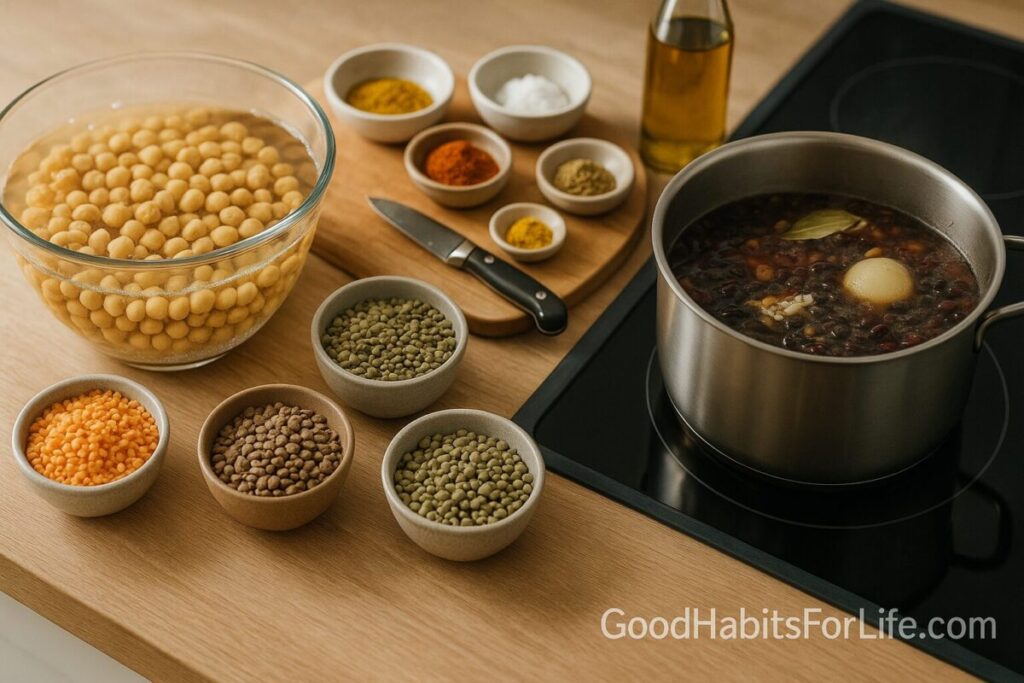
Legumes that Love You Back: Soak, Cook, Flavor: Protein-Forward Plan (2025)
How to Cook Legumes: Soak, Flavor & Protein Plan (2025)
Table of Contents
🧭 What Counts as a Legume & Why It’s Worth It
Legumes include dried beans (kidney, black, pinto), chickpeas, lentils (brown, green, red), split peas, and soy (edamame, tofu made from soy). They deliver a rare combo: plant protein + fiber, with minerals (iron, potassium, magnesium) and phytochemicals. Regular intake is linked with better cardiometabolic health, improved satiety, and lower food costs—ideal for a protein-forward plate.
Core benefits
-
Protein: ~8–10 g per 100 g cooked for most beans/lentils; soybeans higher.
-
Fiber: Often 6–8 g per 100 g; supports gut health and steady energy.
-
Budget-friendly: Dried legumes cost a fraction of animal protein.
-
Shelf-stable: Dried beans last 1+ year in airtight jars away from heat/light.
✅ Safety, Soaking & Debloating Basics
Soaking options (for most dried beans):
-
Overnight soak: Cover beans with 3× water; 8–12 h. Drain, rinse, cook in fresh water.
-
Quick soak: Boil beans 2–3 min, turn off heat, cover 1 h; drain, rinse, cook fresh.
When soaking helps
-
Cuts cook time by 25–40%.
-
Improves hydration for even cooking and creamy interiors.
-
Can reduce gas-forming oligosaccharides (drain soaking water and rinse).
Important safety for kidney beans
-
Red kidney beans contain natural lectins (phytohemagglutinin). Always boil vigorously in fresh water for at least 10 minutes before simmering (slow cookers alone are not adequate unless they reach a full boil). This step neutralizes lectins.
Seasoning and salt—myth busting
-
Salt early is fine. Lightly salting the soaking water or the pot from the start seasons beans throughout and doesn’t toughen skins; hard water/mineral content matters more.
Digestibility tips
-
Start with lentils/split peas (naturally easier to digest).
-
Cook until very tender; undercooked beans cause more discomfort.
-
Add aromatics (bay, garlic, ginger), carminatives (cumin, asafoetida/hing, fennel).
-
Portion size: begin with ½ cup (120 ml) cooked and scale up over 1–2 weeks.
🛠️ Methods: Stovetop, Pressure Cooker, Canned
Stovetop (classic)
-
Soak (beans), drain, rinse. Lentils/split peas usually don’t need soaking.
-
Add to pot with fresh water: Water ratio ~3:1 (water:legume by volume).
-
Bring to a rolling boil (kidney: boil hard 10 min), then reduce to gentle simmer.
-
Skim foam; add aromatics and 1–1.5 tsp salt per 250 g dried beans.
-
Simmer partially covered until creamy-tender; add acids (tomato, vinegar) at the end.
Pressure cooker / Instant Pot (fastest)
-
No-soak method works, but soaked beans cook most evenly.
-
Typical manual high pressure times (soaked):
-
Black/kidney/pinto: 10–15 min; natural release 10 min.
-
Chickpeas: 15–25 min; natural release 10–15 min (for hummus-soft, extend).
-
Brown/green lentils: 5–8 min; quick release. Red lentils: 2–4 min.
-
Canned (zero-prep)
-
Drain and rinse to reduce sodium by ~35–40%.
-
Ready in minutes for salads, sautés, soups, and blended dips.
Batch-cook & store
-
Fridge: 3–4 days in cooking liquid.
-
Freezer: Up to 3 months. Portion 1 cup (240 ml) in labeled bags with a splash of liquid to prevent drying.
🍳 Flavor Blueprints (by cuisine)
Mediterranean: Olive oil, garlic, onion, tomato, rosemary/oregano, lemon zest; finish with feta or tahini.
Indian: Ghee/oil, cumin, mustard seeds, turmeric, coriander, ginger-garlic; finish with cilantro and lemon.
Mexican: Onion, jalapeño, cumin, oregano, bay; finish with lime and coriander.
Middle Eastern: Garlic, cumin, paprika, sumac; finish with tahini, parsley, lemon.
East Asian: Ginger, garlic, scallion, soy sauce/tamari, rice vinegar; finish with sesame oil.
African (North/West): Cinnamon, cumin, paprika, harissa/berbere, peanut/tomato base; finish with herbs and toasted nuts.
Seasoning timeline
-
Start: Salt + bay + onion/garlic.
-
Mid-cook: Ground spices gently toasted in a little oil.
-
Finish: Acid (lemon, vinegar), fresh herbs, and a little fat (olive oil/butter) for mouthfeel.
📏 Times, Ratios & Doneness
Approximate stovetop times (after overnight soak unless noted):
| Legume (dried) | Water ratio | Time (min) | Doneness cue |
|---|---|---|---|
| Chickpeas | 3:1 | 45–70 | Creamy center, skins intact |
| Black beans | 3:1 | 45–60 | Tender, hold shape |
| Kidney beans* | 3:1 | 60–90 | Creamy; boil hard first 10 min |
| Pinto beans | 3:1 | 60–90 | Soft creamy |
| Brown/green lentils (no soak) | 3:1 | 20–30 | Tender but not mushy |
| Red lentils (no soak) | 3:1 | 10–15 | Soft, great for dals/soups |
| Split peas (no soak) | 3:1 | 35–50 | Creamy; good for puree |
*Safety note repeated: always boil red kidneys vigorously 10 min in fresh water before simmering.
Protein & fiber (approx. per 100 g cooked):
| Legume | Protein (g) | Fiber (g) |
|---|---|---|
| Chickpeas | 8–9 | 7–8 |
| Black beans | 8–9 | 8–9 |
| Kidney beans | 8–9 | 6–7 |
| Brown/green lentils | 8–9 | 7–8 |
| Red lentils | 7–8 | 5–6 |
| Soybeans (edamame) | 11–16 | 5–6 |
🧱 Habit Plan: 7-Day Protein-Forward Starter
Goal: 1 legume meal/day (½–1 cup cooked; 120–240 ml). Batch-cook once; assemble fast all week.
-
Day 1 (Sun): Soak 500 g chickpeas; plan 3 recipes.
-
Day 2 (Mon): Pressure-cook chickpeas (hummus-soft). Freeze two 1-cup portions. Dinner: Chana masala + rice + cucumber salad.
-
Day 3 (Tue): Mediterranean bowl: chickpeas, roasted veg, olive oil, lemon, tahini drizzle.
-
Day 4 (Wed): Lentil lunch: 30-minute brown-lentil soup with carrots/celery.
-
Day 5 (Thu): Taco night: black beans from can; sauté with onion + cumin; serve with tortillas, salsa.
-
Day 6 (Fri): Pasta e ceci: pasta + chickpeas + tomato + rosemary; finish with parmesan.
-
Day 7 (Sat): Freezer flip: defrost chickpeas; make quick hummus; snack with veg + pita.
Checkpoints
-
Energy levels steady?
-
Digestion comfortable? (Adjust portion or cook softness.)
-
Budget/food waste reduced this week?
👥 Audience Variations
Students: Use canned beans; invest in a microwave rice cooker and one skillet. Two-ingredient meals: beans + salsa; lentils + jarred curry paste.
Busy professionals: Weekend batch-cook; freeze 6–8 single portions. Set calendar reminder to soak/defrost.
Parents: Blend beans into sauces/soups; make crunchy roasted chickpeas for snacks.
Seniors: Favor softer textures (pressure-cooked, purees). Pair with whole-grain toast for easy meals.
Teens/athletes: Add beans to burrito bowls and egg scrambles for affordable protein.
⚠️ Mistakes & Myths to Avoid
-
Myth: “Salt toughens beans.” → Light salting early seasons better; cook time depends more on bean age/minerals.
-
Mistake: Skipping the kidney-bean hard boil step.
-
Mistake: Acid too early (tomato, vinegar) can slow softening; add near the end.
-
Myth: “No soak ever.” → Works for some beans/pressure cookers, but soaking improves evenness and digestibility for many dried beans.
-
Mistake: Not cooking long enough—creamy-tender beats al dente for beans.
💬 Real-Life Examples & Scripts
-
Weekly script: “Alexa/Google, remind me Saturday 8 pm to soak beans.”
-
Batch-label: “Black beans—2 cups cooked (480 ml), cooked 10-Sep, freezer by 14-Sep.”
-
Speed dinner (10 min): Rinse canned beans → sauté garlic + chili → add beans + splash of stock → finish with lemon + olive oil → pile on toast.
-
Lunchbox template: Grain (brown rice/quinoa) + legume (1 cup/240 ml) + veg + sauce (tahini/yogurt chimichurri).
🧰 Tools, Apps & Resources
Hardware
-
Pressure cooker/Instant Pot (speed + consistent tenderness)
-
Fine-mesh strainer, large Dutch oven, airtight glass jars
Apps
-
Paprika/AnyList: Recipe capture + grocery lists
-
Cronometer: Track protein/fiber if desired
-
Insight Timer/Clock: Soak/cook timers and reminders
Pros/Cons
-
Pressure cooker: +Fast; +energy-efficient; −Slight learning curve.
-
Canned beans: +Ultra-convenient; −Higher sodium (rinse).
-
Stovetop: +Control of texture; −Requires more attention/time.
📌 Key Takeaways
-
Soak (or quick-soak) most beans; boil kidney beans hard for 10 min in fresh water.
-
Salt early, add acid at the end, and finish with herbs/fat for great flavor.
-
Pressure cooker is the fastest path; batch-cook and freeze in 1-cup portions.
-
Aim for ½–1 cup (120–240 ml) legumes daily for protein + fiber.
-
Use the 7-day plan to make legumes an easy, automatic habit.
❓FAQs
1) Do I have to soak beans?
No, but soaking shortens cook time and improves evenness. For pressure cookers, you can skip it, yet soaked beans often cook creamier.
2) How do I reduce gas?
Rinse soaked beans, cook until very tender, start with small portions, and use spices like cumin/hing/fennel. Lentils/split peas are gentler starters.
3) Can I salt the water?
Yes—light salting early seasons beans throughout and doesn’t “toughen” them.
4) Why are my beans still hard after hours?
Very old beans, hard water, or early acid can delay softening. Try baking soda: ⅛ tsp per cup dried beans in the pot (don’t overdo).
5) Are canned beans as healthy as cooked-from-scratch?
They’re comparable; rinse to cut sodium. Home-cooked lets you control salt and texture.
6) What’s a safe internal temperature?
Beans are safe when thoroughly softened and held at a steady simmer/boil; for kidney beans, include the vigorous 10-minute boil step first.
7) Can I freeze cooked legumes?
Yes—cool in liquid, portion 1 cup (240 ml), label, and freeze up to 3 months.
8) Which legumes have the most protein?
Soybeans (edamame) top the list; most beans/lentils provide ~8–10 g per 100 g cooked.
9) Do lentils need soaking?
Usually no. They cook quickly; rinse and pick over before cooking.
10) How much is a serving?
Start with ½ cup (120 ml) cooked as a side or 1 cup (240 ml) as a main component.
📚 References
-
Harvard T.H. Chan School of Public Health — Beans and Legumes (nutrition & health overview): https://www.hsph.harvard.edu/nutritionsource/food-features/beans-and-legumes/
-
USDA FoodData Central — Nutrient data for common cooked legumes: https://fdc.nal.usda.gov/
-
FAO — Pulses: Nutritious Seeds for a Sustainable Future: https://www.fao.org/pulses-2016/en/
-
NHS — Beans and Pulses (preparation, safety, nutrition): https://www.nhs.uk/live-well/eat-well/beans-and-pulses-nutrition/
-
UK Food Standards Agency — Red kidney bean safety (phytohemagglutinin and boiling guidance): https://www.food.gov.uk/safety-hygiene/red-kidney-bean-poisoning
-
University of Nebraska–Lincoln Extension — Dry Beans: Safe Handling and Cooking: https://food.unl.edu/recipe/dry-beans-safe-handling-and-cooking
-
WHO — Healthy Diet (fiber guidance & chronic disease): https://www.who.int/news-room/fact-sheets/detail/healthy-diet
-
American Heart Association — Beans and Your Heart (dietary benefits): https://www.heart.org/
Disclaimer
This guide is general nutrition and cooking information and is not medical advice; consult a qualified professional for personalized recommendations.