
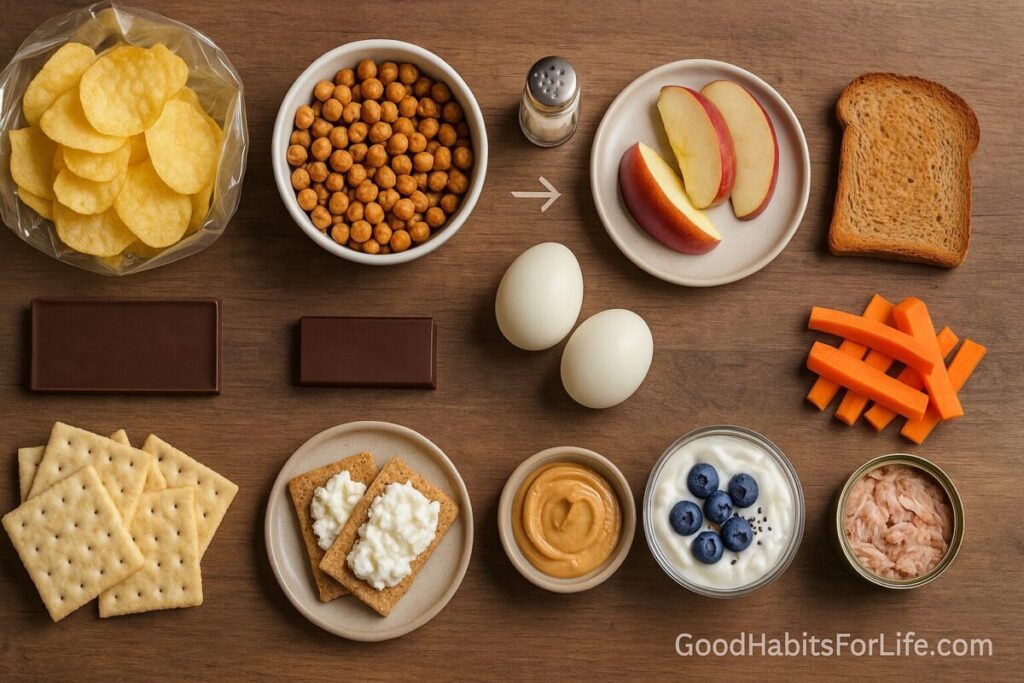
Snack Swaps on a Budget: Better Bites for Less: Protein-Forward Plan (2025)
Snack Swaps on a Budget (2025): Protein-Forward Picks
Table of Contents
🧭 What this guide covers & why it works
Snacks fill the gaps between meals—but many packaged options are high in refined carbs and low in protein and fiber, which can spike hunger soon after eating. A protein-forward approach (aiming for ~10–20 g protein plus fiber and healthy fats) improves satiety, supports muscle maintenance, and helps overall diet quality without raising costs when you choose simple, minimally processed foods (e.g., legumes, eggs, dairy, canned fish, nuts, whole grains). Evidence links higher-protein patterns with better appetite control and weight management when total calories are sensible and protein comes from varied sources. See References.
Targets to keep it easy
-
Per snack: 150–300 kcal; Protein: 10–20 g; Fiber: ≥3 g.
-
Macro pattern: P-F-F = Protein + Fiber + (healthy) Fat.
✅ Quick Start: Today’s 10-Minute plan
-
Pick two swaps from the list below that you can assemble with what you have.
-
Protein check: ensure each snack hits 10–20 g protein; add a side (fruit/veg) if needed.
-
Assemble grab-and-go packs (containers or zip bags): nuts, roasted chana, boiled eggs, yogurt tubs.
-
Shop smart in 5 minutes: add store-brand Greek yogurt, eggs, dry beans/chickpeas/lentils, peanut/groundnut butter, and whole-grain crackers or oats to your list.
-
Set a reminder: batch-prep twice this week (Sun/Wed).
🧠 7-Day Protein-Forward Snack plan (plug-and-play)
Daily goal: 2 snacks, each 10–20 g protein. Mix and match.
-
Mon:
-
A) 200 g Greek yogurt + 1 tbsp roasted seeds (≈20 g P)
-
B) Roasted chickpeas 60 g + orange (≈12 g P)
-
-
Tue:
-
A) 2 boiled eggs + cucumber sticks (≈13 g P)
-
B) Whole-grain toast + 1 tbsp peanut/groundnut butter (≈10 g P)
-
-
Wed:
-
A) Cottage cheese/paneer 80–100 g + tomato slices (≈15–18 g P)
-
B) Milk (250 ml) + unsweetened cocoa + ice (≈8–9 g P) + a handful of nuts (≈5–6 g P)
-
-
Thu:
-
A) Canned tuna/sardine on whole-grain crackers (≈18–20 g P)
-
B) Hummus 3 tbsp + carrots (≈8 g P) + a boiled egg (≈6–7 g P)
-
-
Fri:
-
A) Edamame (frozen) 150 g (≈16–18 g P)
-
B) Skyr/Greek yogurt cup (≈15–17 g P)
-
-
Sat:
-
A) Lentil cheela/chilla (1 medium) + yogurt dip (≈14–18 g P)
-
B) Trail mix (roasted chana + peanuts + a few raisins) (≈10–12 g P)
-
-
Sun:
-
A) Oats (40 g) cooked in milk + 1 tbsp peanut butter (≈14–16 g P)
-
B) Paneer cubes air-fried + salsa (≈15–18 g P)
-
Tip: If you’re vegetarian/egg-free, lean on dairy, soy (edamame, tofu), lentils/beans, roasted chana, nuts/seeds, and high-protein grains like dalia + milk or quinoa.
🛠️ Techniques & frameworks
Read labels fast
-
Protein rule: ≥10 g protein per serving for a “protein-forward” snack.
-
Sugar cap: ≤8–10 g added sugar per serving (less is better).
-
Fiber floor: ≥3 g per serving.
-
Ingredient scan: short lists; legumes, dairy, whole grains, nuts/seeds near the top.
Batch-prep once, snack all week
-
Boil 8–12 eggs (keep 4–5 days refrigerated).
-
Roast 3 cups chickpeas/chana with salt + spices (dry well first).
-
Portion yogurt into tubs; prep a seed/nut sprinkle jar.
-
Cut veg sticks (carrot, cucumber, capsicum) and store in cold water.
Store tactics that cut costs
-
Buy store brands, frozen veg/edamame, and bulk legumes.
-
Choose whole items (block paneer vs pre-cut; large yogurt tubs vs single-serve).
-
Keep a “protein shelf”: eggs, yogurt/skyr, cottage cheese/paneer, roasted chana/peanuts, canned fish, dry lentils.
-
Use unit pricing: compare ₹/100 g protein where possible.
📦 Budget snack swaps list (protein-forward upgrades)
(Protein values are approximate; brands vary. Prices vary by region—use store brands for best value.)
| Instead of… (≈protein) | Swap to… (≈protein) | Why it’s better | Quick build |
|---|---|---|---|
| Potato chips (2–3 g) | Roasted chickpeas/chana 60 g (12–15 g) | More protein + fiber; cheaper per satiety | Roast with chili, cumin, salt |
| Chocolate bar (2–4 g) | Greek yogurt 200 g + cocoa + 1 tsp honey (18–20 g) | Protein + calcium; sweet fix | Stir and chill 5 min |
| Sugary biscuit pack (3–4 g) | Peanut/groundnut butter (1 tbsp) on whole-grain toast (10–12 g) | Protein + fiber; lower sugar | Add banana slices |
| Instant noodles cup (6–8 g) | Lentil cheela + yogurt (14–18 g) | Higher protein, fewer empty cals | Make batter once, cook fast |
| Juice box (0 g) | Milk 250 ml + ice + instant coffee/cocoa (8–9 g) | Protein + micronutrients | Blend 30 sec |
| Pastry (4–5 g) | 2 boiled eggs + veg sticks (13–14 g) | Portable, very low cost per protein | Salt + pepper |
| Fried samosa (5–6 g) | Paneer cubes 100 g air-fried (17–20 g) | High protein; crisp without deep fry | Toss in spices |
| Flavoured puffed snack (2–3 g) | Edamame (frozen) 150 g (16–18 g) | Complete plant protein | Microwave/steam 3–4 min |
| Sweetened yoghurt cup (5–7 g) | Plain skyr/Greek yogurt + fruit + seeds (18–20 g) | Cuts added sugar; adds fiber | Top with apple, chia |
| Granola bar (3–6 g) | Roasted chana + peanuts trail mix 40 g (10–12 g) | Fewer syrups, more protein | Add a few raisins for taste |
Rule of thumb: If the first ingredient is legume, dairy, egg, fish, soy, nut/seed, or whole grain, you’re likely winning.
📚 Audience variations
Students (hostel/PG): electric kettle + microwave = oats in milk, eggs, roasted chana, yogurt cups; buy in mini bulk with roommates.
Parents & kids: keep a “green box” at eye level with yogurt pouches, fruit, nuts; pre-approve 5 school-snack combos.
Busy professionals: desk drawer kit—nuts, roasted chana, whole-grain crackers, tuna pouch; calendar 2×/week for prep.
Seniors: softer options—yogurt, paneer, dal soup in mugs, mashed chickpea dip; ensure hydration and texture-friendly choices.
⚠️ Mistakes & myths to avoid
-
Myth: “High-protein snacks are expensive.” Reality: basics (eggs, legumes, dairy) are among the cheapest per gram of protein.
-
Mistake: relying on “protein” claims without checking actual grams and serving size.
-
Mistake: forgetting fiber—pair protein with fruit/veg or whole grains.
-
Myth: “All fats are bad.” Nuts/seeds and dairy provide helpful fats that improve fullness.
-
Mistake: grazing all day; set 2 snack windows to avoid extra calories.
🗣️ Real-life examples & scripts
-
At the store: “If this has <10 g protein/serving, I’ll choose the store-brand Greek yogurt or roasted chana instead.”
-
At the office café: “Make mine yogurt + fruit + seeds, please.”
-
With kids: “Pick one from each: protein (yogurt/eggs), crunch (carrots/crackers), color (fruit).”
-
On the go: “Two boiled eggs and a banana—done.”
🧰 Tools, apps & resources
-
Unit-price calculator on your phone for ₹/100 g protein.
-
Label scanning apps (no endorsement): use to read protein, fiber, and sugar quickly.
-
Kitchen basics: electric kettle, microwave/air fryer, lunch boxes, ice packs, grocery list template.
✅ Key takeaways
-
Build snacks around protein + fiber + healthy fat.
-
Hit 10–20 g protein per snack; keep calories reasonable (150–300 kcal).
-
Use simple, affordable foods: legumes, eggs, dairy, soy, nuts/seeds, whole grains.
-
Batch-prep twice weekly and keep a protein shelf.
-
Compare unit price and choose store brands and frozen where it makes sense.
❓ FAQs
1) What are the cheapest high-protein snacks?
Eggs, roasted chickpeas/chana, store-brand Greek yogurt/skyr, peanut/groundnut butter on whole-grain toast, and paneer or cottage cheese portions.
2) How much protein should a snack have?
Aim for 10–20 g. Add a small fruit/veg to boost fiber and micronutrients.
3) Are protein bars worth it on a budget?
Sometimes, but many are pricey and sugary. Compare ₹/gram of protein; often yogurt, eggs, or legumes beat bars on cost and nutrition.
4) I’m vegetarian—how do I reach 20 g?
Combine dairy/soy with legumes: Greek yogurt + roasted seeds, paneer + veg, edamame bowls, dal cheela with yogurt.
5) Can I snack at night?
Yes, keep it light and protein-forward (e.g., yogurt or warm milk) and avoid large sugary snacks that can disrupt sleep.
6) What about kids?
Focus on real foods: yogurt + fruit, paneer cubes + chapati triangles, boiled egg + veggie sticks. Watch choking hazards for little ones.
7) How do I prevent overeating nuts?
Pre-portion ~20–25 g (a small handful) into containers.
8) Is canned fish okay?
Yes—look for fish packed in water, check sodium, and pair with whole-grain crackers or veg.
9) Do I need “low-fat” for budget snacks?
Not necessarily. Choose minimally processed foods; total calories and portion size matter more than strict fat avoidance.
10) What if I’m lactose-intolerant?
Use lactose-free milk/yogurt, soy yogurt, tofu/edamame, eggs, legumes, and nuts/seeds.
📚 References
-
Harvard T.H. Chan School of Public Health. Protein—Healthy protein sources & guidance. https://www.hsph.harvard.edu/nutritionsource/what-should-you-eat/protein/
-
USDA MyPlate. Protein Foods Group—tips and portions. https://www.myplate.gov/eat-healthy/protein-foods
-
Rolls BJ. The relationship between dietary energy density and energy intake. (Overview on satiety/energy density). https://www.ncbi.nlm.nih.gov/pmc/articles/PMC4103735/
-
British Nutrition Foundation. Snacking—practical guidance. https://www.nutrition.org.uk/putting-it-into-practice/healthy-eating/snacking/
-
National Institutes of Health / PubMed. Protein intake and satiety: reviews. (e.g., Westerterp-Plantenga et al.) https://pubmed.ncbi.nlm.nih.gov/19943985/
-
American Heart Association. Healthy snacking basics. https://www.heart.org/en/healthy-living/healthy-eating/eat-smart/nutrition-basics/healthy-snacking
Disclaimer
This guide is educational and not a substitute for personalized nutrition or medical advice; consult a qualified professional for individual needs.