
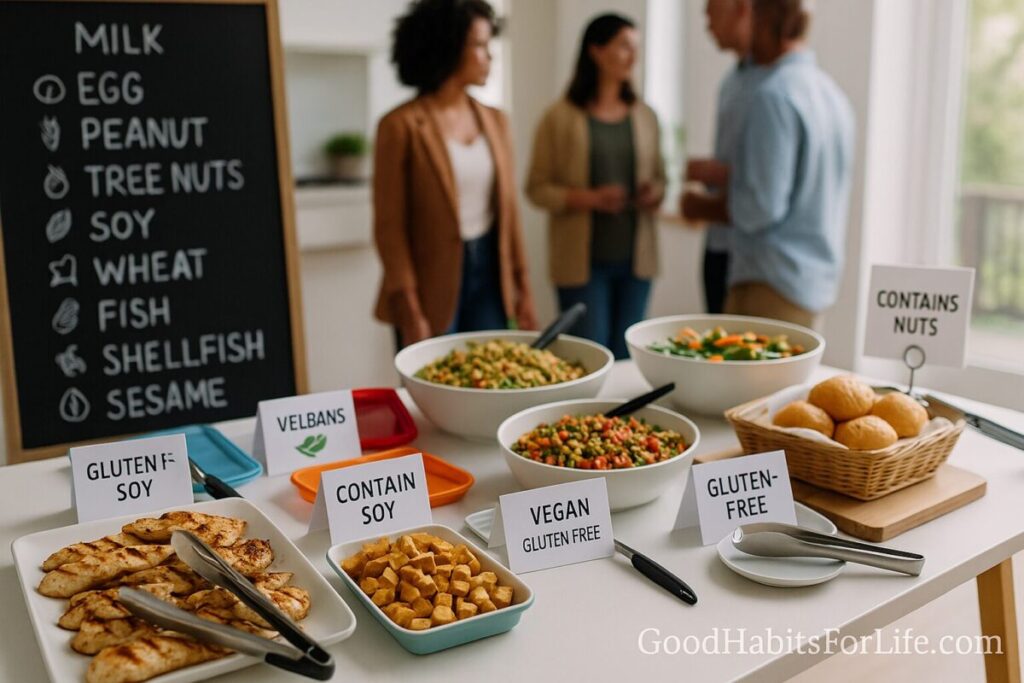
AllergyAware Hosting: Labels, Menus & Kindness: Protein-Forward Plan (2025)
Allergy-Aware Hosting: Labels, Menus & Protein-First (2025)
Table of Contents
🧭 What & Why: Allergy-Aware, Protein-First Hosting
Allergy-aware hosting means planning food and service so that guests with food allergies can eat safely and feel included. It’s not only courteous—it reduces real risk of reactions triggered by common allergens (e.g., milk, egg, peanut, tree nuts, soy, wheat, fish, shellfish, and sesame). Clear labels and cross-contact prevention are central to safety, and a protein-first approach keeps meals satisfying for everyone (protein boosts satiety and helps stabilize appetite), even when certain staples (e.g., nuts or dairy) are off the table.
Benefits
-
Lower risk of accidental exposure via clear labeling and prep separation.
-
Higher guest satisfaction: protein-forward dishes (e.g., legumes, meats, tofu, eggs) reduce “just sides” experiences for restricted eaters.
-
Better planning discipline for hosts and caterers; easier leftover handling with labeled containers.
✅ Quick Start: Your 7-Step Host Checklist
-
Invite kindly: Ask for allergies/intolerances on the invitation (“Any allergies? Please share specifics.”).
-
Collect & confirm: Make a list with guest names + allergens; confirm two days before.
-
Design the menu: Choose 2–3 protein-forward mains with safe-swap variants (e.g., egg-free mayo, dairy-free yogurt).
-
Source smart: Read labels; prefer certified allergen-controlled products; avoid bulk bins for severe nut allergies.
-
Prep safely: Create a Safe Zone on your counter with dedicated board/knife; prep safe foods first; store covered.
-
Label everything: Cards that say Contains / May contain / Safe for; place by every dish and on serving platters.
-
Serve with a plan: Put safe dishes first in the line; use separate utensils; brief helpers; know where the guest’s meds are.
🛠️ Labeling That Works (Templates + Color-Coding)
Card template (print or write):
Dish: ___ | Protein per serve: ___ g
Contains: ___ (e.g., milk, wheat)
May contain traces: ___ (if applicable)
Safe for: ___ (e.g., nut-free, gluten-free)
Prep note: prepared in separate zone / shared kitchen
Color-coding idea
-
Green = prepared in safe zone for named allergens.
-
Yellow = generally safe but made in shared kitchen.
-
Red = contains one or more listed allergens.
Buffet flow
-
Safe items first → 2) General items → 3) Known-allergen items last, on their own table if possible.
🍽️ Protein-First Menu: Safe, Satisfying & Flexible
Below is a sample, mix-and-match menu with approximate protein per serving and common allergen notes. Always verify ingredients.
| Dish | Protein (per serve) | Contains | Safe For | Notes |
|---|---|---|---|---|
| Lemon-Herb Chicken Thighs | 28 g | — | gluten-free, nut-free, dairy-free | Use olive oil; check spice blends for allergens. |
| Smoky Chickpea & Quinoa Pilaf | 16 g | — | vegan, gluten-free, nut-free | Rinse quinoa; cook in veg stock labeled allergen-safe. |
| Baked Salmon with Dill | 30 g | fish | gluten-free, nut-free, dairy-free | Keep separate from non-fish dishes; separate utensil. |
| Tofu & Broccoli Stir-Fry (Tamari) | 20 g | soy | gluten-free, nut-free, dairy-free | Use certified gluten-free tamari not regular soy sauce. |
| Egg-Free Creamy Potato Salad | 5 g | — | egg-free, nut-free | Use aquafaba or dairy-free yogurt; label clearly. |
| Dairy-Free Green Pesto Pasta | 12 g | — | dairy-free, nut-free (if seed-based) | Make pesto with pumpkin/sunflower seeds; avoid pine nuts. |
| Lentil Shepherd’s Pie | 22 g | — | vegan, nut-free | Mash with olive oil and oat drink labeled gluten-free (if needed). |
| Fruit Platter + Dark Chocolate Squares | 3 g | check label (may contain) | varies | Choose chocolate from a nut-free facility if needed. |
Smart swaps
-
Nut-free “pesto” → pumpkin/sunflower seeds + basil + olive oil.
-
Gluten-free pasta → rice/corn/quinoa blends, label brand.
-
Dairy-free creaminess → silken tofu, oat/coconut yogurt, or cashew-free seed creams if nut-free is required.
-
Egg-free mayo → aquafaba-based or certified vegan mayo.
📅 7-Day Hosting Countdown (Habit Plan)
Day −7: Send invites with allergy question; create a guest-allergen sheet.
Day −5: Finalize menu; map safe swaps; list specific brands you’ll buy.
Day −3: Shop shelf-stable items; order specialty products if needed.
Day −2: Confirm guest allergens; clean Safe Zone; label containers/utensils.
Day −1: Prep safe dishes first; store covered and labeled; set up signage.
Day 0 (AM): Arrange buffet flow; brief helpers; place safe dishes and utensils first.
Day 0 (Event): Keep serving utensils with their dish; refresh labels if moved; check in kindly with allergic guests.
🧠 Techniques & Frameworks (SAFE-FEAST)
Use this quick framework at every event.
S A F E – F E A S T
-
Seek specifics (ask allergens by name; note anaphylaxis history).
-
Audit labels (ingredients + “may contain” + facility statements).
-
Food flow (safe-first on buffet; isolate known-allergen items).
-
Equipment separation (boards/knives/utensils; color-code).
-
Freeze or cover safe food promptly after prep.
-
Educate helpers (one-minute briefing).
-
Act on cross-contact (change gloves; wipe surfaces with hot, soapy water, then sanitize).
-
Stock backups (sealed single-serve safe items).
-
Track aftercare (label leftovers; provide guest with package labels if requested).
👥 Audience Variations
Parents / Kids’ parties:
-
Offer bento-style trays; keep a sealed, clearly safe box for the allergic child.
-
Stickers on cups/plates to avoid swaps; avoid communal dips.
Students / Potlucks:
-
Use a shared spreadsheet for dish + full ingredient list + “contains/may contain.”
-
Bring your own serving utensil; host supplies spare, labeled ones.
Professionals / Office events:
-
Provide two safe mains and a sealed single-serve option; send menu/labels ahead via email.
-
Ask caterer for an allergen matrix; place it near the buffet.
Seniors:
-
Include softer proteins (braised lentils, fish, tofu); font-large labels; seat service if mobility is limited.
⚠️ Mistakes & Myths to Avoid
-
Myth: “Picking out nuts is enough.” → Fact: Allergen proteins linger; cross-contact makes foods unsafe.
-
Mistake: Re-using a cutting board/knife between dishes.
-
Mistake: Assuming “vegan” = dairy/egg/nut safe; always check facility statements.
-
Myth: “Gluten-free is only a preference.” → For some, it’s essential (e.g., coeliac disease).
-
Mistake: Unlabeled sauces and dressings—common hidden allergens (soy, sesame, dairy).
💬 Scripts & Real-Life Examples
Invitation line:
“We’re planning an allergy-aware menu. Do you or your child have any food allergies? Please share specifics (e.g., ‘peanut, anaphylaxis’) by DD/MM.”
Follow-up (48h before):
“Quick check: I have you down as sesame and peanut. We’ll have separate utensils and safe dishes first in line. Anything else to note?”
Buffet micro-brief (to helpers):
“Green cards are safe-zone foods—serve those first, keep their utensils there. Red cards contain allergens and stay on the right table. If a utensil moves, replace it.”
Guest kindness script:
“I’ve set two options that should be safe for you. Labels list brands; tell me if you’d like to see any packages. No pressure to eat anything that feels uncertain.”
Leftover handoff:
“Here’s a portion of the safe dish sealed with the same label used today; ingredients are noted on the card inside.”
🧰 Tools, Apps & Resources
-
Printable allergen cards (Word/Docs): quick customization; keep a master copy for future events.
-
Apps: AllergyEats (US restaurants), Spokin (allergy community tips), Yuka/CodeCheck (ingredient scanning—verify reliability).
-
Shopping: Prefer brands with clear “free-from” labeling and dedicated facilities.
-
Thermometers & timers: Keep hot foods ≥60 °C (≥140 °F) and cold foods ≤5 °C (≤41 °F).
Image sourcing for labels/menus: Pixabay, Pexels, Unsplash—license-free; search “food label,” “allergen icons,” “buffet cards.”
🔑 Key Takeaways
-
Ask early, confirm late, and label always.
-
Separate prep + utensils prevent cross-contact.
-
Protein-first menus make “safe” feel satisfying, not second-best.
-
Serve safe dishes first; keep allergen dishes separate.
-
Kindness and clarity are the best ingredients.
❓ FAQs
1) What’s the difference between “contains” and “may contain”?
“Contains” lists ingredients present. “May contain” warns of possible cross-contact in manufacturing; for severe allergies, avoid these unless confirmed safe.
2) Are “vegan” or “plant-based” labels automatically safe for dairy/egg allergies?
No. These terms describe intent, not facility controls. Check for allergen statements and contact manufacturers if unsure.
3) Is gluten-free the same as wheat-free?
Not always. Gluten is found in wheat, barley, rye (and their hybrids). Some wheat-free foods may still contain gluten from other grains.
4) How do I prevent cross-contact in a tiny kitchen?
Make a Safe Zone: clean a section thoroughly, prep safe foods first, use dedicated utensils, and cover/stow immediately.
5) What’s the safest serving order for a buffet?
Safe dishes first, then general items, then known-allergen dishes last and separate—with their own utensils.
6) What about desserts?
Plan at least one sealed safe dessert (e.g., labeled dairy-free sorbet cups) plus fresh fruit; avoid bakery items from mixed facilities if nut-free is critical.
7) How much protein should I target per main?
Aim for 20–30 g per adult serving, adjusting for dietary needs. Provide plant and animal options.
8) Should I keep packages?
Yes—place them behind the buffet for quick ingredient checks.
9) Do I need epinephrine on site?
Guests with severe allergies usually carry their own auto-injector. Know where it is, but they should retain control and administer if needed; call emergency services for any serious reaction.
10) Can I rely on “free-from” claims alone?
Use them as a screening tool, then verify with the ingredient list and, when needed, the manufacturer’s allergen control information.
📚 References
-
Centers for Disease Control and Prevention (CDC). Food Allergies. https://www.cdc.gov/foodsafety/food-allergy.html
-
U.S. Food & Drug Administration (FDA). Food Allergens and Labeling (FALCPA; the “Big 9”). https://www.fda.gov/food/food-labeling-nutrition/food-allergens
-
National Institute of Allergy and Infectious Diseases (NIAID). Food Allergy Overview. https://www.niaid.nih.gov/diseases-conditions/food-allergy
-
NHS (UK). Food Allergy. https://www.nhs.uk/conditions/food-allergy/
-
European Commission. Food Allergens & EU Food Information to Consumers. https://food.ec.europa.eu/safety/chemical-safety/food-allergens_en
-
ASCIA (Australasian Society of Clinical Immunology and Allergy). Food Allergy—Practical Guides. https://www.allergy.org.au/patients/food-allergy
-
Harvard T.H. Chan School of Public Health. Protein—Nutrition Source. https://www.hsph.harvard.edu/nutritionsource/what-should-you-eat/protein/
-
FARE (Food Allergy Research & Education). Best Practices for Dining Out & Social Events. https://www.foodallergy.org/
Disclaimer
This article provides general information on food allergies and hosting; it is not medical advice—always follow your clinician’s guidance and emergency instructions.