
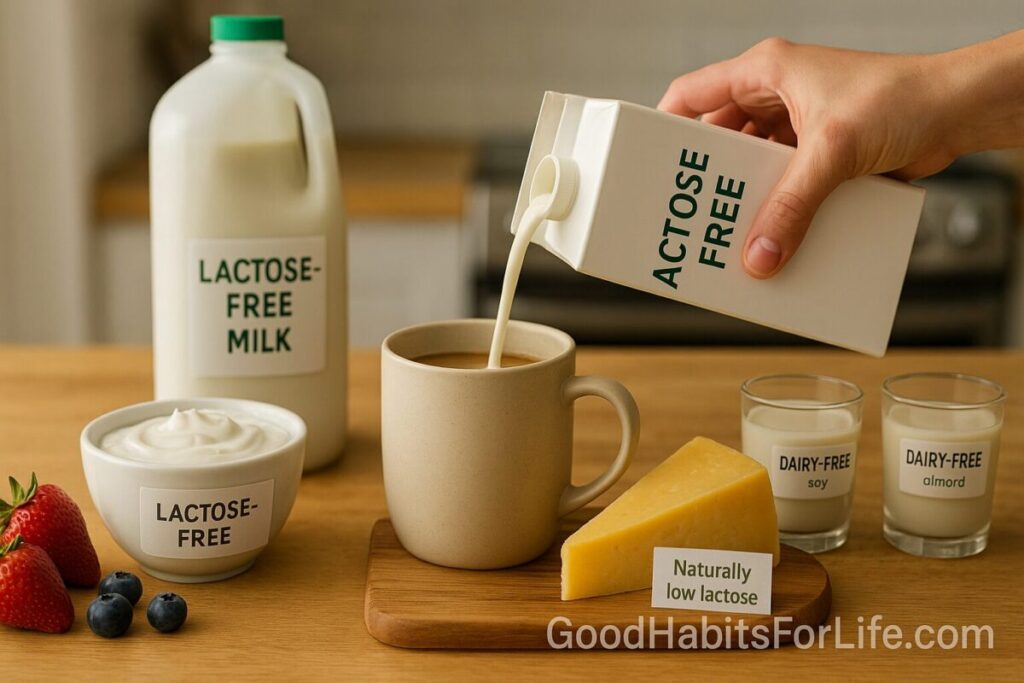
LactoseFree Living: Dairy Swaps that Taste Good
Lactose-Free Living: Dairy Swaps That Taste Good
Table of Contents
🧭 What “Lactose-Free” Really Means (and Why It Helps)
Lactose is the natural sugar in milk. People with lactose intolerance don’t make enough lactase (the enzyme that breaks lactose into digestible sugars). Common symptoms after dairy include bloating, gas, cramps, and diarrhea. “Lactose-free” products either remove lactose (filtration) or add lactase to pre-digest it, so most people with lactose intolerance tolerate them well.
Why go lactose-free?
-
Comfort: Less GI distress → more energy and better focus.
-
Diet quality: With the right swaps, you’ll still hit key nutrients (calcium, protein, vitamin D, B12).
-
Taste continuity: Many lactose-free and aged options taste nearly identical to their dairy counterparts, so habits are easy to keep.
Dairy-free vs lactose-free:
-
Lactose-free milk/cheese/yogurt can still be cow’s milk (just without lactose).
-
Dairy-free products contain no milk; they’re made from plants (soy, oat, almond, coconut, pea, etc.).
Choose lactose-free when you want classic dairy taste; choose dairy-free if you avoid milk entirely (allergy, vegan diet, religious or personal reasons).
✅ Quick Start: Make Three High-Impact Swaps Today
-
Your daily drink: Replace regular milk in tea/coffee/cereal with lactose-free cow’s milk or a fortified soy/pea drink.
-
Breakfast base: Swap regular yogurt for lactose-free yogurt or strained Greek-style (often lower in lactose), or soy/coconut yogurt (fortified).
-
Cooking & topping: Use aged hard cheese (e.g., Parmesan, mature cheddar) sparingly—naturally very low in lactose—or a lactose-free cheese for melting.
Label check in 10 seconds:
-
Look for “lactose-free” or “dairy-free.”
-
Prefer unsweetened varieties (especially plant drinks/yogurts).
-
Check calcium (≈ 240–300 mg per 240 mL) and vitamin D/B12 fortification.
🛠️ The Swap Guide: Best Options by Food
Milk (for drinking, tea/coffee, cereal, baking)
-
Lactose-free cow’s milk: Same taste, same protein (~8 g per 240 mL), naturally a touch sweeter because lactose is split into simpler sugars. Excellent in tea/coffee, baking, sauces.
-
Soy drink (fortified): Most “dairy-like” nutrition among plants (~6–8 g protein), neutral to beany flavor depending on brand.
-
Pea protein drink (fortified): ~7–8 g protein, smooth mouthfeel, good in coffee and cooking.
-
Oat drink (fortified): Creamy texture; lower protein (~2–3 g). Great for frothing.
-
Almond drink (fortified): Light; very low protein (~1 g).
-
Coconut drink (fortified): Rich mouthfeel; minimal protein; distinct flavor.
Tip: For kids and older adults who rely on milk for nutrients, favor lactose-free dairy or fortified soy/pea for protein parity.
Yogurt
-
Lactose-free yogurt (cow’s milk): Closest taste and protein.
-
Greek/strained yogurt: Fermentation + straining lowers lactose; many people tolerate it (test your own response).
-
Plant yogurts: Soy (highest protein), coconut (rich but low protein), almond/oat (light). Choose fortified and unsweetened.
Cheese
-
Naturally low-lactose cheeses: Aged hard cheeses (Parmesan, mature cheddar, Swiss/Gruyère), many semi-hard (Gouda) and blue cheeses; the longer the aging, the less lactose remains.
-
Lactose-free cheese: Cow’s milk cheese treated with lactase—melts like the original (great for pizza/toasties).
-
Fresh cheeses to limit/test: Ricotta, cottage, cream cheese, paneer—higher residual lactose (some tolerate small amounts).
Butter & Ghee
-
Butter: Very low lactose; many people tolerate small amounts.
-
Ghee (clarified butter): Essentially lactose-free and perfect for high-heat cooking; nutty flavor.
-
Plant-based spreads: Olive/avocado-oil–based for dairy-free cooking.
Cream & Creamers
-
Lactose-free cream or half-and-half: Works in sauces, soups, coffee.
-
Coconut cream: Rich, slightly sweet; brilliant for curries and desserts.
-
Barista oat/pea creamers: Foam well; choose unsweetened to avoid hidden sugars.
Ice Cream & Desserts
-
Lactose-free dairy ice cream: Tastes like the original.
-
Coconut/oat/almond/soy ice creams: Wide flavors; check sugars.
-
Sorbet/fruit bars: Naturally dairy-free; pair with dark chocolate chips or nuts for texture.
Baking & Cooking
-
1:1 swaps: Lactose-free milk behaves like milk in pancakes, custards, white sauce.
-
Plant options: Oat for body; soy/pea for protein; coconut for richness.
-
Cheese flavor in sauces: Use aged Parmesan (grated) for umami with minimal lactose; or nutritional yeast for dairy-free “cheesy” notes.
📊 Nutrition Match-Ups (Protein, Calcium, B12, Iodine)
| Beverage (240 mL / 1 cup) | Protein | Typical Fortification | Notes |
|---|---|---|---|
| Lactose-free cow’s milk | ~8 g | Calcium, Vit D, often B12 & iodine (varies by country) | Closest nutrient match |
| Fortified soy drink | ~6–8 g | Calcium, Vit D, B12 (and sometimes iodine) | Best plant match overall |
| Fortified pea drink | ~7–8 g | Calcium, Vit D, B12 | Smooth, neutral taste |
| Fortified oat drink | ~2–3 g | Calcium, Vit D, B12 | Creamy, good in coffee |
| Fortified almond drink | ~1 g | Calcium, Vit D, B12 | Light, low calories |
| Coconut drink | <1 g | Often Ca/D/B12 | Distinct flavor, low protein |
Key points:
-
Protein parity: If milk is a key protein source, choose lactose-free, soy, or pea.
-
Calcium & vitamin D: Prefer fortified options to reach ~1,000 mg calcium/day for most adults (needs vary by age/sex); vitamin D helps absorption.
-
Vitamin B12: Naturally abundant in dairy; for dairy-free patterns, ensure B12-fortified foods or supplements.
-
Iodine: Cow’s milk is a meaningful source in some countries; many plant drinks lack iodine—seek iodine-fortified products or include seafood/iodized salt as appropriate.
📅 7-Day Starter Plan
Goal: Discover 3–5 swaps you love, hit nutrient targets, and avoid symptoms.
-
Day 1 (Kitchen reset):
-
Remove obvious lactose sources you overuse.
-
Add: lactose-free milk, soy/pea drink, one lactose-free yogurt, one aged cheese, coconut cream, sorbet.
-
Print a 1-page label checklist.
-
-
Day 2 (Morning focus):
-
Coffee/tea with lactose-free or soy/pea.
-
Breakfast: yogurt + fruit + nuts (choose lactose-free or soy).
-
Note symptoms (0–10 scale).
-
-
Day 3 (Lunch):
-
Sandwich/wrap with aged cheddar or lactose-free cheese; add salad.
-
Try oat drink in afternoon latte.
-
-
Day 4 (Dinner):
-
Creamy curry or pasta using coconut cream or lactose-free cream; Parmesan sprinkle.
-
Evaluate comfort 2–4 hours later.
-
-
Day 5 (Dessert test):
-
Lactose-free ice cream vs plant-based; compare taste + tolerance.
-
-
Day 6 (Baking):
-
Pancakes or muffins with lactose-free milk (1:1).
-
Freeze portions for busy days.
-
-
Day 7 (Lock it in):
-
Pick your default milk, default yogurt, and two cheeses.
-
Save them as favorites in your grocery app; set a monthly reminder to restock.
-
Checkpoint: If symptoms persist despite strict lactose reduction, consider portions of other FODMAPs, or speak with a healthcare professional to rule out other causes.
🧠 Techniques & Frameworks to Stay Consistent
-
Swap, don’t stop: Replace your top 3 dairy uses (coffee, breakfast, cooking) rather than going “all or nothing.”
-
The “Default Shelf”: Keep your chosen milk/yogurt/cheese visible on the front shelf; hide or avoid trigger items.
-
Symptom Journal (2 minutes): Record foods, portion size, timing, and a 0–10 comfort score. Patterns emerge in a week.
-
Portion testing: Many people tolerate aged cheese or ≤12 g lactose/day spread out; your mileage varies—test deliberately.
-
Nutrient parity check: Once a week, glance at calcium, protein, and B12 in your food tracker; adjust with fortified foods or a supplement if advised by your clinician.
👥 Variations: Students, Parents, Professionals, Seniors, Teens
-
Students: Stock long-life UHT lactose-free milk or fortified soy; instant oats, peanut butter, and tinned fish help hit protein and calcium.
-
Parents: For children, prioritize protein + calcium; consult a pediatric professional if growth or intake is a concern. Pack lactose-free yogurt tubes and cheese sticks; choose unsweetened plant drinks if used.
-
Busy professionals: Default to barista-style oat/pea for office coffee; keep ghee or olive oil at home for quick sautéing; batch-cook a coconut-milk curry.
-
Seniors: Focus on protein at each meal (yogurt, lactose-free milk shakes, soy tofu/tempeh) and vitamin D; check medications for lactose fillers if ultra-sensitive (speak to your pharmacist).
-
Teens: Smoothies with lactose-free milk + banana + peanut butter; cheese on toast using aged cheddar; encourage label reading as a life skill.
⚠️ Mistakes & Myths to Avoid
-
Myth: “All cheese is off limits.”
Reality: Aged cheeses are very low in lactose; many people tolerate them well. -
Mistake: Swapping to plant drinks without fortification or with high sugar; you’ll miss calcium/B12 and overdo sweetness.
-
Myth: “Butter is loaded with lactose.”
Reality: Butter is very low in lactose; ghee is effectively lactose-free. -
Mistake: Assuming all gut symptoms = lactose. IBS, celiac disease, milk protein allergy, or other FODMAPs can also trigger symptoms—get a professional assessment if uncertain.
-
Myth: “Lactose-free means flavor-free.”
Reality: Lactase-treated milk tastes slightly sweeter and works perfectly in tea/coffee and desserts.
💬 Real-Life Scripts (Cafés, Friends, Work Events)
-
At a café: “Could I have a flat white with lactose-free milk (or soy/oat), unsweetened, please?”
-
At a friend’s: “I’m lactose-intolerant, but aged cheeses/lactose-free options are perfect—can I bring a lactose-free ice cream to share?”
-
At work catering: “Please include lactose-free milk and a soy or pea option; label yogurt and desserts clearly.”
-
In restaurants: “I’m avoiding lactose. Could you make that sauce with oil or ghee instead of butter/cream, or serve on the side?”
🧰 Tools, Apps & Resources
-
Grocery apps: Save your default lactose-free milk/yogurt/cheese as favorites; set a monthly restock reminder.
-
Nutrition trackers (e.g., Cronometer, MyFitnessPal): Monitor calcium, protein, vitamin D/B12.
-
Recipe sites/filters: Search for “lactose-free” or “dairy-free”; bookmark 5 quick meals (stir-fry with tofu, coconut dal, tomato-oat cream pasta, Greek-style yogurt bowls, sorbet + fruit).
-
Kitchen gear: Milk frother (works great with oat/pea/soy), microplane grater (Parmesan sprinkles = big flavor, minimal lactose).
🔑 Key Takeaways
-
Lactose-free ≠ dairy-free. Choose the lane that fits your goals and taste.
-
Match nutrients, not just taste. Favor lactose-free dairy or fortified soy/pea for protein parity.
-
Aged cheeses + ghee are your friends; many find them symptom-friendly.
-
Label literacy prevents sugar creep and nutrient gaps.
-
A 7-day, test-and-tweak approach finds your personal sweet spot fast.
❓ FAQs
Is lactose intolerance the same as milk allergy?
No. Lactose intolerance is a carb-digestion issue (enzyme deficiency). Milk allergy is an immune reaction to milk proteins and can be serious. Seek medical guidance for allergy concerns.
Can I tolerate small amounts of lactose?
Many people can, especially with aged cheeses or when lactose is spread across meals. Track your own limits.
Is yogurt easier to tolerate?
Often yes. Fermentation reduces lactose, and live cultures may aid digestion. Strained/Greek yogurts are typically lower than regular yogurt.
Will plant drinks stunt growth in kids?
Kids can thrive on lactose-free dairy or well-planned dairy-free diets. If using plant drinks, choose fortified, higher-protein options (soy/pea) and consult a pediatric professional.
Does taking lactase pills work?
They help many people digest lactose when eating out. Effect varies by brand/dose—trial and observe.
Is ghee really lactose-free?
Ghee is clarified; virtually all lactose and milk solids are removed. It’s commonly well-tolerated.
Do I need supplements?
Not always. If your pattern lacks calcium, vitamin D, B12, or iodine, consider fortified foods first; discuss supplements with a healthcare professional.
What about A2 milk?
A2 refers to a milk protein variant, not lactose content. Some people feel better on A2, but it isn’t a lactose-free product.
Can I make creamy sauces without cream?
Yes—use lactose-free cream, oat or coconut cream, or blend silken tofu with stock for a high-protein sauce.
📚 References
-
National Institute of Diabetes and Digestive and Kidney Diseases (NIDDK). Lactose Intolerance. https://www.niddk.nih.gov/health-information/digestive-diseases/lactose-intolerance
-
NHS. Lactose Intolerance. https://www.nhs.uk/conditions/lactose-intolerance/
-
World Gastroenterology Organisation. Global Guidelines: Lactose Intolerance. https://www.worldgastroenterology.org/guidelines/global-guidelines/lactose-intolerance
-
Harvard T.H. Chan School of Public Health. The Nutrition Source: Calcium; Dairy Alternatives. https://www.hsph.harvard.edu/nutritionsource/
-
Academy of Nutrition and Dietetics. Plant-Based Milks and Fortification. https://www.eatright.org/
-
International Osteoporosis Foundation. Calcium and Vitamin D Recommendations. https://www.osteoporosis.foundation/
-
U.S. Department of Agriculture. FoodData Central (nutrient composition). https://fdc.nal.usda.gov/
-
American College of Gastroenterology. Patient Resources: Lactose Intolerance. https://gi.org/patients/
Disclaimer
This article provides general nutrition information and is not a substitute for personalized medical advice. If you have ongoing symptoms, consult a qualified healthcare professional.