
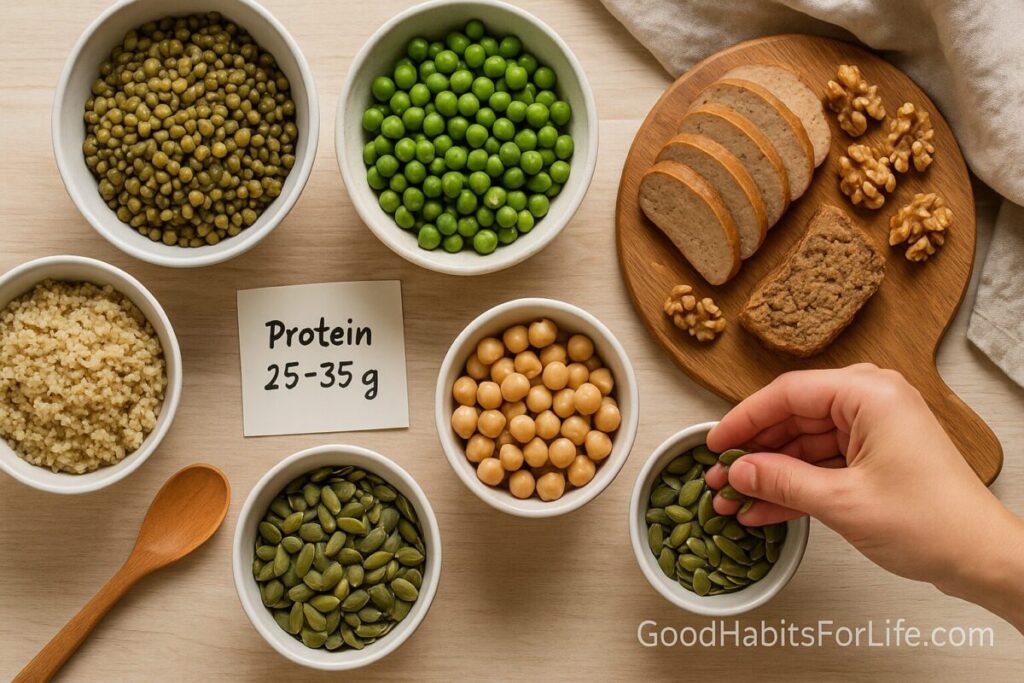
Vegan Protein Beyond Soy: Lentils, Peas, Seitan: Protein-Forward Plan (2025)
Vegan Protein Beyond Soy: Lentils, Peas, Seitan (2025)
Table of Contents
🧭 What & Why
What: A practical, soy-free vegan strategy to meet daily protein targets using lentils, peas, seitan, plus grains, nuts, and seeds.
Why it matters:
-
Adequate protein supports muscle maintenance, recovery, satiety, and healthy aging. Plant-based diets can supply all essential amino acids when varied across the day. Evidence shows total daily intake and essential amino acid distribution (especially leucine) drive muscle protein synthesis alongside resistance exercise.
-
Typical vegan dietary patterns are sometimes lower in protein density per bite than omnivorous diets. A protein-forward plan fixes that with higher-protein staples and smart meal structure.
Targets (general guidance):
-
Everyday active adults: ~1.2–1.6 g/kg/day protein (e.g., 72–96 g for a 60 kg person).
-
Per-meal anchor: 25–35 g protein typically delivers ~2–3 g leucine, a key threshold for muscle protein synthesis.
-
Distribution: 3 meals + a protein snack often works well.
Legumes are rich in lysine but relatively low in methionine; grains are the reverse. Combine them across the day (they don’t need to be in the same bite) for balanced amino acid intake.
✅ Quick Start: Today → This Week
Today (10–30 minutes):
-
Pick your daily goal: body mass (kg) × 1.2–1.6 g.
-
Plan 3 anchors of 25–35 g protein each (breakfast/lunch/dinner).
-
Shop one basket: 1 kg dry lentils; 2–3 cans chickpeas/beans; 1 pack seitan (or vital wheat gluten to make it); frozen peas; oats; whole-grain bread; brown rice; nuts; hemp or pumpkin seeds; olive oil; spices.
-
Cook once:
-
Pressure-cook lentils (plain + salt).
-
Batch seitan (simple broth simmer).
-
Freeze peas in small bags for quick toss-ins.
-
This week:
-
Rotate 3 quick bowls:
-
Lentil-rice bowl + tahini-lemon.
-
Seitan stir-fry + vegetables + rice noodles.
-
Green pea pesto pasta + hemp seeds.
-
-
Snack upgrade: roasted chickpeas or a nut/seed mix.
-
Lift 2–3×/week (bodyweight or weights) to maximize protein benefits.
🛠️ 30-60-90 Day Protein-Forward Roadmap
Days 1–30 (Foundation):
-
Master three base cooks: red lentils (15 min), brown/green lentils (25–30 min), basic seitan (60–75 min simmer).
-
Hit ≥1.2 g/kg/day with 3 protein anchors.
-
Track 3 days in an app (below) to learn your portions.
Days 31–60 (Density & Distribution):
-
Push to 1.4–1.6 g/kg/day if training.
-
Add leucine-rich boosts: peanuts, pumpkin seeds, hemp seeds.
-
Build a 10-minute sauce set (peanut satay, tomato-garlic, herb pesto, spicy gochujang).
Days 61–90 (Performance & Variety):
-
Introduce pea-protein pasta or high-protein breads.
-
Try batch-fermented lentil batters (e.g., dosa-style) for variety.
-
Dial in pre/post-workout: 25–35 g protein meal within ~3 h post-training.
🧠 Techniques & Frameworks
Protein Anchor Method (PAM): Start each meal by locking one anchor that delivers ~25–35 g protein, then add color (veg), carbs, and fats.
Legume+Grain Complementarity:
-
Pairings across the day: lentils + rice, chickpeas + whole-wheat pita, pea pesto + pasta, seitan + quinoa.
Leucine Lens:
-
Aim for ~2–3 g leucine per meal. In practice, ~30 g total protein from mixed plant sources usually suffices.
Batch-Cook + Sauce-Swap:
-
Cook 2 bases (lentils + seitan) on Sunday, then swap sauces to avoid boredom.
Gut-Friendly Prep:
-
Rinse legumes, soak if dry, cook thoroughly; introduce fiber gradually; consider spices like cumin, asafoetida, ginger.
📊 Protein Cheat Table
(Approximate values; cooked unless noted, per 100 g. Actual brands vary.)
| Food | Protein (g) | Notes |
|---|---|---|
| Seitan | 20–25 | Wheat gluten; very high protein, low lysine |
| Lentils (brown/green) | 8–10 | Lysine-rich; low methionine |
| Red lentils | 8–9 | Softer texture, quick cook |
| Chickpeas | 8–9 | Great for roasting/spreads |
| Black beans/kidney beans | 8–9 | Chili, tacos, bowls |
| Green peas | 5–6 | Frozen = ultra-convenient; pea pesto |
| Quinoa | 4–5 | Higher methionine vs legumes |
| Buckwheat | 3–4 | Gluten-free “grain” (pseudocereal) |
| Oats (dry) | ~13 | ~2–3 cooked; add seeds/nut butter |
| Peanuts | 25–26 | High leucine per gram; energy-dense |
| Pumpkin/hemp seeds | 24–32 | Great toppers; add 1–2 tbsp |
| Pea-protein pasta (dry) | 20–25 | Brand-dependent; check label |
👥 Audience Variations
Students: Microwave-friendly bowls; use canned legumes + frozen peas; keep nut/seed jars for sprinkle boosts.
Professionals: Prep 3 lunches in glass boxes (seitan + quinoa + veg + sauce).
Parents: Lentil sloppy joes, seitan “strips,” pea-pesto pasta; blend peas into sauces for picky eaters.
Seniors: Softer textures (red lentil dal, pea soups), focus on distribution (protein at breakfast).
Teens/athletes: Higher total protein (1.4–1.6 g/kg/day), simple shakes (pea-protein milk + oats + peanut butter).
⚠️ Mistakes & Myths to Avoid
-
Myth: “Plant proteins aren’t complete.”
Reality: A varied plant diet provides all essential amino acids; same-meal combining is not required—day-long variety is. -
Mistake: All carbs, no anchor. Always start meals with the protein anchor.
-
Mistake: Ignoring fiber-tolerance. Ramp legumes gradually; cook well; use spices.
-
Mistake: Relying only on salads. Add seitan, lentils, peas, seeds to raise density.
-
Mistake: Overlooking gluten—avoid seitan if you’re gluten-free or have coeliac disease.
🧪 Real-Life Examples & Scripts
Breakfast (25–35 g):
-
Savory oats: Oats + green peas + hemp seeds + nutritional yeast.
-
Toasts: Whole-grain toast + smashed chickpeas + pumpkin seeds.
Lunch (25–35 g):
-
Seitan stir-fry: 120 g seitan + veggies + rice noodles + peanut satay.
-
Lentil bowl: 200 g cooked lentils + brown rice + tahini-lemon + herbs.
Dinner (25–35 g):
-
Pea-pesto pasta: Pea-pasta + pea-basil pesto + walnuts.
-
Chili: Mixed beans + quinoa; top with crushed peanuts.
Snack (10–20 g):
-
Roasted chickpeas, peanut-date bites, or pea-protein yogurt with seeds.
Restaurant script:
“Can you do a bowl with extra beans/lentils or tofu alternative? If you have seitan or pea-protein pasta, I’ll take a double portion and add greens.”
Grocery script:
“I’m focusing on soy-free proteins—please point me to lentils, canned beans, seitan, pea-pasta, and pumpkin/hemp seeds.”
🧰 Tools, Apps & Resources
-
Cronometer / MyFitnessPal: Track protein and leucine approximations; verify labels.
-
Meal-prep containers (glass): Keep bases separate from sauces.
-
Pressure cooker or Instant Pot: Fast, consistent legumes.
-
High-speed blender: Pea pesto, hummus, seed sauces.
🔑 Key Takeaways
-
You can easily meet protein needs on a soy-free vegan plan with lentils, peas, seitan, grains, and seeds.
-
Use the Protein Anchor Method and distribute 25–35 g per meal.
-
Combine legumes + grains across the day for amino acid completeness.
-
Batch-cook bases, rotate sauces, and lift 2–3×/week for best results.
❓ FAQs
1) Can I build muscle on a soy-free vegan diet?
Yes—target 1.2–1.6 g/kg/day, distribute protein (25–35 g/meal), and lift 2–4×/week.
2) Do I need to combine foods in the same meal?
No. Complementarity works across the day—just include both legumes and grains regularly.
3) Is seitan healthy?
Seitan is high-protein but contains gluten and is low in lysine—pair with legumes and avoid if gluten-free or coeliac.
4) What if legumes bloat me?
Start small, cook thoroughly, rinse, consider soaking, and use digestive spices (cumin, ginger, asafoetida). Gradually increase fiber.
5) How do I hit ~100 g protein/day?
Three anchors (30–35 g each) + one 10–15 g snack. Example: seitan lunch, lentil dinner, pea-pesto pasta, plus roasted chickpea snack.
6) Are plant proteins “lower quality”?
Quality indices differ, but total intake + variety cover needs. Mind lysine (legumes) and methionine (grains), and aim for ~2–3 g leucine per meal.
7) Should I use pea-protein powders?
Optional. Many reach targets with whole foods; powders can help if appetite or time is limited.
8) What about kids or older adults?
Kids/teens often need more per kg due to growth; older adults benefit from consistent protein at each meal for muscle maintenance—consult a clinician or dietitian for personal targets.
9) Can I get B12 without animal foods?
B12 is not a protein issue but is essential on vegan diets—use fortified foods or a supplement per medical advice.
📚 References
-
Harvard T.H. Chan School of Public Health. The Nutrition Source: Protein.
-
World Health Organization (WHO). Protein and Amino Acid Requirements in Human Nutrition (2007).
-
FAO. Dietary protein quality evaluation in human nutrition (DIAAS/PDCAAS).
-
Academy of Nutrition and Dietetics. Position of the Academy: Vegetarian Diets.
-
British Dietetic Association. Protein (Food Fact Sheet).
-
International Society of Sports Nutrition. Position Stand: Protein and Exercise (2017).
-
USDA FoodData Central. Food composition database (lentils/peas/wheat gluten).
-
Harvard T.H. Chan School of Public Health. Plant-Based Diets.
⚖️ Disclaimer
This article is for general nutrition education and is not medical advice. Consult a qualified clinician or dietitian for personalized guidance.