
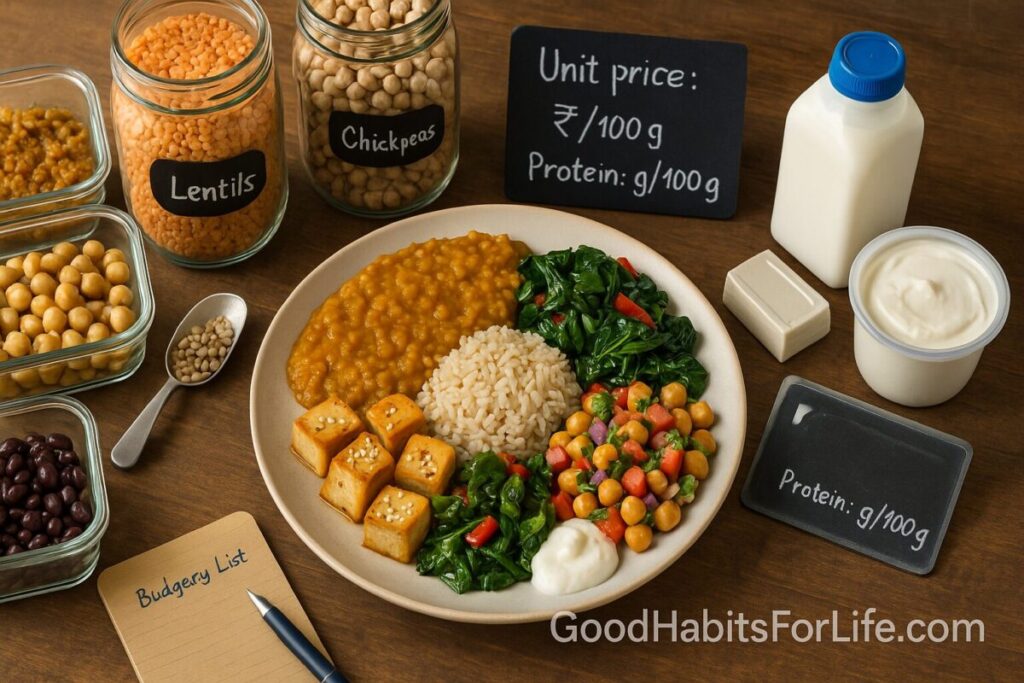
Vegetarian on a Budget (2025): ProteinForward Plates
Vegetarian on a Budget (2025): Protein-Forward Plates
Table of Contents
🧭 What “Protein-Forward” Means (and Why It Saves Money)
Protein-forward eating means planning your plate around the protein first, then adding a high-fiber carbohydrate, vegetables, and a small amount of healthy fat. For budget-minded vegetarians, this stops the “carb-heavy but still hungry” trap and supports better satiety, muscle maintenance, and stable energy. Evidence consistently links adequate protein and fiber with improved fullness and weight management, while a balanced pattern emphasizing minimally processed plants supports overall health.
Core idea:
Pick one affordable protein → build the rest of the plate around it → repeat daily with small variations.
Why it’s budget-friendly
-
Low-cost staples like lentils, dry beans, chickpeas, soy (tofu/tempeh), milk, and yogurt deliver the best protein per currency unit among vegetarian options.
-
Cooking dry pulses and freezing in portions reduces cost and food waste.
-
A repeatable plate template lowers decision fatigue and impulse spending.
Protein targets (general guidance)
Most healthy adults do well around 1.0–1.2 g protein/kg/day (e.g., 60–72 g for a 60 kg person), distributed across meals; higher needs may apply for athletes, older adults, or during recovery—check with a professional.
✅ Quick Start (Do-This-Today)
-
Pick your 3 cheapest proteins where you live (e.g., lentils, chickpeas, tofu).
-
Cook one pot (e.g., 500 g dry lentils → ~6–8 portions cooked). Cool and refrigerate/freeze.
-
Set a repeating plate template:
-
Base: 1 palm-sized portion protein (e.g., ¾–1 cup cooked lentils or 100–150 g tofu).
-
Carb: ½–1 cup cooked brown rice, millet, whole-wheat roti, or potatoes.
-
Veg: 1–2 cups mixed (fresh/frozen), any color.
-
Fat/Flavor: 1–2 tsp oil, nuts, or seeds; add herbs, spice, acid (lemon/vinegar).
-
-
Make a 10-ingredient pantry: dry lentils, chickpeas, kidney beans; brown rice; oats; onions; tomatoes (fresh/canned); frozen mixed veg; eggs or tofu; yogurt.
-
Shop store brands + seasonal veg; buy pulses and grains in bulk; compare unit prices.
-
Repeat for a week; note what you actually ate; refine portions and seasonings.
🛠️ Budget Protein Cheat Sheet (per ~100 g cooked unless noted)
| Food | Approx. protein | Notes |
|---|---|---|
| Lentils, cooked | ~9 g | Soak/pressure cook to save time; very cheap.² |
| Chickpeas, cooked | ~8–9 g | Great for curries, hummus, chaat.³ |
| Kidney beans (rajma), cooked | ~8 g | Comfort stews; freeze well. |
| Black beans, cooked | ~8 g | Good for bowls, tacos, salads. |
| Soy tofu, firm (per 100 g) | ~8 g | Stir-fries, scrambles; keeps 3–4 days.⁴ |
| Tempeh (per 100 g) | ~19 g | Chewy, nutty; slice thin, pan-sear.⁴ |
| Milk, 250 ml (1 cup) | ~8 g | Use in oats/shakes; opt for low-fat if desired. |
| Greek-style yogurt, 170 g (¾ cup) | ~15–18 g | Marinades, dips, parfaits. |
| Peanuts, 30 g (small handful) | ~7 g | Budget-friendly fat + protein; portion mindfully. |
| Eggs, 1 large | ~6 g | Include if ovo-vegetarian; versatile and cheap. |
Tip: Combine protein + vitamin C–rich veg (tomatoes, citrus, peppers) to enhance iron absorption from pulses. Add B12 via fortified foods or supplements if you’re fully plant-based (talk to a clinician).
🗓️ 7-Day Starter Plan (Protein-Forward, Budget-Smart)
Portions are general; scale to your needs. Use local grains and spices you enjoy.
Day 1
-
Breakfast: Oats cooked in milk (or soy milk), peanut sprinkle, banana.
-
Lunch: Lentil-rice bowl: 1 cup dal + ½–1 cup brown rice + 2 cups mixed veg + lime.
-
Dinner: Tofu bhurji (100–150 g tofu) with onions/tomatoes, whole-wheat roti, cucumber salad.
Day 2
-
Breakfast: Yogurt + roasted chana + apple + cinnamon.
-
Lunch: Chickpea masala with millet or rice; carrot-cabbage slaw.
-
Dinner: Egg (or tofu) fried rice with frozen mixed veg; chili-garlic sauce.
Day 3
-
Breakfast: Savory oats upma with peas and peanuts.
-
Lunch: Rajma + rice + kachumber salad; yogurt raita.
-
Dinner: Tofu stir-fry (150 g) + veggies over whole-grain noodles; sesame seeds.
Day 4
-
Breakfast: Peanut-butter banana toast + milk.
-
Lunch: Lentil-vegetable khichdi; lemon pickle; side of yogurt.
-
Dinner: Chickpea “tikka” tray bake (canned or cooked) with potatoes/cauliflower.
Day 5
-
Breakfast: Veg omelet (2 eggs) or tofu scramble + toast.
-
Lunch: Black-bean burrito bowl: beans, rice, corn, salsa, yogurt-lime “crema.”
-
Dinner: Tempeh (or paneer) pepper stir-fry + roti; citrus wedges.
Day 6
-
Breakfast: Fruit + oats porridge with chopped dates and almonds.
-
Lunch: Leftover chickpeas tossed into salad; whole-wheat pita.
-
Dinner: Dal tadka + jeera rice + sautéed greens.
Day 7
-
Breakfast: Yogurt parfait with oats “granola,” peanuts, and seasonal fruit.
-
Lunch: Chana pulao with mixed veg; cucumber raita.
-
Dinner: Egg curry (or tofu curry) + rice; roasted carrots.
Batch once, eat all week: cook 1–2 kg of mixed pulses and 1–2 kg of grains; portion into freezer boxes (1–2 cups each). Rotate spices (garam masala, sambar powder, ras el hanout, Italian blend) to keep flavors fresh.
🧠 Techniques & Frameworks
1) Protein-First Plate Method
-
Step 1: Choose the protein (lentils/chickpeas/beans/tofu/tempeh/eggs/dairy).
-
Step 2: Add a high-fiber carbohydrate (brown rice, millet, whole-wheat roti, potatoes with skin).
-
Step 3: Pile on 2 fistfuls veg (fresh/frozen/canned).
-
Step 4: Finish with 1–2 tsp healthy fat (oil, nuts/seeds) + acid (lemon/vinegar).
2) 3-2-1 Meal Prep Rhythm
-
3 proteins cooked on the weekend (e.g., lentils, chickpeas, tofu).
-
2 grains (e.g., brown rice + oats).
-
1 sauce (e.g., yogurt-mint dip or tomato-peanut chutney).
Then mix-and-match for 10+ combinations.
3) Flavor Budgeting
Lean on onion, garlic, tomato, chilies, ginger, lemons, and whole spices—cheap, fragrant, and salt-sparing.
4) Smart Substitutions
-
Paneer → firm tofu; cashews → peanuts; quinoa → millet/bulghur; store dips → yogurt-based sauces.
5) Spread Protein Across Meals
Aim for 20–30 g per main meal (e.g., 1 cup beans + yogurt + nuts) for better fullness and muscle maintenance.¹
🧑🎓 Audience Variations
-
Students / Busy Professionals: Use canned beans + frozen veg; microwave rice; pack a yogurt/peanut snack.
-
Parents & Kids: Make dal thicker and serve with mini rotis; blend beans into sauces; keep fruit + milk for quick calories.
-
Seniors: Prioritize softer textures (dal, yogurt, soft tofu), higher protein per bite, and vitamin B12 via fortified foods/supplements.
-
Athletes: Push toward 1.2–1.6 g/kg/day and include protein + carb within 1–2 hours post-training (e.g., yogurt + banana; tofu-rice bowl).¹
⚠️ Mistakes & Myths to Avoid
-
Myth: “Vegetarian protein is incomplete.”
Reality: Eat a variety of plant proteins across the day—your body gets all essential amino acids.¹ -
Mistake: Building meals around only rice/bread.
Fix: Start with the protein first, then add starch and veg. -
Mistake: Ignoring iron, zinc, iodine, and B12.
Fix: Use vitamin C with pulses; include dairy/eggs if you eat them; consider iodized salt and B12-fortified foods (or supplements if fully plant-based—ask a pro). -
Mistake: Over-relying on pricey meat analogues.
Fix: Use whole staples; save packaged options for occasional variety.
💬 Real-Life Scripts & Examples
-
At the market: “What’s the cheapest dry pulse today?” (Buy 2–3 kg if the price is great; store airtight.)
-
Meal planning in 20 seconds: “Protein = lentils. Carb = rice. Veg = frozen mix. Flavor = garlic + cumin + lemon.”
-
Batch-cook message to roommate/family: “I’m cooking 1 kg chickpeas on Sunday—grab a portion box for your lunches.”
-
Dining out (budget): “Can you add extra rajma/chole instead of more rice?”
📚 Tools, Apps & Resources
-
Budget & pantry: A simple spreadsheet or notes app; keep a price-per-kg list for staples.
-
Nutrition tracking (optional): Cronometer or MyFitnessPal (track a week to calibrate; then cook by habit).
-
Kitchen helpers: Pressure cooker/Instant Pot, rice cooker, good containers, basic freezer labels.
-
Free recipe sources: Government/university nutrition pages, and community cookbooks focused on pulses.
Pros/Cons:
-
Tracking apps help you hit protein/fiber goals ✅ but can be time-consuming ❗—use short-term.
-
Frozen veg is nutrient-rich and reduces waste ✅; watch added sauces ❗.
🧾 Key Takeaways
-
Center every meal on a low-cost protein; fill the rest with whole grains and vegetables.
-
Cook once, portion, freeze—your biggest savings come from repetition.
-
Aim ~1.0–1.2 g/kg/day protein and distribute across meals.
-
Rotate 10 pantry items to keep choices simple and spending predictable.
-
Use seasonal produce + store brands + bulk buys for the win.
❓ FAQs
1) Can I meet protein needs without eggs or dairy?
Yes. A mix of pulses, soy foods (tofu/tempeh), nuts/seeds, and whole grains across the day can meet needs.¹⁻⁵
2) Are canned beans okay for budgets?
Often yes—especially when time is money. Rinse to reduce sodium. Dry beans are still cheapest per portion when you can batch-cook.
3) What about complete vs. incomplete proteins?
You do not need to combine proteins in the same meal. Eat varied plant proteins daily to obtain all essential amino acids.¹
4) How do I boost iron on a vegetarian diet?
Pair pulses with vitamin C foods (tomato, lemon, peppers) and cook in cast iron if available. If you have a history of deficiency, consult a clinician.
5) Is soy safe to eat daily?
For most people, yes. Traditional soy foods (tofu, tempeh) are nutritious and high-protein. If you have thyroid issues or allergies, seek medical advice.
6) What’s a cheap high-protein breakfast?
Oats in milk/soy milk with peanuts; or yogurt with roasted chana; or tofu/egg scramble with veg.
7) How do I stop overeating bread/rice?
Start with the protein portion first, add 1–2 cups veg, then the carb. This sequence curbs hunger and keeps the plate balanced.
8) I’m training hard—how much protein?
Many active people do well at 1.2–1.6 g/kg/day, spaced over the day, plus a protein-carb snack after workouts.¹
📚 References
-
Harvard T.H. Chan School of Public Health — Protein: What you need to know. https://www.hsph.harvard.edu/nutritionsource/what-should-you-eat/protein/
-
USDA FoodData Central — Lentils, cooked. https://fdc.nal.usda.gov/
-
USDA FoodData Central — Chickpeas (garbanzo beans), cooked. https://fdc.nal.usda.gov/
-
USDA FoodData Central — Tofu/Tempeh entries. https://fdc.nal.usda.gov/
-
FAO — Pulses: Nutritious seeds for a sustainable future. https://www.fao.org/pulses-2016/en/
-
WHO — Healthy diet Fact Sheet. https://www.who.int/news-room/fact-sheets/detail/healthy-diet
-
NHS (UK) — Protein in your diet. https://www.nhs.uk/live-well/eat-well/food-types/protein-in-your-diet/
-
EFSA — Dietary Reference Values for Protein. https://www.efsa.europa.eu/en/efsajournal/pub/2557
-
Academy of Nutrition and Dietetics — Vegetarian Diets. https://www.eatright.org/health/wellness/vegetarian-and-special-diets/vegetarian-diets
-
American Heart Association — Plant-Based Diets. https://www.heart.org/en/healthy-living/healthy-eating/eat-smart/nutrition-basics/plant-based-diets
⚖️ Disclaimer
This article provides general nutrition guidance and is not a substitute for personalized medical advice; consult a qualified professional for individual recommendations.