
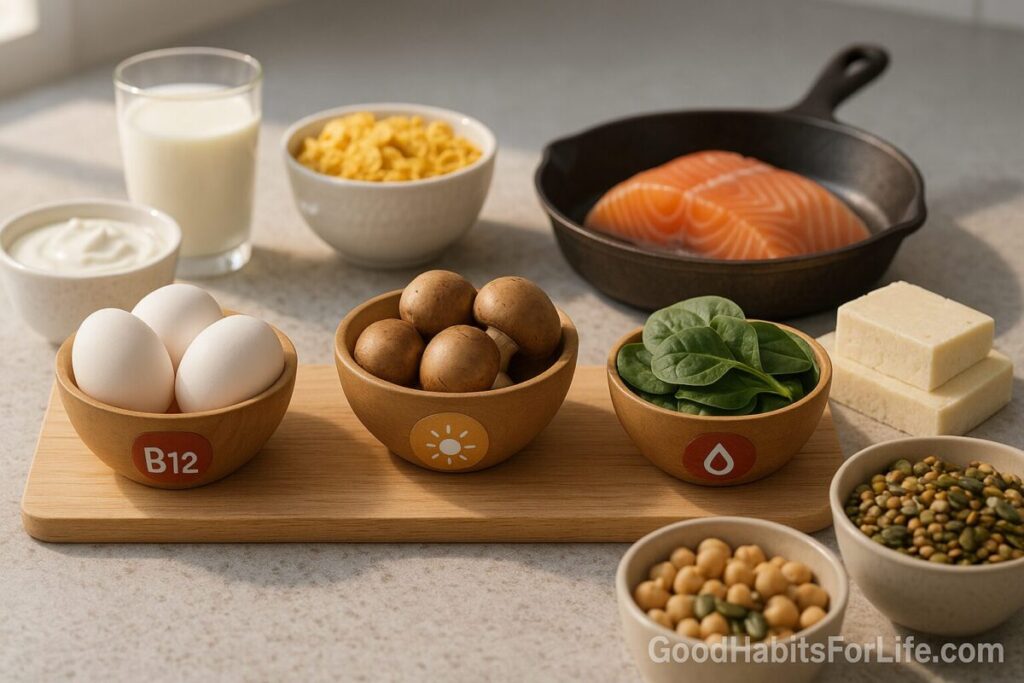
Vitamins that Matter: B12, D & Iron in Plain English
Vitamin B12, Vitamin D & Iron: Plain-English Guide
Table of Contents
🧭 What & Why: The Big Three
Vitamin B12 (cobalamin)
-
What it does: Builds red blood cells; keeps nerves and DNA healthy.
-
Why it matters: Low B12 can cause anemia, numbness/tingling, memory issues, and fatigue.
Vitamin D (D₂/D₃)
-
What it does: Helps absorb calcium and phosphorus; supports bones, muscles, and immune function.
-
Why it matters: Low D links to weak bones, falls in older adults, and muscle weakness.
Iron (heme & non-heme)
-
What it does: Core of hemoglobin that moves oxygen around your body.
-
Why it matters: Low iron → anemia → tiredness, shortness of breath, headaches, brain fog.
At-a-glance table
| Nutrient | Key Roles | Typical Risk Groups |
|---|---|---|
| B12 | Nerves, DNA, red blood cells | Vegans/vegetarians, adults 50+, metformin or acid-reducing meds, GI disorders |
| Vitamin D | Bone & muscle health, immunity | People with little sun, darker skin at high latitudes, older adults, those who cover skin |
| Iron | Oxygen transport, energy | Menstruating women/teens, pregnant people, endurance athletes, frequent blood donors |
📏 How Much Do You Need? (RDAs & ULs)
RDAs (Recommended Dietary Allowances)
-
Vitamin B12
-
Adults: 2.4 µg/day
-
Pregnancy: 2.6 µg; Lactation: 2.8 µg
-
-
Vitamin D (1 µg = 40 IU)
-
Ages 1–70: 15 µg (600 IU)/day
-
70 years: 20 µg (800 IU)/day
-
Pregnancy/Lactation: 15 µg (600 IU)
-
-
Iron
-
Men 19–50: 8 mg/day
-
Women 19–50: 18 mg/day
-
51+ (most adults): 8 mg/day
-
Pregnancy: 27 mg; Lactation: 9 mg
-
Teens 14–18: 11 mg (boys), 15 mg (girls)
-
Upper Limits (do not exceed regularly without medical advice)
-
Vitamin D: 100 µg/day (4,000 IU)
-
Iron: 45 mg/day
-
B12: No established UL (generally well-tolerated).
🥗 Best Food Sources
Vitamin B12 (animal & fortified)
-
Fish (salmon, trout, tuna), shellfish (clams), beef, liver, eggs, milk/yogurt/cheese.
-
Fortified breakfast cereals, fortified plant milks, and nutritional yeast (check label for B12).
Vitamin D
-
Fatty fish (salmon, sardines, mackerel), egg yolks, mushrooms exposed to UV, fortified milk/plant milks and yogurts, fortified cereals. Limited from food alone; many people need fortified foods or supplements.
Iron
-
Heme iron (better absorbed): red meat, poultry, fish, shellfish.
-
Non-heme iron: beans, lentils, chickpeas, tofu/tempeh, spinach, beet greens, pumpkin seeds, sesame, fortified cereals, whole grains.
-
Absorption tip: add vitamin C (lemon, tomatoes, citrus, capsicum) to iron-rich plant meals. Avoid tea/coffee with iron-rich meals; calcium also competes—separate by ~2 hours.
🧯 Deficiency Signs & Who’s at Risk
B12 deficiency: fatigue, tingling hands/feet, poor balance, sore tongue, memory issues; may present with macrocytic anemia.
Higher risk: vegans/vegetarians, adults 50+, people on metformin or acid-suppressing meds (PPIs/H2 blockers), gastric bypass or IBD.
Vitamin D deficiency: bone pain, muscle weakness, frequent falls; children may develop rickets.
Higher risk: little sun exposure, darker skin at high latitudes, older adults, people with obesity, malabsorption conditions.
Iron deficiency: fatigue, pallor, shortness of breath, headaches, brittle nails, hair loss; microcytic anemia if advanced.
Higher risk: menstruating teens/women, pregnancy, endurance athletes, GI blood loss, frequent blood donors, low-meat diets.
Testing to discuss with your clinician
-
B12 panel: serum B12 ± methylmalonic acid (MMA) if borderline.
-
Vitamin D: serum 25-hydroxyvitamin D [25(OH)D].
-
Iron status: ferritin, hemoglobin, transferrin saturation.
⚡ Quick Start: Do This Today
-
Pick your gap. Skim the risk list above. Which one likely applies—B12, D, iron?
-
Food move (today’s meal):
-
B12: add 1 cup fortified plant milk or a serving of yogurt/eggs/fish.
-
D: choose fortified milk/plant milk with dinner; include an egg or salmon if available.
-
Iron: add ½ cup lentils/beans or 90 g lean meat + squeeze lemon.
-
-
Supplement sanity:
-
B12: If vegan/low-B12 diet, start cyanocobalamin 50–100 µg daily or 1,000 µg 2–3×/week (common maintenance doses).
-
Vitamin D3: If intake/sun is low, many adults use 10–20 µg (400–800 IU)/day; some need more—confirm with a test.
-
Iron: Only if labs or clinician advise. If supplementing, consider 18–27 mg on alternate days to improve tolerance and absorption.
-
-
Set a lab reminder in your calendar for 8–12 weeks after starting changes.
-
Track symptoms (energy, mood, sleep, workout recovery) weekly.
🗺️ 30-60-90 Habit Plan
Days 1–30 (Foundation)
-
Standardize breakfast with one fortified item (plant milk or cereal) for B12/D.
-
3 iron-rich meals/week (e.g., chickpea spinach curry + lemon; egg & bean bowl; fish + greens).
-
If advised to supplement, set recurring alarms. Use a pillbox.
-
Log your food in an app for 7 days to baseline B12/D/iron intake.
Days 31–60 (Optimization)
-
Upgrade one dinner to fatty fish or tofu + mushrooms weekly.
-
For iron, use vitamin C buddies (tomato, citrus, guava, capsicum) at plant-iron meals.
-
Practice alternate-day iron dosing if supplementing (research shows better absorption/tolerance for some).
-
Order labs (25-OH D, ferritin/Hb, B12 ± MMA) if due.
Days 61–90 (Sustain & Review)
-
Tweak doses based on labs with your clinician.
-
Create a rotation menu: 6 go-to meals that reliably hit targets.
-
Recheck labs in 3–6 months if you changed doses or had low levels.
-
Keep a short “energy score” (0–10) in your weekly review.
🛠️ Techniques & Frameworks
-
Food-First + Fortify + Test (FFT): Aim to meet needs with food; layer in fortified foods; test to verify.
-
Pairing Principle for Iron: Non-heme iron + vitamin C; avoid tea/coffee/calcium around iron meals.
-
Supp Split: If D > 20 µg/day (800 IU) or iron upsets your stomach, split doses or take with food (iron absorbs best on empty stomach but tolerance matters).
-
Medication checks:
-
B12: metformin and PPIs/H2 blockers can lower B12—monitor.
-
Iron: separates from thyroid meds (levothyroxine) and some antibiotics by ≥4 hours.
-
Vitamin D: some anticonvulsants, glucocorticoids, and orlistat can lower D levels—monitor with your prescriber.
-
-
Sunlight with nuance: UV makes vitamin D, but depends on latitude, season, skin tone, and coverage. Treat sun as bonus, not your only plan.
🧑🤝🧑 Audience Variations
-
Vegans/Vegetarians:
-
B12 supplement is essential (food alone is unreliable). Choose cyanocobalamin (stable) or methylcobalamin; check labels on plant milks and cereals.
-
Combine legumes, tofu/tempeh, seeds, and greens for iron; add vitamin C.
-
Vitamin D: consider D₂ or plant-derived D₃; rely on fortified foods and testing.
-
-
Students & Busy Professionals:
-
Keep a fortified cereal + plant milk combo at home/office.
-
Carry roasted chickpeas or pumpkin seeds for iron; sardines (tin) for D + B12 if you eat fish.
-
-
Pregnancy:
-
Higher iron (27 mg) and slight B12 increase; many prenatal vitamins cover this—confirm doses. Test ferritin/hemoglobin as advised.
-
-
Older Adults (50+):
-
Lower stomach acid reduces B12 absorption from foods; fortified foods or supplements are often recommended. D needs and fracture risk also rise—test and adjust.
-
⚠️ Mistakes & Myths to Avoid
-
“Sun is enough for vitamin D” — not reliable year-round; test rather than guess.
-
“I’m vegan so I’ll get B12 from spirulina/fermented foods” — not dependable; use supplements/fortified foods.
-
“More iron is better” — excess can harm; supplement only with clinical guidance.
-
Taking iron with coffee/tea or with calcium-rich foods → poor absorption.
-
Folic acid can mask B12 deficiency on blood tests; ensure B12 is checked if folate is high.
🗣️ Real-Life Scripts
-
Doctor message: “I’ve had low energy. Could we check ferritin, hemoglobin, serum B12 with MMA, and 25-hydroxyvitamin D?”
-
Pharmacist question: “I take metformin/PPIs—should I monitor B12 yearly?”
-
Meal planning: “Let’s add beans + spinach + lemon twice this week and fortified plant milk to breakfasts.”
-
Supp timing: “I’ll take iron on alternate days, away from coffee and calcium.”
📚 Tools & Resources
-
Cronometer or MyFitnessPal — track micronutrients; scan barcodes for fortified foods.
-
Pill reminder apps (e.g., Medisafe) — consistent dosing.
-
Reputable supplement brands with third-party testing—look for USP, NSF, or Informed Choice marks.
-
Local lab service — schedule follow-up tests at 8–12 weeks.
✅ Key Takeaways
-
B12, D, and iron drive energy, nerves, bones, and oxygen transport.
-
Many people—vegans, menstruating teens/women, older adults, those with little sun—benefit from testing.
-
Use food-first, add fortified foods/supplements as needed, and verify with labs.
-
Respect upper limits for vitamin D and iron; B12 is generally low-risk but still coordinate with your clinician.
-
A 30-60-90 plan makes this sustainable.
❓ FAQs
1) Should I take B12 daily or weekly?
Either works. Common maintenance: 50–100 µg daily or 1,000 µg a few times per week. Choose a routine you’ll keep; confirm with labs.
2) D2 vs D3—does it matter?
Both raise vitamin D, though D3 often raises levels more efficiently. Plant-derived D3 exists if you avoid animal products.
3) Can I fix iron deficiency with food only?
Mild cases sometimes improve with iron-rich foods + vitamin C. Documented deficiency typically needs supplements (dose/duration per clinician).
4) Is too much vitamin D dangerous?
Yes—chronically high doses can cause hypercalcemia. Stick to needs and test if using higher doses. UL: 100 µg (4,000 IU)/day.
5) Do coffee and tea block iron?
Polyphenols reduce non-heme iron absorption. Keep them 1–2 hours away from iron-rich meals or supplements.
6) I’m on metformin—what should I do about B12?
Metformin can lower B12 over time; ask to monitor B12 (± MMA) annually.
7) Is heme iron “bad”?
Heme iron absorbs well; general healthy eaters can include moderate amounts of lean meats/fish if they choose. Plant-only diets can meet needs with planning.
8) What blood tests tell me about iron?
Ferritin (stores) + hemoglobin and transferrin saturation give the best picture; ask for the trio if iron is a concern.
9) Can kids take these supplements?
Children’s needs differ; use pediatric RDAs and speak with a clinician before supplementing.
10) How long until I feel better?
If deficiency was present, many feel improvements in 2–12 weeks after correcting intake; full replenishment can take longer—verify with labs.
📖 References
-
NIH Office of Dietary Supplements — Vitamin B12 Fact Sheet (Health Professionals): https://ods.od.nih.gov/factsheets/VitaminB12-HealthProfessional/
-
NIH Office of Dietary Supplements — Vitamin D Fact Sheet (Health Professionals): https://ods.od.nih.gov/factsheets/VitaminD-HealthProfessional/
-
NIH Office of Dietary Supplements — Iron Fact Sheet (Health Professionals): https://ods.od.nih.gov/factsheets/Iron-HealthProfessional/
-
National Academies (IOM) — Dietary Reference Intakes for Calcium & Vitamin D: https://nap.nationalacademies.org/resource/13050/ReportBrief.pdf
-
WHO — Anaemia overview and public health guidance: https://www.who.int/health-topics/anaemia
-
CDC — Iron and Iron Deficiency resources: https://www.cdc.gov/nutrition/micronutrients/iron.html
-
Endocrine Society — Evaluation, Treatment, and Prevention of Vitamin D Deficiency (Clinical Practice Guideline): https://academic.oup.com/jcem/article/96/7/1911/2833671
-
British National Formulary (BNF) — Oral Iron dosing & interactions (professional reference): https://bnf.nice.org.uk/drugs/ferrous-fumarate/
-
FDA/NIH — Daily Value & UL resources for nutrients: https://www.fda.gov/food/new-nutrition-facts-label/daily-value-new-nutrition-and-supplement-facts-labels
-
Harvard T.H. Chan — Vitamin B12, Vitamin D, Iron nutrition summaries: https://www.hsph.harvard.edu/nutritionsource/
🩺 Disclaimer
This article is for general education, not medical diagnosis or treatment. Always consult your healthcare professional about supplements, labs, or symptoms.