
Festivals & Feasts: Enjoy Without Overdoing: Protein-Forward Plan (2025)
Protein-Forward Plan for Festivals: Enjoy Without Overdoing
Table of Contents
🧭 What is a Protein-Forward Festival Plan?
A protein-forward plan is a simple way to structure festive meals so you can savor everything (yes, desserts too) while avoiding the slump, bloat, or regrets afterward. You anchor each eating occasion with a solid portion of protein (about 25–30 g), then round it out with vegetables, smart carbs, and healthy fats. The goal isn’t restriction—it’s strategic order and balance that leverages how protein supports satiety and steady energy. PubMedPMC
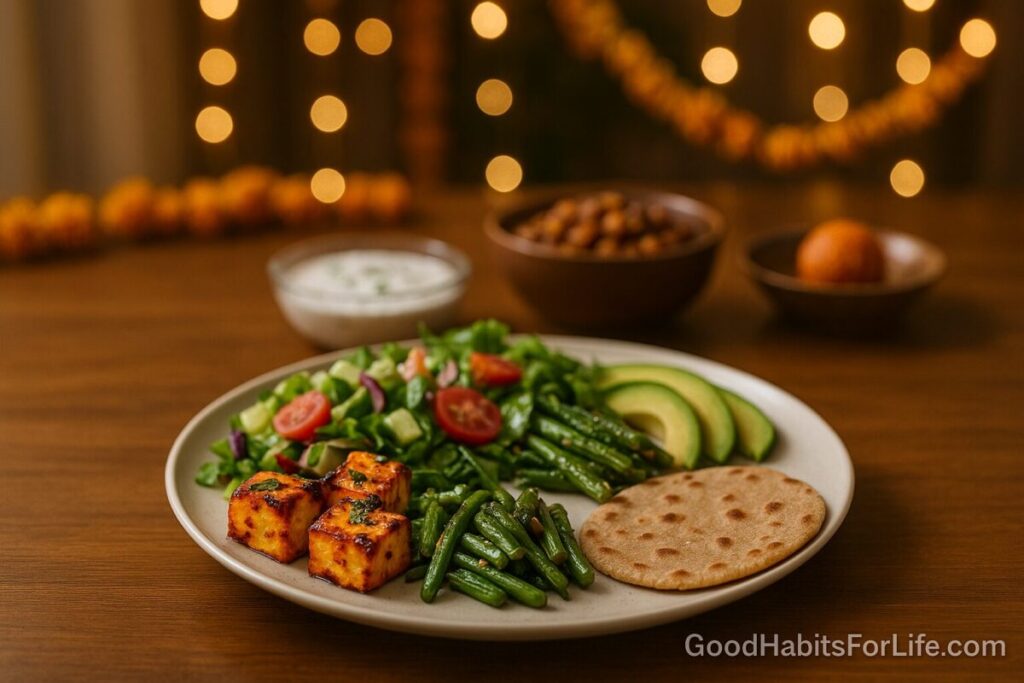
How it looks on the plate: Start with a palm-to-hand-size serving of protein, add two fistfuls of veg/salad, then a fist of grains/starches or festive breads, plus a thumb of healthy fats. This mirrors healthy plate guidance and keeps festive calories in check without food FOMO. The Nutrition Source
✅ Why Protein First Works (and Where It Fits)
1) Protein increases fullness and “diet-induced thermogenesis.” Higher-protein meals reliably improve satiety and slightly raise energy expenditure compared with lower-protein meals, which can translate into fewer total calories eaten. PubMed
2) Distributing protein across meals matters. Hitting ~25–30 g protein per meal stimulates muscle protein synthesis and helps tame hunger between courses and parties. PubMedPMC
3) Balance curbs overdoing. A plate built around vegetables, whole grains, healthy fats, and protein supports cardiometabolic health and keeps added sugars/saturated fats in check. The Nutrition SourceWorld Health Organization
4) Ultra-processed spreads fuel overeating. When tables skew toward ultra-processed items, people eat more even when calories and macros are matched—planning protein-forward whole-food anchors is protective. Cell+1
5) Alcohol loosens brakes. Alcohol is energy-dense, weakly satisfying, and can stimulate appetite—pair drinks with protein-rich food and water. PMC
Healthy baseline: Most adults do well meeting at least the standard daily protein reference (≈0.8 g/kg/day; EU PRI 0.83 g/kg). Distribute across meals during festival days. European Food Safety Authority+1
🛠️ Quick Start: Do-This-Today Checklist
-
Pre-party snack: 1 cup Greek yogurt + berries or chickpea chaat (~15–20 g protein).
-
First plate rule: Fill ½ plate veg, ¼ protein, ¼ starch, drizzle olive oil; eat the protein first. The Nutrition Source
-
Mindful minute: Put phone away; first 60 seconds notice aroma, texture, pace bites. PMC
-
Drink smart: Alternate every alcoholic drink with water/soda water; avoid sugary mixers. PMCWorld Health Organization
-
Dessert strategy: Share portions; “two-bite test” for very sweet items—stop at satisfied, not stuffed.
-
Movement micro-dose: 10–15-minute walk after big meals to aid glucose control and comfort.
🗓️ 7-Day Feast Plan (Before • During • After)
Days −3 to −1 (Prime without “dieting”):
-
Protein at each meal (25–30 g): eggs, lentils/dal, tofu/paneer, fish, chicken, Greek yogurt. PubMedPMC
-
Veg loading: Aim 6–8 servings/day (mix raw/sautéed/roasted). Healthy Plate proportions help. The Nutrition Source
-
Hydration baseline: Water, unsweetened tea/coffee; limit sugary drinks. World Health Organization
-
Sleep & stress basics: Better sleep lowers snack cravings; plan logistics early.
Day 0 (Feast Day) — Four Moves:
-
Protein-first appetizer: Seek kababs, paneer tikka, shrimp skewers, chana chaat, yogurt dips.
-
Plate build: ½ veg/salads, ¼ protein, ¼ festive staples (biryani/naan/stuffing/sweets on the side). The Nutrition Source
-
Mindful pace: Put fork/spoon down between bites; rate hunger/fullness 0–10 before refills. PMC
-
Drink rule: 1:1 alcohol-to-water; cap sweet beverages. PMCWorld Health Organization
Days +1 to +3 (Rebalance, not “detox”):
-
Return to routine: 3 protein-centered meals + veg; leftovers = perfect balanced bowls.
-
High-fiber carbs: Whole grains/beans aid satiety and digestion. World Health Organization
-
Light movement daily: Walks, mobility, or easy lifts to reset appetite cues.
-
Reflect: What worked? Save a note for the next celebration.
🧠 Techniques & Frameworks
Plate Method (visual autopilot)
Use the ½ veg, ¼ protein, ¼ carbs template at buffets and home feasts. It’s simple, flexible, and evidence-aligned. The Nutrition SourceCDC
Protein Targets by Meal
-
Breakfast/brunch: 25–30 g (e.g., 3 eggs + dal, or Greek yogurt + nuts).
-
Lunch/dinner: 25–35 g (fish/chicken/tofu/paneer + legumes).
These per-meal ranges hit the satiety/MPS sweet spot. PubMedPMC
Mindful Eating Micro-skills
-
ARRIVE: 3 slow breaths before first bite.
-
SCAN: Notice colors/aromas; choose favorites, skip fillers.
-
PACE: Chew thoroughly; set utensil down often.
Mindful attention reduces intake versus distracted eating. PMC
Processed-Food Radar
Aim for mostly minimally processed dishes early in the meal (grilled proteins, legumes, salads). Ultra-processed items are easier to overeat. Cell
Smart Drinks
Prioritize water/sparkling water; if drinking alcohol, pair with protein and sip slowly. Alcohol weakens appetite regulation and adds energy quickly. PMC
👥 Audience Variations
Students/Teens: Pre-party protein snack (milk + peanut butter sandwich, or boiled eggs + fruit). Keep a water bottle; make the first plate the “parent-approved” one, then sample favorites. World Health Organization
Professionals hosting clients: Serve protein-rich starters and colorful veg platters up front; brief “cheers + water” ritual between rounds to pace alcohol. PMC
Parents with kids: Build mini plates with the same ½-¼-¼ layout; let kids pick their two favorite festive foods after protein + veg. The Nutrition Source
Older adults: Distribute protein evenly across meals to support muscle health; soft-texture options: yogurt bowls, dal, fish, tofu, paneer. PubMed
Vegetarian/Vegan: Lean into legumes, tofu/tempeh, soy yogurt, mixed-nut laddoos (portion-controlled), and chickpea-based snacks to hit per-meal protein. The Nutrition Source
⚠️ Mistakes & Myths to Avoid
-
Myth: “I should starve all day to ‘save’ calories for the party.”
Fix: Arrive nourished; pre-party protein + fiber prevents rebound overeating. PubMed -
Mistake: Starting with bread/chips/sweets.
Fix: Open with protein and salad; sweets taste better when you’re not ravenous. PubMed -
Myth: “Protein only matters for gym-goers.”
Fact: Protein supports satiety and muscle maintenance for everyone; per-meal targets help. PubMed -
Mistake: Liquid calories all evening.
Fix: Water between drinks; choose low-sugar mixers. World Health OrganizationPMC
🎉 Real-Life Examples & Scripts
Buffet Strategy (30-second scan):
“I’m going to start with the grilled fish and chana salad, then I’ll come back for the biryani and a small gulab jamun.”
Social Pressure Line:
“Everything looks amazing—I’m pacing myself so I can enjoy dessert later.”
Host Plate:
-
Starter tray: Paneer tikka / chicken satay / shrimp skewers + yogurt-mint dip.
-
Sides first: Big salad bowls, roasted veg.
-
Carb faves: Biryani/naan/stuffing appear after proteins/veg on the table (nudge order).
Sample Balanced Feast Plate (approx.):
-
120 g tandoori chicken (≈27 g protein)
-
1 cup kachumber salad
-
½ cup chana masala (≈7–8 g protein)
-
½ cup biryani
-
1 small dessert to share
🧰 Tools, Apps & Resources (quick pros/cons)
-
Plate Method Printout (fridge-ready): Visual guardrails; flexible for any cuisine. The Nutrition SourceCDC
-
Cronometer/MyFitnessPal: Easy protein checks; beware perfectionism—use as a spot-check, not a scoreboard.
-
Timer app or smartwatch haptics: Gentle cues to slow down and check fullness.
-
Notes app template: Save what worked this festival for the next one.
📌 Key Takeaways
-
Lead with protein (25–30 g/meal) and build a ½-¼-¼ plate to enjoy more and overeat less. PubMedPMCThe Nutrition Source
-
Mindful, unhurried bites beat willpower; distractions drive extra intake. PMC
-
Mind the drinks—alcohol and sugary beverages quietly add energy and loosen appetite control. PMCWorld Health Organization
-
Favor minimally processed dishes early; ultra-processed spreads invite seconds (and thirds). Cell
❓ FAQs
How many grams of protein should I aim for during festivals?
Aim for ~25–30 g per meal, distributed across the day. That level supports fullness and muscle protein synthesis. PubMedPMC
Is there a safe daily minimum?
For most healthy adults, population reference intakes are around 0.8–0.83 g/kg/day. Distribute across meals, and adjust with your clinician if you have medical conditions. European Food Safety Authority
What if I’m vegetarian or vegan?
Combine foods like legumes, tofu/tempeh, soy yogurt, nuts/seeds, and whole grains to hit per-meal targets while keeping the plate balanced. The Nutrition Source
Does mindful eating really make a difference at parties?
Yes—brief mindful-eating instructions reduce ad-libitum energy intake compared with no guidance or distracted eating. PMC
How do I handle buffets without feeling restricted?
Start with protein and colorful veg, then add your favorite festive starches/sweets in small portions. Pace with water between courses. The Nutrition SourcePMC
Are ultra-processed party foods the problem?
They’re easy to overeat. In a controlled trial, participants ate ~500 kcal/day more on ultra-processed menus vs unprocessed, despite matched macros. Cell
What about sugary drinks and cocktails?
Limit them. Liquid calories don’t satisfy well and alcohol can stimulate appetite—alternate with water/sparkling water. World Health OrganizationPMC
Is it okay to skip meals before a feast?
Skipping often backfires; arrive steady with a protein-rich snack to avoid overeating. PubMed
📚 References
-
Harvard T.H. Chan School of Public Health — Healthy Eating Plate. https://nutritionsource.hsph.harvard.edu/healthy-eating-plate/ The Nutrition Source
-
Dietary Guidelines for Americans 2020–2025. U.S. Departments of Agriculture and Health & Human Services. https://www.dietaryguidelines.gov/ Dietary Guidelines
-
Halton TL, Hu FB. Effects of high-protein diets on thermogenesis and satiety. Am J Clin Nutr. 2004. PubMed
-
Paddon-Jones D, et al. Dietary protein recommendations and prevention of sarcopenia. Curr Opin Clin Nutr Metab Care. 2009. PubMed
-
Schoenfeld BJ, Aragon AA. How much protein can the body use per meal? J Int Soc Sports Nutr. 2018. PMC
-
Hall KD, et al. Ultra-Processed Diets Cause Excess Calorie Intake. Cell Metabolism. 2019. Cell+1
-
World Health Organization. Healthy Diet—Fact Sheet (limiting free sugars/saturated fat). World Health Organization
-
Fong M, et al. Alcohol and energy intake (narrative review). Nutrients. 2021. PMC
-
CDC. Diabetes Meal Planning (plate method overview). https://www.cdc.gov/diabetes/healthy-eating/diabetes-meal-planning.html CDC
-
Harvard T.H. Chan — Protein: The Nutrition Source. https://nutritionsource.hsph.harvard.edu/what-should-you-eat/protein/ The Nutrition Source
-
EFSA. Dietary Reference Values for Protein — PRI 0.83 g/kg/day. European Food Safety Authority+1
Disclaimer: This guide is educational and not a substitute for personalized medical or nutrition advice; consult your clinician or dietitian for individual guidance.