
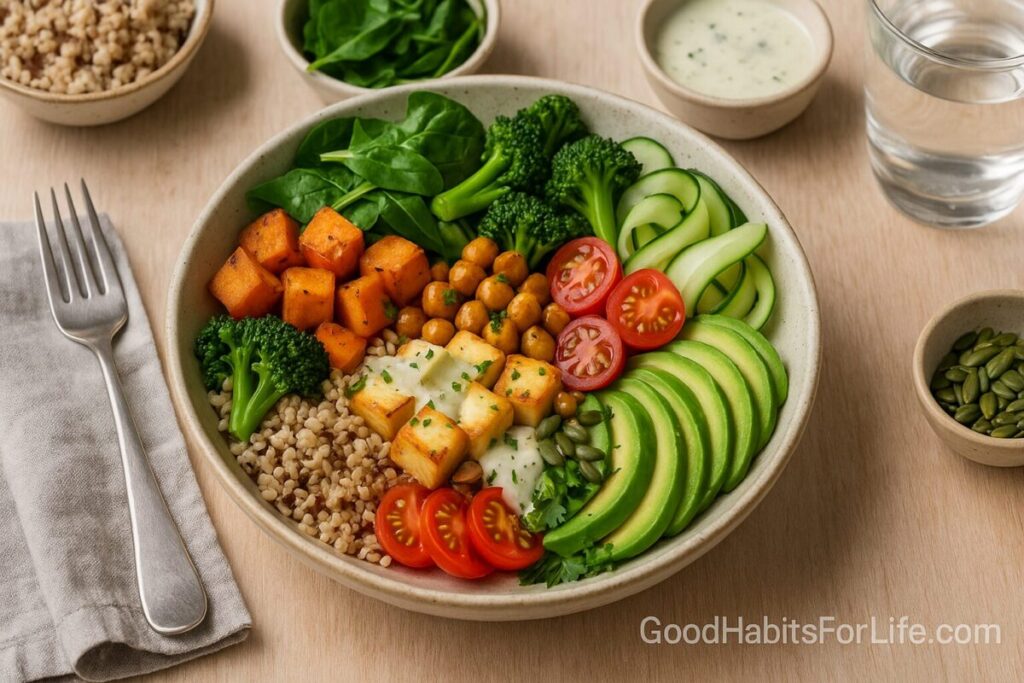
MixandMatch Bowls: Grains, Greens, Goodness
MixandMatch Bowls: Grains, Greens, Goodness
Table of Contents
🧭 What are Mix-and-Match Bowls & why they work
A mix-and-match bowl is a fast template meal built from a grain or starchy base, lots of vegetables, a protein, healthy fats, and a punchy sauce or seasoning. Think grain bowls, Buddha bowls, macro bowls—different names, same habit: balanced, customizable plates you can assemble in minutes.
Why this habit works
-
Balanced nutrition: Fill half the bowl with vegetables/fruit, add whole grains and healthy proteins/fats—this mirrors evidence-based plate models that improve diet quality and satiety.
-
Fiber first: Whole grains + pulses + veg drive fiber intake, linked to heart, gut, and metabolic health.
-
Decision relief: One repeatable structure reduces weekday friction and food waste.
-
Batch-friendly: Cook components once; assemble fresh combinations all week.
✅ The Perfect Bowl Blueprint (portions & components)
Use this baseline and adjust to taste, appetite, and activity.
Visual portions (per serving)
-
~40% Vegetables (raw/roasted/mixed)
-
~25% Whole Grains or Starchy Base
-
~25–30% Protein (plant or animal)
-
~5–10% Sauce, Healthy Fats & Crunch
Quick gram/cup guide (per person)
-
Vegetables: 250–350 g (2–3 cups chopped)
-
Grain/starchy base (cooked): 150–200 g (¾–1 cup)
-
Protein (cooked/ready): 100–150 g tofu/tempeh/fish/chicken or ¾–1 cup beans/lentils; aim for 20–40 g protein
-
Sauce/fats: 1–2 tbsp; Crunch: 1–2 tbsp
Component picker
| Component | Portion | Examples |
|---|---|---|
| Base (whole grains/starch) | 150–200 g cooked | Brown rice, quinoa, millet (jowar/bajra), barley, farro, potatoes/sweet potato, whole-wheat couscous |
| Protein | 100–150 g (or ¾–1 cup pulses) | Chickpeas, rajma/kidney beans, masoor/moong, tofu/tempeh, paneer, eggs, fish, chicken, lean meat |
| Vegetables (mix textures) | 250–350 g | Leafies (spinach, lettuce), crucifers (broccoli, cauliflower), roasted roots, cucumber/tomato/onion, slaw |
| Healthy fats | 1–2 tbsp | Olive/mustard/peanut oil, tahini, avocado, nuts/seeds, coconut (sparingly) |
| Punch/seasoning | to taste | Citrus, vinegar, yogurt, herbs, spices, pickles, kimchi, olives, capers |
| Crunch | 1–2 tbsp | Toasted seeds, nuts, crushed papad, baked pita chips |
Adjust for goals
-
Lighter bowl: halve the grain portion, double non-starchy veg.
-
Extra-active day: +½ cup grains or add starchy veg.
-
Plant-forward: combine pulses + tofu/tempeh for complete amino acid variety.
🛠️ Quick Start: Build 3 bowls today
Pantry check (10 items): brown rice or millet, canned chickpeas, eggs/tofu, curd/yogurt, cucumber, tomatoes, mixed greens, onions, lemon, olive/mustard oil + salt/pepper/spices.
1) Mediterranean Fresh Bowl (10 minutes)
-
Base: 1 cup (cooked) brown rice or quinoa
-
Protein: ¾ cup chickpeas + 30 g feta (optional)
-
Veg: 1½ cups cucumber, tomato, red onion, herbs
-
Sauce: 1 tbsp olive oil + lemon + pinch salt, oregano
-
Finish: Olives (1 tbsp), toasted seeds (1 tbsp)
2) Ginger-Sesame Veg Bowl
-
Base: 1 cup cooked rice/millet
-
Protein: 120 g tofu or 1 cup edamame
-
Veg: 2 cups slaw mix (cabbage/carrot) + spring onion
-
Sauce: 1 tbsp soy sauce + 1 tsp grated ginger + 1 tsp sesame oil + lime
-
Finish: Sesame seeds (1 tbsp), chili flakes
3) Indian-Inspired Comfort Bowl
-
Base: 1 cup brown rice or foxtail millet
-
Protein: 1 cup warm chana masala or rajma (leftover works)
-
Veg: 1 cup kachumber (cucumber-tomato-onion) + 1 cup sautéed spinach
-
Sauce: 2 tbsp mint-yogurt raita
-
Finish: Crushed roasted papad (1 tbsp)
📦 Batch once, eat many: prep & storage safety
Weekend (or one evening) batch plan (60–90 min total, mostly hands-off)
-
Grains: Cook 6–8 cups cooked grains (e.g., 2 cups dry brown rice + 1 cup quinoa).
-
Proteins:
-
Sheet-pan chicken/tofu: 700–900 g with simple spice rub.
-
Cook 2–3 cups lentils/beans (pressure cooker/Instant Pot).
-
-
Vegetables: Roast 1–1.2 kg mixed veg (broccoli, carrots, cauliflower, pumpkin) + wash/dry salad greens.
-
Sauces: Make 2–3 small jars (120–180 ml each).
-
Portion: Build kits in containers—keep wet sauces separate.
Keep it safe
-
Cool cooked foods and refrigerate within 2 hours.
-
Store at ≤4 °C (≤40 °F); eat refrigerated cooked components within 3–4 days; freeze for 2–3 months.
-
Reheat to 74 °C (165 °F) before eating hot foods.
-
Label containers (item + date). Use shallow containers to cool faster.
Layering to avoid soggy bowls
-
Bottom: grains/starch → proteins → firm veg → leafy/delicate veg in a separate mini-box → sauces in tiny jars → crunch just before eating.
🧠 Flavor frameworks & 6 go-to sauces
Use these families to keep variety high with the same base.
Flavor families
-
Mediterranean: lemon, garlic, parsley, olive oil, oregano, tahini.
-
North Indian: cumin, coriander, chili, garam masala, yogurt, mint.
-
Middle-Eastern: sumac, cumin, tahini, lemon, pomegranate molasses.
-
East-Asian: soy, rice vinegar, ginger, sesame, spring onion.
-
Tex-Mex: lime, chili, cumin, cilantro, black beans, corn, tomato.
-
Herb-Nut: basil/coriander + nuts/seeds, citrus, a little oil.
Sauces (shake in a jar; ~2–3 tbsp per bowl)
-
Lemon-Tahini: 3 tbsp tahini + 2 tbsp lemon + 1 tbsp water + pinch salt + garlic.
-
Mint-Yogurt Raita: ½ cup yogurt + 2 tbsp minced mint + pinch cumin + salt.
-
Ginger-Soy: 2 tbsp soy + 1 tbsp rice vinegar + 1 tsp grated ginger + 1 tsp sesame oil.
-
Green Herb Chutney: coriander, mint, green chili, lemon, 1–2 tsp oil, water to loosen.
-
Smoky Chipotle-Lime: 1–2 tsp chipotle in adobo (or chili paste) + 2 tbsp yogurt + lime.
-
Peanut-Lime: 1 tbsp peanut butter + 1 tbsp lime + 1 tsp soy + water to thin.
Tip: Keep sodium reasonable—taste before salting; acids and herbs boost flavor without extra salt.
👥 Audience variations
Students (budget & speed)
-
Use one-pot pressure-cooked grains + lentils (khichdi-style) as base; top with raw veg and chutney.
-
Eggs, canned chickpeas, frozen mixed veg = cheapest protein + veg combo.
Parents (family-friendly)
-
Keep sauces mild; serve crunchy items on the side so kids can “decorate.”
-
Pre-roast bite-size veg; add sweet potato cubes for natural sweetness.
Busy professionals (pack & go)
-
Use microwave-safe glass containers; pack sauce separately.
-
Choose “desk-cold” bowls (leafy base + beans + canned fish + citrus dressing).
Seniors (ease & texture)
-
Soften veg (steam/roast); pick smaller seeds or ground nuts; ensure adequate protein (soft tofu, eggs, yogurt, well-cooked pulses).
Teens/active
-
Add an extra ½ cup grains or starchy veg and a second protein scoop.
⚠️ Mistakes & myths to avoid
-
Myth: Bowls = salads only. Warm grains + roasted veg + hot proteins make hearty meals.
-
Under-protein. Many bowls skimp—target 20–40 g protein.
-
Sauce overload. Dress lightly; include acidity to cut the need for excess salt.
-
No crunch. Texture contrast prevents “mushy bowl” fatigue.
-
Batching only one flavor. Make two sauces for variety with the same base.
-
Skipping food safety. Label dates; reheat properly.
🧩 Real-life scripts & a 1-shop list
“Sunday 60-minute script”
-
Start grains in rice cooker/Instant Pot.
-
Toss veg with oil + salt; roast 25–35 min at 200 °C.
-
Sheet-pan protein with spices; bake/roast 15–25 min.
-
Blend/whisk 2 sauces.
-
Cool, portion, label.
One-trip shopping list (7 dinners, 2 people)
-
Grains/starch: 1.5 kg potatoes/sweet potatoes; 1 kg brown rice/millet; 500 g quinoa/couscous.
-
Proteins: 2×400 g tofu/tempeh or 1 kg chicken/fish; 4 cans (400 g) beans; 12 eggs; 500 g yogurt.
-
Veg: 1 kg mixed roast veg, 2 heads leafy greens, 6 tomatoes, 4 cucumbers, 2 onions, 1 cabbage/carrot pack, lemons/limes, herbs.
-
Pantry/crunch: olive or mustard oil, nuts/seeds, olives, spices, soy sauce, tahini/peanut butter, whole-grain pita/tortillas (optional).
🧰 Tools, apps & resources
-
Rice cooker/Instant Pot — set-and-forget grains and beans. Pro: reliable; Con: counter space.
-
Half-sheet pans — batch proteins/veg in one go.
-
Prep containers (glass, leakproof) — stackable; keep sauces separate.
-
Kitchen scale — quick, consistent portions.
-
Apps:
-
Paprika / AnyList — recipe + grocery organizing.
-
Cronometer — macro/micronutrient tracking if you like numbers.
-
FoodKeeper — storage time reminders.
-
🏁 Key takeaways
-
Use a repeatable template: veg-forward, whole-grain base, solid protein, bright sauce, crunchy finish.
-
Batch once, then assemble bowls in minutes.
-
Rotate flavors to stay excited while eating better.
-
Store safely and label everything.
-
Keep a sauce toolkit—it’s the quickest way to transform leftovers.
❓ FAQs
1) What are the best grains for bowls?
Brown rice, quinoa, millet (jowar/bajra), farro, barley, and whole-wheat couscous. Choose what cooks easily in your kitchen and what you enjoy.
2) How much protein should I include?
A practical target is 20–40 g per bowl. That’s roughly 120–150 g cooked chicken/fish/tofu or ¾–1 cup beans/lentils. Adjust for appetite and activity.
3) Can I skip grains?
Yes—use extra non-starchy veg + beans/lentils or potatoes/sweet potatoes for starch. The goal is balance and fiber, not a mandatory grain.
4) How long do cooked components keep?
Most cooked grains, proteins, and veg keep 3–4 days refrigerated (≤4 °C/≤40 °F). Freeze portions for longer and reheat to 74 °C (165 °F) when serving hot.
5) How do I prevent sogginess?
Store sauces and delicate greens separately; reheat bases/proteins first, then add fresh veg and sauce.
6) Are bowls good for weight management?
They can be. Prioritize veg volume and lean proteins, keep grain portions moderate, and use flavor from herbs/acid rather than excess oil/sugar.
7) What if I’m plant-based?
Combine pulses (beans, lentils, chickpeas) with tofu/tempeh or nuts/seeds across the week for protein variety and iron-vitamin C pairing (e.g., beans + lemony salad).
8) Is white rice okay?
Yes in moderation—balance with extra veg and protein. Whole grains add more fiber and micronutrients; mixing white and brown is a handy compromise.
📚 References
-
Harvard T.H. Chan School of Public Health. Healthy Eating Plate & Healthy Eating Pyramid. https://www.hsph.harvard.edu/nutritionsource/healthy-eating-plate/
-
U.S. Department of Agriculture & U.S. Department of Health and Human Services. Dietary Guidelines for Americans, 2020–2025. https://www.dietaryguidelines.gov/
-
USDA Food Safety and Inspection Service. Leftovers and Food Safety (chill within 2 hours; 3–4 days; reheat to 165 °F/74 °C). https://www.fsis.usda.gov/food-safety/safe-food-handling-and-preparation/food-safety-basics/leftovers-and-food-safety
-
FoodSafety.gov. FoodKeeper Storage Guidance. https://www.foodsafety.gov/keep-food-safe/foodkeeper-app
-
World Health Organization. Salt reduction. https://www.who.int/news-room/fact-sheets/detail/salt-reduction
-
American Heart Association. Whole Grains 101. https://www.heart.org/en/healthy-living/healthy-eating/eat-smart/nutrition-basics/whole-grains
-
FAO of the United Nations. Pulses: Nutritious seeds for a sustainable future. https://www.fao.org/pulses-2016/en/
-
NHS UK. Fat: the facts (guidance on saturated fat). https://www.nhs.uk/live-well/eat-well/food-types/fat-the-facts/
Disclaimer
This article offers general nutrition and meal-prep guidance and is not a substitute for personalized medical or dietary advice.