
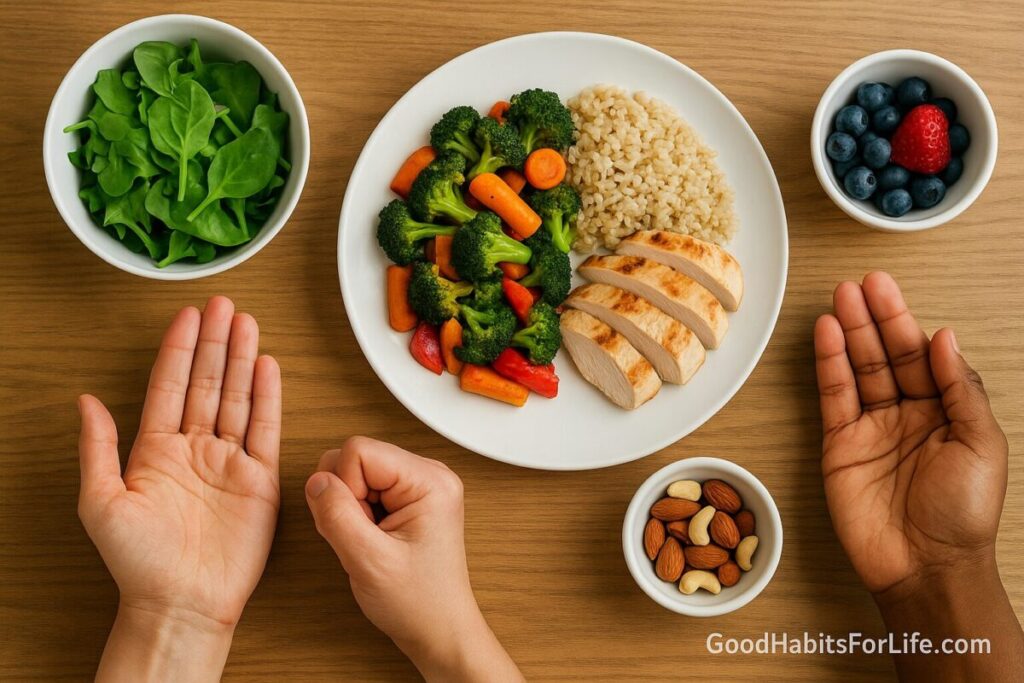
Portion Guides that Work: Hands, Bowls, Plates: Protein-Forward Plan (2025)
Portion Guides That Work: Hands, Bowls & Plates (Protein-First)
Table of Contents
🧭 What & Why
Portion guides help you build meals with the right balance of protein, vegetables, carbohydrates, and fats—without weighing food. Visual methods (hands, bowls, plates) work because they’re fast, portable, and scale to your body size.
Benefits (supported by major guidelines listed in References):
-
Encourages higher fruit/veg intake and whole grains (e.g., MyPlate/Healthy Eating Plate).
-
Protein-forward portions improve fullness and help preserve muscle during weight management.
-
Reduces guesswork when eating out, at work, or cooking for family.
✅ Quick Start (Do This Today)
-
Pick one meal (lunch or dinner). Use a 9–10 in (23–25 cm) plate.
-
½ plate non-starchy veg (salad, beans, bhindi, broccoli).
-
¼ plate protein (palm-sized chicken, paneer, tofu, eggs, dal mix).
-
¼ plate smart carbs (roti, brown/red rice, quinoa, millet, potato).
-
Add 1 thumb of healthy fat (olive oil, ghee, nuts, seeds).
-
-
Snack fix: Pre-portion with your hand—1 cupped hand nuts or 1 fist fruit.
-
Protein check: Aim 20–35 g at this meal (see “Protein-First”).
-
Hydration: 1 glass water (250–300 ml) before the meal; eat slowly (10–15 min).
-
Track one thing: After eating, rate fullness (1–10). Adjust protein/veg next time.
🛠️ The Three Methods
🍚 The Hand Method (portable, no tools)
| Hand Cue | Approx. Measure | Good For | Examples |
|---|---|---|---|
| Palm (no fingers) | ~90 g cooked meat/fish/tofu (≈3 oz) | Protein | Chicken, fish, paneer, tofu, tempeh |
| Fist | ~1 cup / 240 ml | Veg, cooked grains | Salad, cooked veg, rice, millet |
| Cupped hand | ~½ cup / 120 ml | Dense carbs, beans | Rice, pasta, dal, chana, rajma |
| Thumb | ~1 Tbsp / 15 ml | Fats | Oil, nut butter, ghee |
| Thumb tip | ~1 tsp / 5 ml | Dressings, sugar | Mayo, sauces, honey |
Typical meal using hands
-
1 palm protein + 1–2 fists veg + 1 cupped hand smart carbs + 1 thumb fat.
Note: Larger/smaller hands? See FAQs for adjustments.
🥣 The Bowl Method (great for bowls, stews, mixed meals)
Use a medium bowl (500–600 ml; ~2–2.5 cups):
-
Bottom layer (½ bowl): cooked/non-starchy veg.
-
Protein (¼ bowl): meat, eggs, tofu, paneer, beans/legumes.
-
Smart carbs (¼ bowl): brown rice, quinoa, millet, whole-wheat pasta, potato.
-
Top: a thumb of fats or seeds; sauce ≤ 2 Tbsp (30 ml).
Examples
-
Dal-Rice Bowl: ½ bowl sautéed veg → ¼ bowl dal → ¼ bowl brown rice → tadka oil (1 thumb).
-
Mediterranean Bowl: veg mix → grilled chicken/tofu → quinoa → olive oil + yogurt dressing (2 Tbsp).
🍽️ The Plate Method (balanced default)
On a 23–25 cm plate:
-
½ plate: non-starchy vegetables.
-
¼ plate: protein (aim 20–35 g).
-
¼ plate: smart carbs or starchy veg.
-
Optional: small dairy/fruit on the side.
Why it works: Mirrors public health plates, keeps calorie density in check, and is easy to repeat.
🧠 Protein-First: How Much & How to Hit It
Daily baseline: ~0.8 g protein/kg body weight (general adults); active/older adults often benefit from 1.0–1.2 g/kg—work with a clinician if needed.
Per meal target: 20–35 g is a practical range for fullness and muscle maintenance.
Quick protein math (approx.)
-
1 palm chicken/fish: 25–30 g
-
150 g paneer/tofu: 18–25 g
-
2 whole eggs + 2 egg whites: 22–26 g
-
1 cup (240 ml) cooked dal/beans: 12–18 g (pair with dairy/egg/tofu to reach 20–30 g)
-
¾ cup Greek/strained yogurt (170 g): 15–18 g
Protein-forward habits
-
Anchor every meal with a palm of protein first.
-
Combine plant proteins (dal + roti/daliya; beans + rice) to boost total.
-
Keep ready protein: boiled eggs, roasted chana, tofu cubes, grilled chicken strips, Greek yogurt cups.
📅 Habit Plans
7-Day Starter
-
Day 1–2: Convert one meal/day to the plate method; hand-portion snacks.
-
Day 3–4: Make one protein batch (e.g., 600 g tofu/paneer or chicken) for 3 meals.
-
Day 5: Build two bowls using the bowl method.
-
Day 6: Eat out once; use palm + fist method; swap fries for a fist of salad.
-
Day 7: Review: Did you hit 20–35 g protein per main meal? Adjust portions.
30-60-90 Roadmap
-
30 days: Plate method at one meal daily; track protein grams 3×/week.
-
60 days: Plate method at two meals daily; standardize a house bowl template.
-
90 days: Maintain; tailor portions to goals (fat loss, muscle gain, glycemic control) with clinician input if medical conditions exist.
🧩 Audience Variations
-
Students: Stock budget proteins (eggs, tofu, dal, canned beans). Use a microwave bowl method with frozen veg.
-
Busy professionals: Prep once; use grab-and-go components (pre-cut veg, yogurt, rotisserie chicken or tofu packs).
-
Parents: Build “family plates”: veg first on plates; let kids choose carb quarter; serve sauces on the side.
-
Seniors: Prioritize protein at breakfast (eggs/yogurt) and softer textures; keep hydration and fiber high.
-
Vegetarian/Vegan: Combine legumes + grains (rajma + rice; hummus + whole pita) and add tofu/tempeh/seitan where suitable.
⚠️ Mistakes & Myths to Avoid
-
Serving vs portion: A serving is a standard unit; your portion is what you actually eat.
-
“Healthy = unlimited.” Nuts, oils, and sauces are nutritious but energy-dense—use the thumb rule.
-
Skipping protein at breakfast: Makes it harder to reach daily totals; aim for 20–30 g early.
-
Forgetting beverages: Sugary drinks can add portions you didn’t plan; default to water/unsweetened tea.
-
Hand size confusion: Your hand is a starting point—adjust 10–20% based on hunger, activity, and body size.
💬 Real-Life Examples & Scripts
At a thali/restaurant
-
Script: “I’ll have grilled chicken/paneer. Please add extra salad and halve the rice.”
-
Visual: 1 palm protein, 1–2 fists veg, ½ cupped hand rice, 1 thumb ghee/oil.
Office cafeteria
-
Script: “Bowl with veggies first, tofu/chicken next, ½ cup rice, sauce on the side.”
-
Visual: Bowl method 50/25/25.
Indian home meal
-
1 palm chole/rajma (thick) + 1–2 fists veg + 1 roti (¼ plate) + 1 thumb ghee.
Quick breakfast
-
Greek yogurt (¾ cup) + fruit (1 fist) + nuts (½ cupped hand) → ~25 g protein.
🧰 Tools & Resources
-
MyPlate Planner (meal visuals & tips).
-
Harvard Healthy Eating Plate (food quality focus).
-
Cronometer / MyFitnessPal / Yazio (optional logging to learn protein hits).
-
Kitchen basics: 23–25 cm plates, 500–600 ml bowls, measuring spoons for sauces.
Pros/Cons (brief)
-
Visual methods: fast, portable; con: less precise for special diets.
-
Apps: detailed feedback; con: time-consuming—use short-term for learning.
📌 Key Takeaways
-
Build meals with hands, bowls, or plates—they all converge on balance.
-
Keep it protein-forward (20–35 g/meal) for satiety and muscle.
-
Default to ½ veg, ¼ protein, ¼ smart carbs; add a thumb of healthy fats.
-
Use the 7-Day Starter and 30-60-90 plan to make it stick.
❓ FAQs
1) How many grams of protein should most adults aim for per meal?
A practical range is 20–35 g, aligned with daily intakes around 0.8–1.2 g/kg across the day (see References).
2) My hands are small/large—won’t that skew portions?
Hands are a starting template that scales to body size. If you’re consistently hungry or full, adjust by ~10–20% or add/subtract a cupped hand of carbs/veg.
3) What’s a quick way to portion rice or pasta?
Use ½–1 cupped hand cooked (60–120 ml) for most meals; pair with a palm of protein and 1–2 fists veg.
4) Can these methods work for diabetes or weight loss?
Yes, but tailor carbs (often smaller carb quarter) and emphasize non-starchy veg + protein. Always follow medical advice from your clinician.
5) Do I need a food scale?
Not for everyday eating. Visual cues cover 95% of situations. A short 2-week app/scales “learning sprint” can calibrate your eye.
6) How do I portion Indian breads?
Generally, 1 roti/chapati can represent the carb quarter for many adults; adjust by activity and hunger.
7) What about healthy fats—how much is too much?
Start with 1 thumb (1 Tbsp / 15 ml) oil or nut butter at meals; add seeds or nuts sparingly (½ cupped hand) as needed.
8) Are bowls as good as plates?
Yes—if you layer veg first, then protein, then carbs, and control sauces (≤ 2 Tbsp / 30 ml).
9) How do I portion snacks?
Use hands: 1 cupped hand nuts; 1 fist fruit; 1 palm jerky/tofu cubes; ¾ cup yogurt.
10) What’s a kid-friendly version?
Keep the plate picture, offer choices in the carb quarter, and serve sauces on the side. Kids’ protein is smaller (about ½ adult palm), scaled by age and appetite.
📚 References
-
Harvard T.H. Chan School of Public Health — Healthy Eating Plate: https://www.hsph.harvard.edu/nutritionsource/healthy-eating-plate/
-
U.S. Department of Agriculture — MyPlate: https://www.myplate.gov/
-
American Heart Association — Portion Size: https://www.heart.org/en/healthy-living/healthy-eating/eat-smart/nutrition-basics/portion-size
-
Academy of Nutrition and Dietetics — Learn the Facts on Portion Sizes: https://www.eatright.org/food/nutrition/dietary-guidelines-and-myplate/learn-portion-sizes
-
NHS — Eight Tips for Healthy Eating & portion guidance: https://www.nhs.uk/live-well/eat-well/
-
Diabetes UK — What is a portion?: https://www.diabetes.org.uk/guide-to-diabetes/enjoy-food/eating-with-diabetes/what-is-a-portion
-
WHO — Healthy Diet factsheet (fruit/veg & fats guidance): https://www.who.int/news-room/fact-sheets/detail/healthy-diet
-
NIH Office of Dietary Supplements — Protein Fact Sheet: https://ods.od.nih.gov/factsheets/Protein-Consumer/
-
British Heart Foundation — Portion Sizes: https://www.bhf.org.uk/informationsupport/support/healthy-living/healthy-eating/portion-sizes
-
NIDDK — What is a portion size?: https://www.niddk.nih.gov/health-information/weight-management/take-charge-health-guide-kids-teens/what-portion-size
Disclaimer: This article is educational and not a substitute for personalized medical or nutrition advice—consult your clinician or a registered dietitian for individual guidance.