
If Youre Stopped by Police: Rights, Respect, Records
If You’re Stopped by Police: Rights, Respect, Records
Table of Contents
🧭 What This Guide Covers & Why It Matters
A traffic stop can be routine—or stressful. Knowing exactly what to do, what to say, and what to record protects your safety and your legal position. Universal best practices (calm, visible hands, clear communication) pair with legal rights such as the right to remain silent and to decline consent to a search in many jurisdictions. American Civil Liberties UnionBC Civil Liberties Association
This guide focuses on rights (what you’re legally allowed to do), respect (how to keep the interaction safe and calm), and records (how to document the encounter for accuracy and accountability). Policies and laws differ by country/state—so we include regional notes and sources throughout.
✅ Quick Start: Do This the Moment You See Lights
-
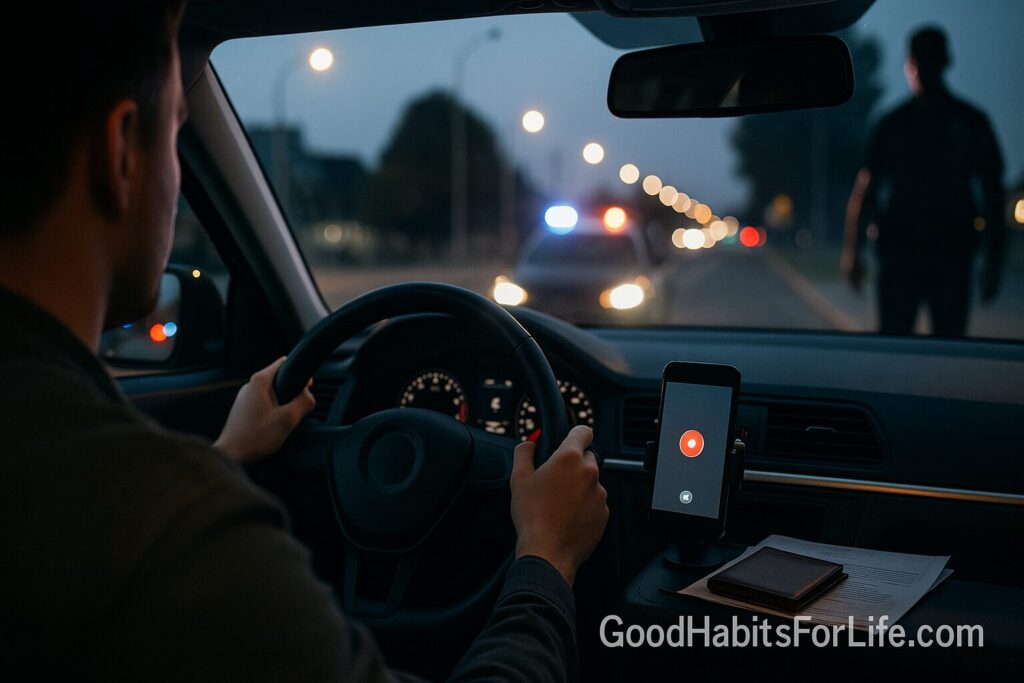
Acknowledge & stop safely. Signal, slow, and pull to the nearest safe spot; at night, turn on interior lights. Keep both hands on the wheel; passengers keep hands visible. rcmp.caaamva.org
-
Car in park, engine off, windows down. If tinted, lower driver’s window fully.
-
Wait for instructions. Don’t rummage for documents until asked; tell the officer where items are before reaching. newli.plea.org
-
Speak calmly, briefly. “Good evening, officer.” Avoid arguing roadside; save disputes for court.
-
Provide required documents when requested (see next section).
-
If asked questions, you can generally give basic ID details and then say: “I prefer to remain silent.” American Civil Liberties Union
-
If asked to search, you can calmly reply: “I do not consent to any searches.” (See “Consent, Searches & Seizures.”) BC Civil Liberties Association
-
End well. When released, merge back carefully. Immediately note details (time, place, badge number, reason given).
🧠 Your Core Rights (and Regional Notes)
-
You can usually remain silent beyond identification. In many places, both drivers and passengers may assert the right to remain silent; drivers still must meet ID/document laws. American Civil Liberties Union
-
You may ask, “Am I free to go?” If yes, leave calmly; if not, you’re being detained—be extra careful to avoid sudden movements. American Civil Liberties Union
-
You can request a lawyer if arrested or formally detained. In Canada, for example, the Charter guarantees the right to counsel (with nuances during roadside sobriety checks). Ministère de la Justice
-
Use-of-force standards require objective reasonableness (e.g., U.S. DOJ policy grounded in case law). Your calm behavior helps reduce risk. Department of Justice
-
Policy fairness & transparency are part of modern community policing models; logging accurate details supports any later complaint or review. Department of Justice
Important: Laws differ by country/state. Always check your local rules.
🗂️ What You Must Show: Documents & Regional Checklist
Commonly requested: driver’s licence, registration/ownership, and proof of insurance. If you need to retrieve them, say where they are before moving. newli.plea.org
Regional notes (examples):
-
India: The Motor Vehicles Act empowers officers to require production of licence and registration; keep insurance and pollution-under-control (PUC) certificate handy. Digital (DigiLocker/mParivahan) may be accepted, but carry physical copies as backup. India Code
-
UK: Police may stop you for various reasons and request breath tests for suspected impairment or vehicle faults. Keep V5C/insurance/MOT details ready (paper or app). GOV.UK+1
-
Canada: You must produce licence, registration and insurance; you may be obliged to state name/address and owner’s info. BC Civil Liberties Association
Pro tip: Store documents in a brightly colored sleeve in the glove box or door pocket to minimize movement and fumbling.
🤝 How to Speak & Move Safely (Respectful De-escalation)
-
Keep hands at the top of the wheel; passengers keep hands on knees.
-
Pause before reaching; announce movements (“My registration is in the glove box; I’m reaching now”). newli.plea.org
-
If you’re anxious, say so: “I’m nervous. I’m going to speak slowly.”
-
Avoid profanity, sarcasm, or sudden gestures—even if you feel unfairly treated. Disputes belong in court or complaints—not curbside.
🔍 Consent, Searches & Seizures
-
Consent searches: In many jurisdictions, officers may ask to search. You can refuse consent clearly and politely: “I do not consent to any searches.” This preserves your rights if a search proceeds anyway. BC Civil Liberties Association
-
Probable cause / reasonable grounds: If officers see contraband in plain view, smell alcohol/drugs, or have other lawful grounds, they may search without consent or with a warrant depending on local law. BC Civil Liberties Association
-
Passengers: Rights vary, but as a passenger you can typically ask, “Am I free to leave?” and you generally need not provide ID unless legally required by local law or the officer has grounds. American Civil Liberties Union
🎥 Recording the Stop (Phones, Dashcams & What to Say)
-
Recording is often lawful in public spaces if you don’t interfere. Keep the phone steady; announce: “For everyone’s safety, I’m recording.” CCLA
-
Don’t block or shove cameras at officers. Step back if asked for safety; keep narration factual, not provocative.
-
If told to stop recording, calmly say: “My understanding is I may lawfully record this interaction.” If your device is seized or ordered unlocked, comply under protest and note the command for later legal review. American Civil Liberties Union
🛠️ Habit Plan: 7-Day “Prepared Driver” Setup
Day 1 — Document Kit. Put licence (if local law allows, carry), registration, insurance, and any inspection/PUC papers in a labeled sleeve. Add an info card with emergency contacts, medical alerts, and your preferred language. India Code
Day 2 — Phone Prep. Add a lock-screen note: “If stopped, I will keep hands visible and request counsel if detained.” Enable voice recording and set a home-screen shortcut to your camera/dashcam app. CCLA
Day 3 — Script Practice. Rehearse calm responses (see “Scripts”).
Day 4 — Car Setup. Interior light works? Dashcam aimed correctly? Keep a small notebook/pen for stop details.
Day 5 — Passenger Brief. Share basics with family: hands visible, minimal talk, one speaker (driver).
Day 6 — Local Law Check. Spend 20 minutes checking your state/country’s specific rules on ID, searches, and filming. Bookmark official pages (e.g., transport ministry, police). GOV.UKGovernment of British Columbia
Day 7 — Review & Refresh. Replace expiring documents; test your phone storage and dashcam.
🧩 Audience Variations
-
Teens/Students: Keep scripts ultra-simple. Parents: add consent forms to access insurance if needed; review curfew/zero-tolerance alcohol laws.
-
Parents with Kids in the Car: Narrate calmly so children see safe behavior: “We’re stopping so the officer can talk to us; hands stay on the wheel.”
-
Professionals (duty to report/regulated roles): If you carry sensitive work materials/devices, enable device encryption and understand employer policies for searches (consult counsel if necessary).
-
Immigrants/Non-citizens: You often don’t have to discuss immigration status with local police. If immigration officers are involved, ask to speak to a lawyer. American Civil Liberties Union
-
Seniors or Drivers with Health Conditions: Keep a medical info card on top of your documents (e.g., hearing impairment, diabetes).
⚠️ Mistakes & Myths to Avoid
-
Myth: “If I’m innocent, I should let them search to speed things up.”
-
Even innocent drivers risk misunderstandings; calmly decline consent. BC Civil Liberties Association
-
-
Mistake: Reaching for items without warning.
-
Always announce movements first. newli.plea.org
-
-
Myth: “Filming is illegal.”
-
In many places, filming public officials in public is lawful if you don’t interfere. CCLA
-
-
Mistake: Arguing roadside.
-
Accept the citation and contest it later using your notes and any video.
-
🗣️ Scripts You Can Use
-
Initial greeting: “Good evening, officer. For everyone’s safety, I’m keeping my hands here.”
-
Before reaching: “My licence is in my wallet and registration in the glove box—may I reach for them now?” newli.plea.org
-
Clarifying detention: “Am I being detained, or am I free to go?” American Civil Liberties Union
-
Asserting silence: “I choose to remain silent and would like to speak to a lawyer if I’m being detained or arrested.” Ministère de la Justice
-
Declining a search: “I do not consent to any searches.” (Repeat calmly if needed.) BC Civil Liberties Association
-
Recording notice: “I’m going to record this interaction; I’ll keep the phone still and won’t interfere.” CCLA
-
Ending: “Thank you. I’ll pull out safely.”
📚 Tools, Apps & Resources
-
Dashcam (hardware or phone app): Creates an objective record; set to auto-save to the cloud.
-
Document wallet (paper + digital): Bright sleeve + secure cloud folder for licence/insurance/registration/PUC/MOT/MoT. India CodeGOV.UK
-
Rights cards: Keep a small card with the scripts above; some civil liberties orgs provide printable “bust cards.” American Civil Liberties Union
-
Official portals: Bookmark your transport ministry/police pages for fines, appeals, and complaint procedures. Government of British Columbia
🔑 Key Takeaways
-
Safety first: Stop promptly and predictably; hands visible; announce movements. rcmp.canewli.plea.org
-
Rights matter: Provide required documents, then keep answers minimal; you can usually decline searches and remain silent. American Civil Liberties UnionBC Civil Liberties Association
-
Document everything: Names/badge numbers, time/place, reason given; save video and follow up via formal channels if needed. Government of British Columbia
❓ FAQs
1) Can I record the police during a traffic stop?
In many countries, yes—recording officials in public is generally lawful if you don’t interfere. Announce that you’re filming and keep a safe distance. CCLA
2) Do I have to answer questions beyond identification?
Often, no. You can usually provide required documents and then assert your right to remain silent. Laws vary by location. American Civil Liberties Union
3) Can an officer search my car if I say no?
If officers have lawful grounds (e.g., plain-view evidence, arrest, or specific statutory powers), they may search without consent; otherwise, clear refusal preserves your rights. BC Civil Liberties Association
4) I’m a passenger—do I have to show ID?
Passengers often may ask if they’re free to leave and generally can remain silent unless local law requires otherwise or the officer has grounds. American Civil Liberties Union
5) What documents should I carry?
Licence, registration/ownership, and insurance are standard; some regions also require inspection or PUC/MOT proof. Check your local rules. India CodeGOV.UK
6) What if I’m asked to step out of the car?
Follow lawful commands. Step out calmly, lock the car if allowed, and restate that you do not consent to any searches. (Grounds for searches vary.) BC Civil Liberties Association
7) How do I get body-cam or dash-cam footage of the stop?
Note agency name, badge number, date/time, and location. Use your jurisdiction’s public-records or complaint process to request video; many police standards require documenting citizen rights information. Government of British Columbia
8) Should I sign a ticket?
In many regions, signing acknowledges receipt—not guilt. You can contest later. Check your local procedure.
9) What if the officer asks about immigration status?
You typically don’t have to discuss your immigration or citizenship status with local police; ask to speak to a lawyer if detained. American Civil Liberties Union
10) Is it okay to argue if I think the stop is unfair?
Don’t argue roadside. Stay calm, comply with lawful commands, and contest later using your notes and any recording. American Civil Liberties Union
📖 References
-
ACLU. Stopped by Police: Know Your Rights. https://www.aclu.org/know-your-rights/stopped-by-police American Civil Liberties Union
-
ACLU (Bust Card). What To Do If You’re Stopped by Police. PDF. https://www.aclu.org/…/bustcard_eng_20100630.pdf American Civil Liberties Union
-
AAMVA. What to Do and Expect When Pulled Over by Law Enforcement. https://www.aamva.org/…/what-to-do-when-stopped-by-law-enforcement aamva.org
-
GOV.UK. Being stopped by the police while driving. https://www.gov.uk/stopped-by-police-while-driving-your-rights GOV.UK
-
Government of India. Motor Vehicles Act, 1988. https://www.indiacode.nic.in/…/a1988-59.pdf India Code
-
RCMP (Canada). Interactions with the police. https://rcmp.ca/…/interactions-police rcmp.ca
-
BCCLA. When Can Police Search Your Vehicle? https://bccla.org/…/privacy7-4-2.html BC Civil Liberties Association
-
CCLA. Filming & Photographing Police — Know Your Rights. PDF. https://ccla.org/…/Know-Your-Rights-Filming-Police-2021.pdf CCLA
-
U.S. DOJ. Use of Force Policy. https://www.justice.gov/jm/1-16000-department-justice-policy-use-force Department of Justice
-
Province of British Columbia. Police Stops – Policing Standards. https://www2.gov.bc.ca/…/6-2-1-police-stops Government of British Columbia
⚖️ Disclaimer
This guide provides general information, not legal advice. Laws and procedures vary by country/state—consult a qualified lawyer in your area for guidance on your situation.