
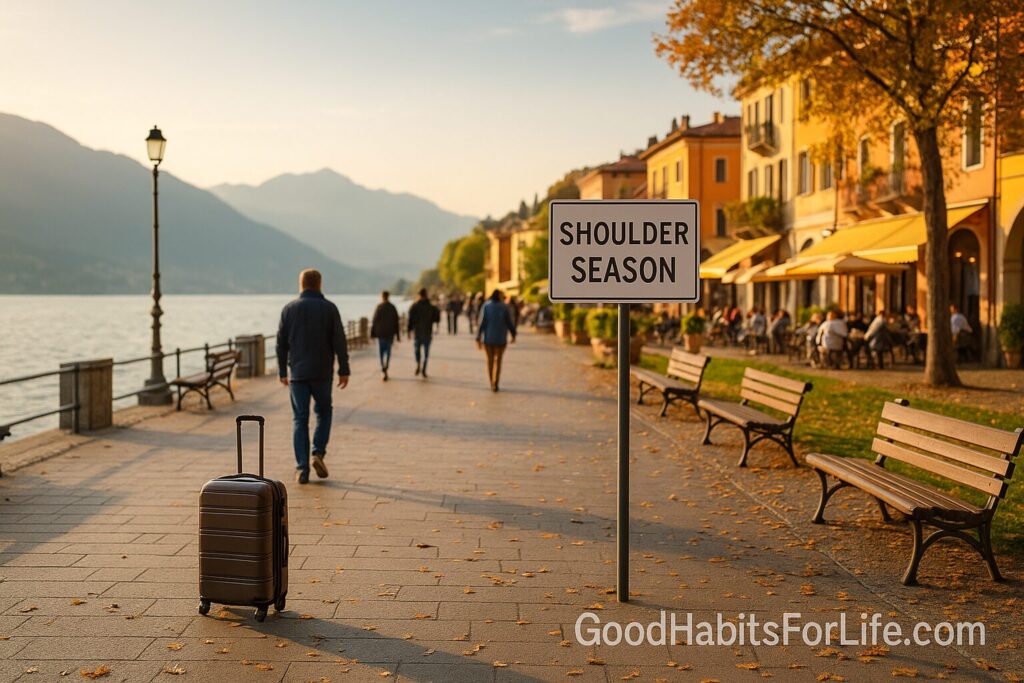
ShoulderSeason Strategy 2025: Save Money, Skip Crowds
Shoulder Season 2025: Save Money, Skip Crowds
Table of Contents
🧭 What Is “Shoulder Season” & Why It Wins
“Shoulder season” is the period between a destination’s high (peak) and low (off) seasons—often spring and autumn in many regions. Demand dips, so prices for flights and stays commonly soften while attractions stay open and the weather is still comfortable. Industry trackers note shoulder months regularly deliver cheaper fares and rooms because demand ebbs after peak travel. expediawebunwto.s3.eu-west-1.amazonaws.com
In 2025, airfare trends show windows of value around late spring and autumn as peak-summer prices normalize and demand spreads beyond school holidays. Monitoring reports (Hopper, Expedia) can help you pinpoint the cheapest weeks. media.hopper.com+1expedia
Shoulder travel also reduces crowd stress. For high-visitation places (e.g., U.S. national parks), official guidance emphasizes visiting in off-peak times or on slower weekdays to bypass congestion. National Park Service+1
✅ Quick Start: Plan a Trip This Week
-
Pick 2–3 destinations you’d love to see this year. Check their historical climate and festivals to identify shoulder months (e.g., April–May or Sept–Oct).
-
Scan flexible fares. In Google Flights, toggle “Flexible dates” and view whole-month pricing; set price alerts. Use Hopper/Skyscanner watchlists. (You’ll act when a fare dips.) media.hopper.com
-
Block cancellable stays. On Booking/Airbnb/Hotels.com, reserve refundable accommodation for your top dates.
-
Map the must-dos. Book timed entries for popular sights (museums, monuments, national-park shuttles) as soon as dates open. For parks, check the NPS calendar. National Park Service
-
Travel mid-week. Tuesdays–Thursdays often avoid school-holiday crowds and events; many reports flag shoulder-season mid-weeks as value days. expedia
-
Lock transport. If you’ll need trains/buses, use Rome2Rio or rail apps to price options and durations.
-
Pack and plan smart. Layer for variable weather; pre-download offline maps; book one standout experience (food tour, hike guide) to anchor the trip.
🧠 The 30-60-90 Shoulder-Season Roadmap
90+ Days Out (Explore & Alert)
-
Define your shoulder window (e.g., late April vs early June).
-
Set fare alerts; track monthly price patterns.
-
List top 5 activities and any permits.
-
Hold a refundable stay as a placeholder near transit.
60 Days Out (Commit & Optimize)
-
Book flights when alerts trigger a dip (target a price you’d be happy with). media.hopper.com
-
Reserve key activities and dining.
-
Sketch day-by-day plans with a late start/early start rhythm to dodge midday crowds.
-
Add ground transport (rail passes, car rentals, local sim/eSIM).
30 Days Out (Polish & Prep)
-
Re-check opening hours/maintenance schedules.
-
Confirm all bookings; consolidate tickets and QR codes.
-
Plan rain-day and heat-wave alternates.
-
Finalize packing list; schedule currency card / ATM plan.
🛠️ Techniques & Frameworks That Save You Money
The 3-Flex Framework: Be flexible on dates, destination, or airport—flex any two and you’ll usually win on price.
“Book-Flights-First” Rule: Airfare swings most. Secure the flight when it drops; align lodging after (refundable holds protect you). media.hopper.com
Mid-Week & Shoulder-Month Targeting: Combine a Tuesday/Wednesday departure with late-spring or autumn windows for consistent savings. expedia
Anchor One Splurge: A great guided hike, chef’s table, or hot-spring day elevates the trip without blowing the budget.
Crowd-Avoidance Pattern: Arrive early or late in the day for marquee sights; schedule big-hit parks mid-week. National Park Service
🗺️ Best Shoulder Windows by Destination Type
-
Mediterranean cities & coasts: April–May, late Sept–Oct (mild temps; many ferries still running).
-
European capitals: March–April; Sept–Nov (fewer cruise-ship waves; cultural calendars in full swing).
-
East Asia (Japan/Korea/Taiwan): Late Oct–Nov or late Mar–Apr (foliage/blossoms; reserve popular attractions early).
-
Southeast Asia (tropical monsoons vary): May–June or Sept–Nov can be sweet spots outside peak dry or wet extremes.
-
Alps & mountain towns: Sept (post-summer) or late May–June (pre-summer) for open lifts/trails without peak crowds.
-
U.S. National Parks: Spring or fall shoulder weeks; check park pages for shuttle/road timings and program calendars. National Park Service
(Always verify local school holidays, festivals, and climate anomalies before booking.)
👪 Audience Variations
Families
-
Use shoulder months tied to your school calendar (long weekends, teacher-work days).
-
Prioritize walkable bases to reduce transfers; pre-book kid-friendly time slots.
Students / Budget Travelers
-
Bus/rail over flights on short hops; dorm-style or capsule stays.
-
Aim for Sunday–Thursday nights for the cheapest accommodation.
Busy Professionals
-
Two mini-breaks beat one long trip: a 4-day city break and a 5-day nature retreat in different shoulder windows.
-
Pick hotels with late checkout and business-friendly lounges.
Seniors
-
Target early fall for milder temperatures and calmer streets.
-
Look for senior passes and accessible transport; national-park resources detail crowd-avoidance tips. National Park Service
⚠️ Mistakes & Myths to Avoid
-
Myth: “Shoulder = everything open.” Some ferries, lifts, or dining rooms reduce hours—always check calendars.
-
Mistake: Over-optimizing flights, under-planning on-the-ground. Cheap airfare is pointless if a must-see is closed.
-
Myth: “Rain ruins it.” Many regions see short showers; build indoor alternates instead of skipping the window.
-
Mistake: Weekend-only itineraries. Shift a day or two mid-week to escape surges. expedia
💬 Real-Life Scripts & Examples
Hotel Email (rate leverage):
Hi [Hotel Name], I’m planning a [4-night] stay [dates]. I see a [€XXX] flexible rate. If I book direct today, could you extend [free breakfast / late checkout / balcony room]?
Guide Message (park timing):
We’ll be in [Park] mid-week in October. What’s the best early-morning route to avoid crowds and still see [landmark]? (We can meet at [6:45 a.m.].)
Work OOO Note (mid-week hack):
I’m offline Wed–Fri. For urgent items, ping [backup]. I’ll wrap priority tasks by Tuesday EOD.
Mini Case:
-
Rome, October: Flights dip after summer; book a refundable Trastevere stay, timed Colosseum entry early morning, Vatican after 15:00.
-
Zion NP, late April: Mid-week shuttle, sunrise Canyon Overlook, Emerald Pools midday, Watchman golden hour. Check NPS shuttle calendar. National Park Service
🧰 Tools, Apps & Resources (Pros/Cons)
-
Google Flights / Skyscanner / Hopper — great for month-view pricing and alerts; some deals are app-only or limited-time. media.hopper.com
-
National Park Service (NPS) calendars — shuttle times, ranger programs, construction updates. Pros: official; Cons: some pages update close to season. National Park Service
-
WeatherSpark / Meteoblue — detailed climate norms; remember climate ≠ forecast.
-
Rome2Rio / Rail planners — visualize routes and durations across modes.
-
Local tourism boards — festival/holiday lists; many promote shoulder months to spread visitors. webunwto.s3.eu-west-1.amazonaws.com
📌 Key Takeaways
-
Shoulder season = best value-to-experience ratio for many destinations. expedia
-
Track fares now; pounce during dips, especially around late spring and autumn in 2025. media.hopper.comexpedia
-
Plan marquee sights for early/late hours and mid-week days to breeze past crowds. National Park Service
-
Use the 30-60-90 cadence: explore, commit, polish.
-
Keep bookings refundable and build a wet-weather backup.
❓ FAQs
1) What months count as shoulder season in 2025?
It varies by destination, but for much of Europe/North America: April–May and Sept–Oct. Tropics and mountains differ—check climate and event calendars.
2) Are flights always cheaper in shoulder months?
Not always, but demand often dips—alerts help you catch price drops quickly. media.hopper.com
3) Do attractions still run normally?
Mostly yes, but hours can shorten; ferries/lifts may have maintenance. Always verify before locking dates.
4) What if I can only travel on weekends?
Go Thu–Mon instead of Fri–Sun; schedule top sights at opening or late afternoon to dodge peak times. National Park Service
5) Is shoulder travel good for families with school calendars?
Yes—use teacher-work days or local holidays; book kid-friendly timed entries and central stays.
6) How far ahead should I book?
Start 90 days out for alerts and placeholders; commit around 60 days when a fare dips; polish details at 30 days. media.hopper.com
7) Are parks and nature areas less crowded in shoulder season?
Typically yes, and official park pages recommend off-peak hours/days to avoid congestion. National Park Service+1
8) Will 2025 be busier than 2024?
Interest in off-peak travel keeps growing; watch fall outlooks for deal-heavy weeks. Forbesexpedia
📚 References
-
Expedia Newsroom. Fall Travel Outlook 2025 (shoulder-season pricing & cheap dates). expedia
-
Hopper Research. Summer 2025 Travel Outlook (domestic airfare trends). media.hopper.com
-
Hopper Research. Q1 Consumer Travel Index & 2025 Outlook (early-year price levels). media.hopper.com
-
UNWTO. Tourism Seasonality — Tools & Indicators (managing off-peak/shoulder demand). webunwto.s3.eu-west-1.amazonaws.com
-
National Park Service (Acadia). Traffic, Congestion & Programs (official crowd-avoidance tips). National Park Service
-
National Park Service (Sequoia & Kings Canyon). The Busy Season (visit on slower days; arrive early). National Park Service
-
Expedia Newsroom. Autumn Travel Outlook 2025 (prices cheaper in shoulder season). expedia
-
Forbes. Travel Trends Report 2025: Off-Season Travel (rising interest in shoulder months). Forbes