
Weekend Jet Lag: How to Avoid Social Jet Lag: Zone 2 + NEAT (2025)
Weekend Social Jet Lag (2025): Zone 2 + NEAT Plan
Table of Contents
🧭 What is “weekend social jet lag”?
“Social jet lag” is the gap between your biological clock and your social schedule—most obvious when bed/wake times shift later on weekends than weekdays. You feel like you’ve flown a couple of time zones without leaving home. The term comes from chronobiology research describing this misalignment between biological and social time. PubMed
Healthy sleep is more than just hours; timing and regularity are core parts of sleep health. aasm.org
✅ Why it harms how you feel (and health risks)
A large epidemiological study found that, independent of sleep duration, more social jet lag is associated with higher BMI. Other research links greater social jet lag with poorer overall health and worse mood. Cellaasm.org
Adults should generally target ≥7 hours per night; when weekend drift steals an hour or two, you’re more likely to feel groggy, crave junk food, and underperform on Monday. jcsm.aasm.org
The good news: reducing social jet lag—by keeping schedules more consistent—improves sleep continuity and daytime energy. Sleep Education
🛠️ Quick Start: Your Weekend Reset (Fri–Sun)
Goal: keep your wake time within ~1 hour of weekdays and use light + movement to cue your clock.
Friday
-
Set tomorrow’s alarm for your usual time (+/– 60 min). Sleep Education
-
Caffeine cut-off: if bedtime ≈ 22:30, stop by ~14:30 (8-hour buffer). Sleep FoundationPubMed
-
Evening wind-down: dim lights/screens 2 hours pre-bed.
Saturday
-
Wake (anchor time). Get 30–60 min of outdoor morning light within 1 hour of waking. PMC
-
Zone-2 cardio 30–45 min (easy conversation pace, ~60–70% HRmax). chhs.source.colostate.eduCleveland Clinic
-
High NEAT day: aim 8k–10k steps, spread through the day (walks, chores, errands). PubMed+1
-
Alcohol: skip or keep minimal and earlier; it fragments sleep and suppresses REM. PMCPubMed
-
If you stay out late: still wake within ~1 hour of normal; take an early 10–20 min nap after lunch if needed, not after 15:00.
Sunday
-
Repeat light + Zone-2 + NEAT. Exercise and morning light together have additive phase-advancing effects (help you feel sleepy on time). PMC
-
Caffeine cut-off again; screens/lights low 2 hours pre-bed.
-
Plan Monday: meals, outfit, and commute to lower Sunday stress.
📅 7-Day Habit Plan (checkpoint style)
Day 1 (Mon): Pick your anchor wake time for all 7 days (±60 min on weekends). Add a daily 10-minute morning outside walk. Sleep Education
Day 2: Add Zone-2 cardio 30–45 min (bike, brisk walk, jog) after your morning light. chhs.source.colostate.edu
Day 3: Track NEAT: schedule three 10-minute mini-walks (mid-morning, mid-afternoon, after dinner). PubMed
Day 4: Lock caffeine cut-off (–8 h) and alcohol minimums. Sleep FoundationPubMedPMC
Day 5: Night routine: dim lights/screens; keep the bedroom cool, dark, quiet.
Day 6 (Sat): Stick to anchor wake time; do morning light + Zone-2; high-NEAT day. PMC
Day 7 (Sun): Same as Day 6; set Monday alarms and plan an early bedtime.
Checkpoint: You should fall asleep closer to target time, wake with less sleep inertia, and feel steadier energy. If not, keep the plan 1–2 more weeks.
🧠 Techniques & Frameworks
🌞 Light as the master cue
-
Bright morning light shifts your clock earlier (phase advance); target 30–60 min outside. PMC
-
Pair light + morning exercise for stronger phase shifting. PMC
❤️ Zone-2: the “easy” anchor workout
-
What it is: steady, conversational cardio ≈ 60–70% HRmax; you can talk in short sentences. chhs.source.colostate.edu
-
Why it helps sleep: regular aerobic exercise improves sleep quality and efficiency across adults. PubMed
🚶 NEAT: movement you don’t log as “exercise”
-
Definition: energy you burn outside of sleep/eating/sports (walking, chores, fidgeting). PubMed
-
Why it matters: frequent, light movement elevates energy and nudges sleep pressure without overstimulating late. PubMed
☕ Caffeine timing
-
Meta-analysis shows caffeine reduces total sleep and deep sleep; keep an 8-hour buffer before bedtime. PubMedSleep Foundation
🍷 Alcohol timing
-
Alcohol may speed sleep onset but disrupts REM and fragments sleep—especially at moderate/high doses. Prefer earlier, lighter, or none. PMCPubMed
💤 How much sleep?
-
Adults generally need ≥7 hours; timing and regularity are part of “healthy sleep,” not just duration. jcsm.aasm.orgaasm.org
👥 Variations by audience
Students/Teens: Weekend drift is tempting; keep wake time within 60 min. Morning campus walk + light breakfast outdoors, then Zone-2 to stabilize sleep timing. (Teens: avoid self-prescribing melatonin; talk to a clinician.) aasm.org
Parents of young kids: Use stroller walks for morning light + NEAT. If nights are fragmented, protect a consistent wake time and add a 10–20 min early-afternoon nap when needed.
Professionals: Book Saturday morning classes or meet-ups as “commitment devices.” Prep Monday on Sunday afternoon to lower stress rumination.
Seniors: Prefer morning light walks; keep evening light low to protect melatonin; discuss meds that may impact sleep with your clinician.
Shift-workers: Follow your rota with prescribed sleep scheduling and light management; consider specialist guidance for circadian rhythm sleep-wake disorders. aasm.org
⚠️ Mistakes & Myths to Avoid
-
“I’ll catch up on Sunday.” Big sleep-ins delay the clock further; keep it within ~1 hour. Sleep Education
-
“Hard workouts at night are fine.” Vigorous late-evening sessions can push alertness; front-load cardio when possible.
-
“Alcohol helps me sleep.” It shortens latency but harms sleep quality and REM. PMC
-
“Caffeine doesn’t affect me.” On average it reduces total sleep and deep sleep; respect the buffer. PubMed
🗣️ Scripts & Real-Life Examples
If friends want a very late dinner:
“Love to! I’m doing a sleep experiment—could we do 19:30? I’ve got a morning ride planned.”
If you stayed out until 01:00:
-
Wake at anchor time (say 07:00), no long lie-in.
-
Morning light + 25–30 min Zone-2 walk/ride.
-
10–20 min nap around 13:00 if needed; no naps after 15:00.
-
Early, light dinner; dim lights 2 hours before bed.
Weekend “movement stack”:
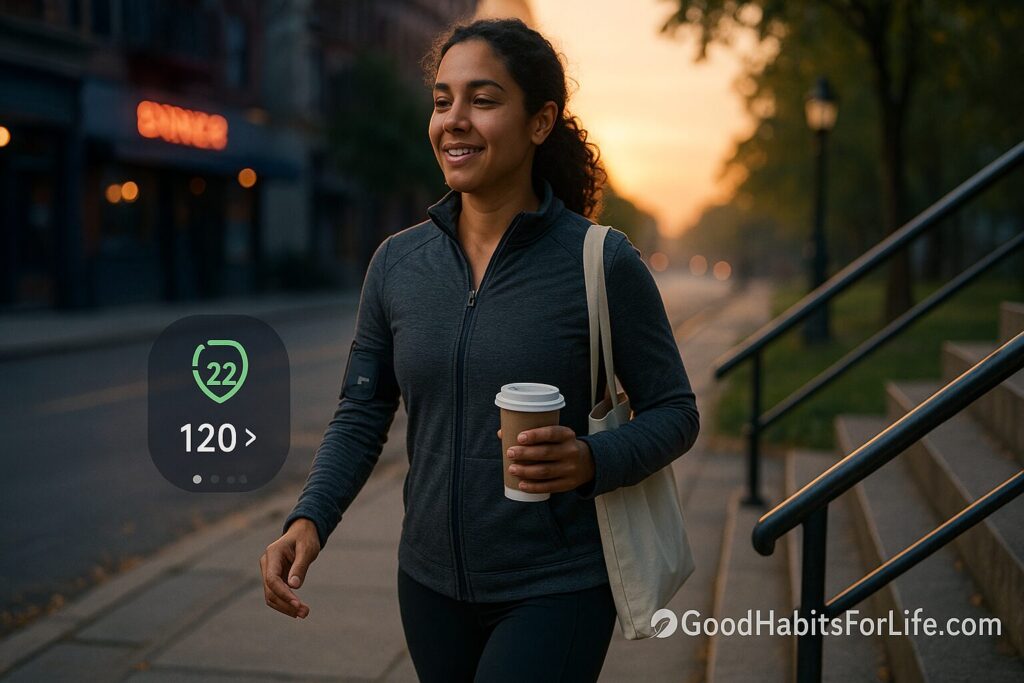
Outside coffee walk (light) → Zone-2 (30–45 min) → errands on foot (NEAT) → evening screen dimming.
🧰 Tools & Resources
-
Timers & tracking: Apple/Google Clock (consistent alarms), step tracker (any phone/watch).
-
Light hygiene: Daytime: balcony/park time; Evening: device night-shift settings or blue-light-reducing glasses.
-
Training: Any easy-pace cardio app or bike trainer that shows heart-rate; aim for 60–70% HRmax. chhs.source.colostate.edu
-
Sleep education: AASM patient resources for healthy sleep habits. Sleep Education
🧾 Key Takeaways
-
Keep wake time within ~1 hour of weekdays.
-
Use morning light + Zone-2 + NEAT to anchor your clock. PMC
-
Caffeine cut-off (–8 h) and minimal alcohol protect sleep quality. Sleep FoundationPubMedPMC
-
Aim for ≥7 hours with consistent timing, not just more hours on Sunday. jcsm.aasm.orgaasm.org
❓ FAQs
1) How big a weekend shift counts as social jet lag?
Even ~1–2 hours later on weekends can matter; keep wake time within ~1 hour when you can. Sleep Education
2) What exact heart rate is “Zone-2”?
About 60–70% of HRmax; the “talk test” works—you can speak in short sentences. chhs.source.colostate.edu
3) Will one late night ruin my sleep week?
No. Anchor wake time the next morning, get light + movement, and you’ll re-align within a day or two. PMC
4) Do I need melatonin?
Most people don’t. If considering it (e.g., shifting for travel), speak to a clinician—timing/dose matter and supplements vary widely. aasm.org
5) Is afternoon coffee really a problem?
Often yes; systematic reviews show shorter and lighter sleep after caffeine. Keep an 8-hour buffer before bedtime. PubMed
6) Does lifting weights help, or only cardio?
Both help overall health; for circadian anchoring, light morning cardio is especially effective. Add strength work earlier in the day when possible. PubMed
7) Are naps allowed on weekends?
Short 10–20 min naps before mid-afternoon can help without pushing bedtime. Keep them early.
8) I’m a shift-worker—does this apply?
Core principles still apply, but shift-work needs specific scheduling and light guidance; see circadian disorder resources or a sleep specialist. aasm.org
📚 References
-
Wittmann M. Social jetlag: misalignment of biological and social time. Curr Biol. 2006. PubMed
-
Roenneberg T, et al. Social Jetlag and Obesity. Curr Biol. 2012. Cell
-
American Academy of Sleep Medicine & Sleep Research Society. Recommended Amount of Sleep for a Healthy Adult. J Clin Sleep Med. 2015; AASM summary page 2024. jcsm.aasm.orgaasm.org
-
Roenneberg T. How can social jetlag affect health? J Sleep Res. 2023 (review). PMC
-
Crowley SJ, et al. Phase advancing human circadian rhythms with morning bright light + afternoon melatonin. Sleep Med. 2015. PMC
-
Youngstedt SD, et al. Circadian phase-shifting effects of bright light, exercise, and combined stimuli. Sleep Med Rev. 2016. PMC
-
Banno M, et al. Exercise can improve sleep quality: systematic review/meta-analysis. BMC Psychiatry. 2018. PubMed
-
Cleveland Clinic. Exercise Heart-Rate Zones Explained (includes Zone-2). 2023. Cleveland Clinic
-
Levine JA. Non-exercise activity thermogenesis (NEAT). Best Pract Res Clin Endocrinol Metab. 2002; & 2004 review. PubMed+1
-
Gardiner C, et al. Effect of caffeine on subsequent sleep: systematic review/metaanalysis. 2023. PubMed
-
Colrain IM, Nicholas CL. Alcohol and the sleeping brain. Nat Rev Neurol. 2014; plus alcohol & normal sleep review. PMCPubMed
-
AASM Sleep Education. Healthy Sleep Habits (keep a consistent schedule). 2025. Sleep Education
Disclaimer: This article is educational and not a substitute for personalized medical advice; consult a qualified clinician about your sleep or before changing medications/supplements.