
Wind-Down Stack: Light, Breath, Story, Sound: Zone 2 + NEAT (2025)
Wind-Down Stack: Light, Breath, Story, Sound — Zone 2 + NEAT
Table of Contents
🧭 What the Wind-Down Stack Is (and Why It Works)
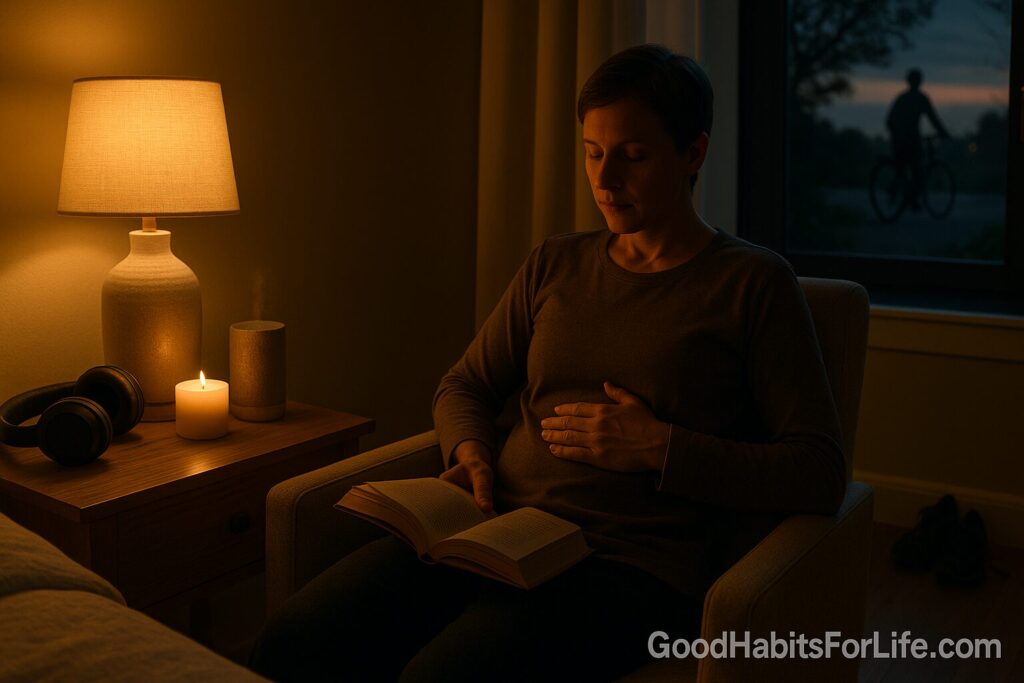
A wind-down stack is a short, repeatable sequence that cues your body to shift from alert to sleepy. Ours uses four evidence-aligned levers—Light, Breath, Story, and Sound—then reinforces sleep at the systems level with daytime Zone-2 aerobic work and NEAT (non-exercise movement).
-
Light: Evening bright/blue light delays melatonin and pushes your body clock later; dimmer, warmer light protects it. PNAS
-
Breath: Slow, diaphragmatic breathing activates the parasympathetic (“rest and digest”) response. NCCIH
-
Story: Reading a physical book before bed improves sleep quality in randomized trials. PMC
-
Sound: Relaxing music or gentle noise can reduce sleep latency and improve subjective sleep quality. Cochrane
-
Zone 2 + NEAT: Regular moderate activity (Zone-2 intensity) and more all-day movement are linked to better sleep and overall health. PMC+1
✅ Quick Start: Do This Tonight
-
T-120 min: Switch home lighting to warm/dim. Turn on Night Shift/Night Light if you must use screens.
-
T-30 min: Phone away. Put a paper book on your pillow, headphones or speaker by the bed, and a glass of water within reach.
-
T-20 min — BREATH (4–5 min): Sit up; inhale 4 s, exhale 6–8 s. Repeat ~30 cycles.
-
T-15 min — STORY (10–20 min): Read light fiction or familiar nonfiction (no cliff-hangers).
-
T-0 — SOUND (optional): Start low-volume white/pink noise or calm instrumental music; set a 30-min timer.
-
Room setup: 18–20 °C (64–68 °F), blackout/eye mask, cool breathable bedding.
-
If awake >20 min: Get up, read under dim light until sleepy, then return to bed.
🛠️ 30-60-90 Day Habit Plan
Days 1–30 (Install the stack)
-
Pick a fixed lights-out time and aim to start the stack ~45 minutes before.
-
Track 3 metrics nightly: start time, total wind-down minutes, sleep quality (1–5).
-
Daytime: 3×/week Zone-2 (see below), 6,000–8,000 steps on off days.
Days 31–60 (Optimize signals)
-
Nudge lights-out earlier by 15 minutes if still groggy in mornings.
-
Standardize your book genre and soundscape to minimize decision fatigue.
-
Add a 5-minute evening stretch or progressive muscle relaxation on tense days.
Days 61–90 (Automate & expand)
-
Keep the stack even when traveling (pack a clip-on warm light, eye mask, paperback).
-
Layer in a morning light anchor: 5–10 minutes outdoor daylight within an hour of waking—this strengthens your circadian rhythm and makes the evening stack even more effective. PLOS
🧠 Techniques & Frameworks
🕯️ Light: Guard Your Clock
-
Two-hour taper: Shift to warm (<2700 K) lamps and dimmers 2–3 h before bed; avoid overhead bright light.
-
Screen hygiene: Use device night modes + reduce brightness; prefer print or dedicated e-ink. Evening e-readers and bright screens delay circadian timing and suppress melatonin. PNAS
-
Bedroom darkness: Use blackout curtains or an eye mask; cover LEDs.
-
Morning reset: Get outdoor light soon after waking; it sets your clock and improves sleep drive at night. PLOS
🌬️ Breath: Switch on “Rest & Digest”
-
Technique: 4-second inhale ➝ 6–8-second exhale (through the nose if comfortable) for 3–5 minutes.
-
Why it works: Slow breathing elicits the physiological relaxation response—slower heart rate and lowered arousal. NCCIH
-
Progression: Add body scan or progressive muscle relaxation on stressful days.
📖 Story: Read Yourself to Sleep
-
What to read: Paper > screens; pick familiar, low-stakes fiction or gentle nonfiction.
-
Dosage: 10–20 minutes is enough for most people.
-
Evidence: A pragmatic randomized trial found that reading a book in bed before sleep improved sleep quality vs. not reading. PMC
🔉 Sound: Mask, Calm, or Sync
-
Options:
-
White/pink noise (fan, noise app) to mask disruptions.
-
Calm instrumental or nature sounds to reduce arousal.
-
-
Evidence: A Cochrane review shows music can improve subjective sleep quality in adults with insomnia symptoms; overall, results vary by individual—experiment. Cochrane
-
Safety: Keep volume low; use timers, especially with earbuds.
🏃♀️ Zone 2 + NEAT: The Daytime Boost for Better Nights
-
Zone-2 defined: Comfortable, conversational cardio—roughly 60–70% of max heart rate (you can talk in full sentences).
-
Amount: Adults benefit from 150–300 min/week of moderate-intensity aerobic activity (e.g., brisk walking, cycling), per global guidelines. PMC
-
Why it helps sleep: Regular physical activity is associated with shorter time to fall asleep and better sleep quality; high-intensity late at night can be too activating for some. PMC
-
NEAT (Non-Exercise Activity Thermogenesis): All the small movements that add up—standing, strolling, stairs, chores. NEAT varies widely between people and plays a meaningful role in energy balance and metabolic health. Aim to sprinkle movement from morning to evening. PubMed
-
Daily targets: 7,000–10,000 steps; stand/move 5 minutes each hour; take stairs; walking calls.
👥 Audience Variations
-
Students: Anchor the stack after last screen study block; use a desk lamp at 20–40% brightness in warm mode; keep a short story collection by the bed.
-
Parents: Run a family wind-down—dim lights house-wide, quiet toys/books, bath, then everyone reads. (For infants/toddlers, keep sound consistent and dim light after feedings.)
-
Busy professionals: Put the stack in your calendar; use a smart plug to auto-dim lights at T-120 and to start pink-noise at T-0.
-
Seniors: Emphasize morning daylight, gentle Zone-2 walks, and lower volumes for audio; discuss any persistent insomnia with a clinician.
-
Teens: Move homework earlier where possible; phones docked outside the bedroom 30–60 minutes before lights-out.
⚠️ Mistakes & Myths to Avoid
-
Myth: “Blue-light glasses fix everything.” Daytime blue light is helpful; at night, overall brightness/timing matters more than glasses alone. You still need the light taper. Harvard Health
-
Mistake: Late-night HIIT. Intense workouts close to bedtime can spike arousal; schedule them earlier and keep evenings easy. PMC
-
Myth: “Any book works.” Thrillers can raise arousal; choose calming, familiar content.
-
Mistake: Cranking noise too loud. Keep soundscapes low and timer-limited.
-
Myth: “Catch-up sleep fixes weekdays.” Consistency beats swings; aim for a steady schedule.
💬 Real-Life Scripts You Can Copy
-
Phone sign-off (to yourself): “It’s 10:00. Night mode on. I’ll pick this up tomorrow.”
-
Household cue: “Lights to warm and low now; reading in 15.”
-
If awake at 2 a.m.: “Up for a chapter under the lamp; back to bed when sleepy.”
-
Work boundary email footer: “I pause email after 9 p.m. for sleep—thanks for understanding.”
🧩 Tools, Apps & Resources (pros/cons)
-
Lighting: Smart bulbs with warm presets (easy automation; cost more). Clip-on amber light for travel (portable; narrower beam).
-
Breathing: Breathwrk, Oak, Headspace (guided timers; subscriptions).
-
Reading: Paperbacks (best for arousal control; physical clutter) or e-ink readers with warm light at lowest brightness (still light-emitting).
-
Sound: White/pink noise apps or simple fan (cheap and effective; learn safe volume).
-
Activity: Any step counter to raise NEAT; HR monitors to keep Zone-2 conversational (extra gadget, optional).
🔑 Key Takeaways
-
Your brain learns bedtime from repeatable cues—stack the same 3–4 steps nightly.
-
Light is the strongest external signal; dim and warm wins at night. PNAS
-
Slow breathing, a short paper read, and gentle audio lower arousal and ease sleep onset. NCCIHPMCCochrane
-
Daytime movement—Zone-2 cardio + high NEAT—sets up deeper, easier sleep. PMC+1
-
Keep it consistent for 30–90 days; small, boring, nightly wins beat heroic one-offs.
❓ FAQs
How long should my wind-down take?
20–45 minutes is plenty for most people—enough to lower arousal without turning into a project.
Is reading on a phone OK if I use Night Shift?
Better than bright default screens, but still not ideal. If you must, lowest brightness + warmest tone + short duration; print or e-ink is better at bedtime. PNAS
Which breathing pattern is “best”?
Anything slow and comfortable works. Try 4-in/6-out or box breathing (4-4-4-4). The key is slow exhale to trigger relaxation. NCCIH
Does music/noise help everyone?
No—responses vary. If sound soothes you or masks a noisy street, use it. If it distracts you, skip it. Evidence is mixed but supportive for many. Cochrane
When should I exercise for better sleep?
Do Zone-2 most days, ideally finishing vigorous sessions at least a few hours before bed. Regular moderate activity improves sleep quality. PMC
How warm should my lights be at night?
Aim for <2700 K (think amber/warm white) and lower illuminance; keep mornings bright, evenings dim. PLOS
What if I wake up at 3 a.m.?
Get out of bed after ~20 minutes; read under dim light until sleepy, then return. Keep clocks out of sight to avoid time-checking.
Can I skip parts of the stack?
Yes—make it your own. Most people benefit from at least light taper + one calming activity.
📚 References
-
Harvard Health Publishing — Blue light has a dark side. Harvard Health
-
Chang AM et al., PNAS (2015) — Evening use of light-emitting eReaders negatively affects sleep. PNAS
-
NCCIH — Relaxation Techniques: What You Need to Know. NCCIH
-
Finucane E. et al. (2021) — Does reading a book in bed make a difference to sleep? (randomized trial). PMC
-
Cochrane Review (2022) — Music for insomnia in adults. Cochrane
-
Alnawwar MA. et al. (2023) — Effect of Physical Activity on Sleep Quality (review). PMC
-
WHO Guidelines (2020) — Physical activity recommendations for adults. PMC
-
Levine JA. (2002/2004) — Non-exercise activity thermogenesis (NEAT). PubMed
-
Brown TM. et al., PLoS Biology (2022) — Consensus recommendations on daily light exposure. PLOS
Disclaimer: This article is educational and is not a substitute for personalized medical advice; speak with your healthcare provider about your sleep or exercise needs.