
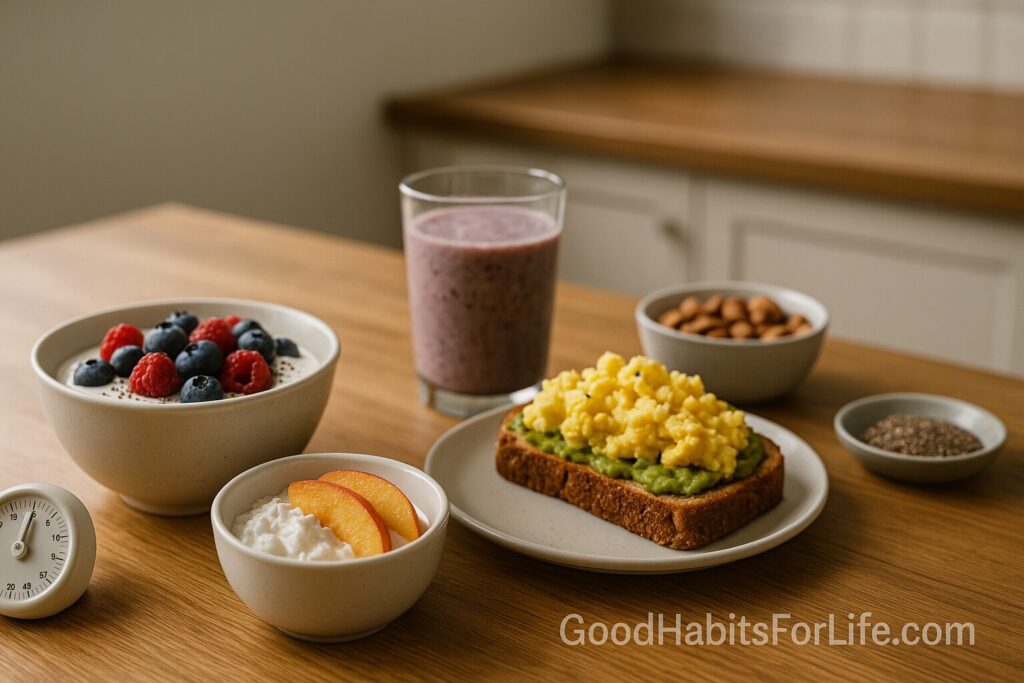
ProteinForward Breakfasts in 10 Minutes
Protein-Forward Breakfasts in 10 Minutes
Table of Contents
🧭 What & Why: Protein-Forward Breakfasts
A protein-forward breakfast is a morning meal intentionally designed to deliver ~20–30 g of high-quality protein alongside fiber-rich carbs and healthy fats. This range helps maximize morning muscle-protein synthesis and tends to keep you fuller for longer. PMC
Research shows that higher-protein breakfasts (vs. low-protein or skipping breakfast) improve appetite control, reduce cravings, and can decrease evening snacking—useful whether your goal is focus, energy, or weight management. PubMed+1
Protein also influences hunger-regulating hormones (GLP-1, PYY, CCK) and slows gastric emptying, which helps satiety. PMC+1ScienceDirect
As a baseline, adults can use 0.8 g protein/kg body weight per day (minimum to avoid deficiency) and distribute protein across meals—breakfast included. www.heart.org
✅ Quick Start: 10-Minute Builds (20–30 g Protein)
Protein counts are approximate, based on typical portions; data drawn from USDA FoodData Central and derivative summaries. FoodData Central
-
Greek Yogurt Bowl (≈25 g)
-
170 g plain nonfat Greek yogurt (≈17 g) + 30 g whey/plant protein (≈8 g).
-
Add berries + crushed nuts; drizzle honey if needed. My Food Data
-
-
Egg + Cottage Cheese Scramble (≈30 g)
-
2 large eggs (≈12–13 g) + 150 g low-fat cottage cheese (≈16–17 g).
-
Scramble with spinach; finish with pepper/chilli flakes. My Food DataUCLA Health
-
-
Tofu Bhurji Wrap (≈24–28 g)
-
150 g firm tofu (≈18–20 g) sautéed with onions/tomatoes/masala.
-
Roll in 1 whole-wheat roti/chapati (≈4–6 g).
-
-
Protein Oats (≈24–30 g)
-
40 g oats cooked in 250 ml milk (≈13–15 g combined) + 20 g protein powder (≈16–18 g); fold in banana/peanut butter.
-
-
Smoked Salmon & Egg Toast (≈25–28 g)
-
1 slice sprouted/whole-grain toast + 80 g smoked salmon (≈16–18 g) + 1 egg (≈6–7 g). My Food Data
-
-
High-Protein Smoothie (≈25–35 g)
-
1 scoop protein (20–25 g) + 170 g Greek yogurt (≈17 g) + fruit + water/ice. My Food Data
-
Speed tips: pre-boil eggs, keep tofu and chopped veg ready, portion yogurt in jars, pre-mix dry oats + protein, and stock sprouted/whole-grain bread.
🛠️ 7-Day Starter Habit Plan
-
Day 1–2: Pick one build; make it two days in a row. Log how long it actually takes.
-
Day 3: Add fruit/veg to the same build; prep a second portion for tomorrow.
-
Day 4: Switch to a different protein (e.g., eggs → yogurt; tofu → cottage cheese).
-
Day 5: Hit 20–30 g without powder (use eggs/tofu/yogurt/beans).
-
Day 6: Add fiber booster (chia/flax/berries/leafy veg).
-
Day 7: Plan next week: rotate 3 go-to breakfasts; prep a shopping list and a 10-minute morning block in your calendar.
Checkpoint cues:
-
Fullness lasts 3–4 hours; fewer morning snacks; steadier energy; easier portion control at lunch. If not, increase protein or add fiber/fats.
🧠 Techniques & Frameworks
-
The 20–30 Rule: Target 20–30 g protein at breakfast to maximize morning muscle-protein synthesis. For most adults, this is the sweet spot per meal. PMC
-
P+F+F (Protein + Fiber + Fat): Anchor the plate with a protein, add a fiber source (fruit/veg/whole grains), and include a little healthy fat for satisfaction.
-
Even Distribution: Spread daily protein across 3–4 meals instead of back-loading at dinner. Helps satiety and quality recovery. American Journal of Clinical Nutrition
-
Hunger Science: Protein-rich meals can boost GLP-1/PYY/CCK activity and slow gastric emptying—one reason high-protein breakfasts feel “steady.” PMC+1
👥 Audience Variations
-
Students/Teens: Smoothies, yogurt bowls, egg wraps—portable and budget-friendly. Trials in teens show appetite and snacking benefits from higher-protein breakfasts. PubMed
-
Busy Professionals: Prep 3 jars of Greek-yogurt parfaits or tofu bhurji for grab-and-go in <10 minutes.
-
Parents/Kids: Scrambled eggs + chapati + fruit; or mini yogurt parfaits. Keep toppings fun (granola, berries).
-
Seniors: Prioritize texture (softer foods), add dairy/soy proteins for convenience; aim for 25–30 g to offset age-related muscle loss. PMC
-
Vegetarian/Vegan: Use tofu, soy milk, plant protein powders, beans; pair with grains/nuts/seeds for a complete amino acid profile. MedlinePlus
⚠️ Mistakes & Myths to Avoid
-
Myth: “Breakfast protein is only for bodybuilders.” Protein supports satiety, focus, and healthy aging for everyone, not just lifters. MedlinePlus
-
Mistake: Skipping breakfast then overeating at night. Higher-protein breakfasts reduce evening snack drive in studies. PubMed
-
Myth: “More than 30 g is wasted.” ~20–25 g maximizes MPS in young adults; higher amounts at a meal may still be useful (e.g., larger bodies/older adults), but the key is hitting the threshold consistently and distributing across the day. PMCAmerican Journal of Clinical Nutrition
-
Mistake: Only counting protein powder. Whole-food proteins bring extra micronutrients and texture—use both strategically.
🗣️ Real-Life Examples & Scripts
-
Morning of a busy workday:
“No time? I’ll do Greek yogurt (170 g) + scoop of protein + berries. That’s 25–30 g in 2 minutes.” My Food Data -
Family breakfast:
“Let’s make egg + cottage cheese scramble and fruit. Ten minutes; everyone eats.” My Food DataUCLA Health -
Veg/vegan option:
“Tofu bhurji wrap with spinach and peppers—keep a block of tofu in the fridge for fast protein.”
🧰 Tools, Apps & Resources
-
FoodData Central (USDA): Look up exact protein for your foods. FoodData Central+1
-
Cronometer / MyFitnessPal / Yazio: Quick logging; create breakfast templates.
-
Batching gear: Microwave rice-cooker/egg boiler, stick blender, non-stick pan, storage jars.
📚 Key Takeaways
-
Hit 20–30 g protein at breakfast. PMC
-
Use 10-minute builds you can repeat under pressure.
-
Combine protein + fiber + fat for lasting fullness.
-
Distribute protein evenly across the day. American Journal of Clinical Nutrition
-
Keep ingredients prepped so the habit survives busy mornings.
❓ FAQs
1) Is protein powder necessary?
No. Powder is convenient, but eggs, Greek yogurt, tofu, cottage cheese, milk, and legumes can easily reach 20–30 g in 10 minutes. FoodData Central
2) I’m vegetarian—how do I get enough protein at breakfast?
Use dairy (yogurt, cottage cheese, milk) or soy (tofu, soy milk, tempeh) and consider nuts/seeds; pair foods to cover amino acids. MedlinePlus
3) Will a high-protein breakfast help with weight control?
It can help by increasing satiety and reducing later snacking, making calorie control easier. PubMed+1
4) How much protein should I eat per day?
Start with 0.8 g/kg/day as a minimum; distribute protein across meals. Some individuals (very active/older adults) may benefit from more—speak with a clinician or dietitian. www.heart.org
5) What if I’m not hungry in the morning?
Try a high-protein smoothie or split breakfast in two (e.g., yogurt at 9:00, toast + egg at 11:00) while still hitting 20–30 g by late morning.
6) Are eggs okay every day?
Eggs are nutrient-dense and provide ~6–7 g protein each; consider overall diet and personal risk factors—consult your clinician if you have lipid concerns. My Food Data
7) Do I need to “carb-cut” at breakfast?
No—pair fiber-rich carbs (oats, fruit, whole grains) with protein and healthy fats for steady energy.
References
-
Leidy HJ, et al. Am J Clin Nutr (2013): Higher-protein breakfast improved appetite regulation and evening snacking in adolescents. American Journal of Clinical Nutrition
-
Leidy HJ, et al. Br J Nutr (2009): Protein at breakfast led to greater fullness vs. other meal times during energy restriction. PubMed
-
Schoenfeld BJ & Aragon AA. J Int Soc Sports Nutr (2018): Single-meal protein to maximize MPS ~20–25 g; context for distribution. PMC
-
Layman DK. Am J Clin Nutr (2015): Meal-threshold concept and protein redistribution for metabolic health. American Journal of Clinical Nutrition
-
Moon J, et al. Nutrients (2020): Protein elevates GLP-1, CCK, PYY; appetite mechanisms. PMC
-
van der Klaauw AA, et al. (2013): High-protein meal increased GLP-1/PYY secretion in controlled test breakfasts. PMC
-
American Heart Association (2024): Protein RDA 0.8 g/kg/day and general guidance. www.heart.org
-
USDA FoodData Central (ongoing): Authoritative nutrient data for foods used in examples. FoodData Central
-
MyFoodData (USDA-derived) Greek yogurt profile (typical 170 g serving ≈17 g protein). My Food Data
-
MyFoodData (USDA-derived) egg profile (large egg ≈6.3 g protein). My Food Data
Disclaimer: This article is for general education and is not a substitute for personalized nutrition or medical advice; consult a qualified professional for individual guidance.