
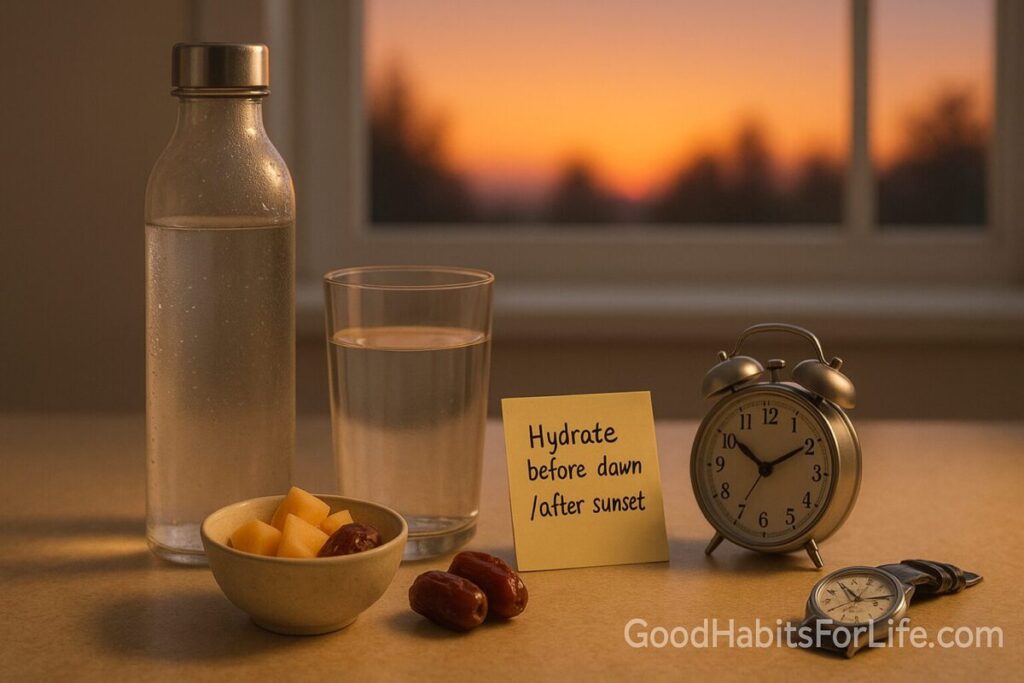
Religious Fasting & Drinks: Respect and Hydration: AI workflows (2025)
Religious Fasting & Hydration: Respectful Drink Rules
Table of Contents
🧭 What This Guide Covers & Why Hydration Matters
Religious fasts exist across faiths—e.g., Ramadan (Islam), Yom Kippur/Tisha B’Av (Judaism), Lent/other fasts (Christian traditions), and myriad Hindu and Buddhist observances. In many of these, no eating or drinking occurs during fasting windows; hydration happens before and after. This guide helps you respect those rules while staying safe at home, work, on flights, and across time zones.
Proper hydration supports temperature regulation, cognition, mood, and physical performance. Public-health agencies suggest aiming for roughly 2.0 L/day (women) and 2.5 L/day (men) of total water from food and beverages, adjusted for climate, activity and individual needs. EFSA Journal The UK Eatwell guidance also frames this as 6–8 cups/glasses daily (more if you’re active, pregnant, unwell or it’s hot). nhs.uk
Religious respect + health safety: In Ramadan, WHO emphasizes drinking “plenty of water” in non-fasting hours and choosing hydrating foods; local NHS bulletins clarify exemptions/adjustments for people with medical needs. EMROEast London NHS Foundation Trust For Yom Kippur, most healthy adults fast completely, but physicians highlight medical exceptions. Georgetown Medical Review
✅ Quick Start: Do This Today
-
Confirm the rule. Know if your fast prohibits all fluids during the window (Ramadan day hours; Yom Kippur/Tisha B’Av ~25 h; others vary). When in doubt, consult your faith authority. EMROGeorgetown Medical Review
-
Back-load hydration. Distribute intake across non-fasting hours (e.g., between sunset→sleep and pre-dawn). Use small, frequent sips rather than chugging. CDC Stacks
-
Prioritize electrolytes via food. Soups, fruits (watermelon, citrus), vegetables, yogurt and balanced meals help retain fluids. EMRO
-
Minimize diuretics late. Reduce caffeine near bedtime to protect sleep and hydration status. nhs.uk
-
Plan meds. If you take medication, ask your clinician about schedule/dose changes, or whether you’re exempt. Never stop essential meds or prescribed fluids without advice. cnwl.nhs.ukEast London NHS Foundation Trust
-
Watch your outputs. Aim for pale-yellow urine and steady energy. If dizzy, confused, or faint—break the fast and seek care. nhs.uk
🧪 Hydration Science & Safe Targets
-
Baselines: EFSA’s adequate intakes: ~2.0 L/day (women), ~2.5 L/day (men) total water (beverages + food). EFSA Journal
-
Hourly safety: For strenuous heat exposure, CDC recommends ~240 mL every 15–20 min and warns not to exceed ~1.5 qt (1.4 L) per hour to avoid hyponatremia. Apply the “little-and-often” principle during non-fasting windows too. CDC Stacks
-
Ramadan specifics: WHO regional guidance: “Drink plenty of water” and include hydrating foods at iftar/suhoor. EMRO
-
Special populations:
-
Diabetes: Use a clinician-led plan; IDF-DAR outlines risk stratification and when to avoid fasting. diabetes.org.sg
-
Acute illness, frailty, pregnancy, breastfeeding: NHS guidance notes exemptions or modifications—health protection comes first. cnwl.nhs.uk
-
Jewish fasts: Most healthy adults fully abstain from food and drink on Yom Kippur; physicians provide protocols for medically indicated exceptions. Georgetown Medical Review
-
🤖 AI Workflows (2025): Planning, Prompts & Automations
Use these plug-and-play prompts with your AI assistant or automation platform.
1) Hydration Plan Generator (suhoor/iftar windows)
Prompt: “I’m observing [fast type] in [city/time-zone] from [start–end times]. Create a 7-day hydration schedule that hits [2.0/2.5 L] total water via small, frequent servings in non-fasting hours. Include foods that aid hydration (soups, fruit, yogurt) and a caffeine cut-off.”
2) Medication & Fasting Check (for doctors’ review)
Prompt: “Draft a questions list for my GP about safely fasting with [condition/medication], including timing, dose changes, and signs to stop fasting immediately.”
3) Travel & Time-Zone Shift
Prompt: “I’m flying [route, dates]. Map my fasting window across time zones, note local sunset/sunrise at layovers, and schedule hydration blocks after landing.”
4) Respectful RSVP & Workplace Note
Prompt: “Write a brief, respectful message to [host/HR/manager] explaining I’m fasting, can join socially without eating/drinking, and will bring water or break fast at [time].”
5) Calendar + Reminder Automation
-
Add events: “Suhoor Hydration Block” (40–60 min), “Iftar Hydration Block” (60–90 min), “Post-Taraweeh sip breaks,” or for other fasts, “Sunset Hydration.”
-
Smart reminders: every 15–20 min during non-fasting windows until daily target met. CDC Stacks
6) Menu Builder
Prompt: “Plan [7/30] balanced suhoor/iftar menus (vegetarian/halal/kosher) with hydration-friendly foods, fiber, and protein; include a shopping list.”
✈️ Travel, Work & Social Events: Respect + Practicalities
-
Flights & time zones: Confirm local sunrise/sunset at departure, layovers, and arrival. Pack clear water bottle (fill after security) for non-fasting hours; consider oral rehydration salts if you land dehydrated.
-
Workdays in heat: Increase non-fasting hydration, pre-cool (tepid shower), wear breathable fabrics; if symptoms of heat illness arise, break the fast and seek care. CDC
-
Office meetings/events: Let the organizer know you’re fasting, request a quiet space at sunset to break fast, or RSVP as “attending (no refreshments).”
-
Hosting respectfully: Provide water/fruit at sunset, label ingredients, and offer a private area for prayer/breaking fast.
👥 Audience Variations
Students/teens: Keep a water-first routine after sunset; prep portable, hydrating snacks for post-fast study (fruit + yogurt). Early bedtime protects next-day focus.
Professionals/shift workers: Use AI reminders to distribute intake between commute, desk and home; schedule caffeine early.
Parents: Batch-prep soups/salads; align kids’ mealtimes with your iftar to simplify family routines.
Seniors: Review meds with a clinician; consider lighter fasts if advised. Keep electrolytes via food (broths, fruit). cnwl.nhs.uk
⚠️ Mistakes & Myths to Avoid
-
“I’ll chug 2 L at iftar.” Large boluses overload the gut; small, frequent sips hydrate better. CDC Stacks
-
“Caffeine doesn’t count.” Caffeinated drinks can count toward fluids but may disturb sleep; use strategically. nhs.uk
-
“Everyone should fast.” Medical conditions (e.g., high-risk diabetes, acute illness) may preclude fasting. Follow clinician guidance and faith exemptions. diabetes.org.sgcnwl.nhs.uk
-
“Only water hydrates.” Foods (soups, fruit, vegetables, dairy) contribute to total intake. nhs.uk
💬 Real-Life Scripts (copy-paste)
-
To a manager:
“I’m observing a religious fast this week. I’ll join meetings as usual; I won’t be eating/drinking during daylight. Could we schedule a 10-minute sunset break for hydration?” -
To a flight attendant:
“I’m fasting today. May I have bottled water ready for after [local sunset time]?” -
To a friend/host:
“I’m so happy to come! I’m fasting until [time], but I’ll join the conversation. I’ll break my fast at [time] and will bring something to share.” -
To HR:
“I’m observing [fast]. Could we provide a quiet space at [time] for breaking the fast and prayer? I’ll keep hydration before/after working hours.”
🧰 Tools & Apps
-
Water trackers: Any simple tracker works; set goals to 2.0–2.5 L and spread alerts.
-
Faith-timing apps/calendars: Local sunrise/sunset times, Ramadan timetables, Jewish fast calendars.
-
Notes/Shortcuts: One-tap hydration log, menu ideas, reminders tied to sunset/sunrise.
-
Wearables: Vibrating reminders during non-fasting windows.
📌 Key Takeaways
-
Respect the no-drink rules during the fast; hydrate before/after using small, frequent sips. CDC Stacks
-
Target ~2.0–2.5 L/day (women/men) total water from all sources, adjusted for your context. EFSA Journal
-
Use AI workflows to automate menus, reminders, travel timing, and respectful messages.
-
If you’re ill, pregnant, frail, or have diabetes, seek tailored guidance—exemptions exist. diabetes.org.sgcnwl.nhs.ukGeorgetown Medical Review
❓ FAQs
1) Can I count tea, milk, or soup toward my daily total?
Yes. Total fluid includes water from beverages and foods; choose lower-sugar options and avoid heavy caffeine late. nhs.uk
2) How do I avoid nighttime bathroom trips?
Front-load intake between iftar and early evening, taper in the final hour before sleep; include hydrating foods (soup, fruit) so fluids absorb more steadily. EMRO
3) What if I feel faint or confused while fasting?
Break the fast and seek medical care—safety comes first under both medical and faith guidance. cnwl.nhs.ukGeorgetown Medical Review
4) I have diabetes—can I fast?
Some can with preparation; others shouldn’t. Use IDF-DAR risk stratification and get a clinician’s plan well before the fast. diabetes.org.sg
5) How much can I safely drink at once after breaking the fast?
Avoid “chugging.” For hydration safety, frequent small servings are superior; generally avoid more than ~1.5 qt (1.4 L) per hour. CDC Stacks
6) I’m traveling—when do I start/stop my fast?
Follow local sunrise/sunset where you are; plan hydration blocks around flight timing, and carry supplies to hydrate promptly after sunset.
7) Do caffeinated drinks dehydrate me?
Moderate coffee/tea can count toward fluids, but excess caffeine may affect sleep or stomach comfort. nhs.uk
8) Are there health benefits to religious fasting?
Evidence varies by context; some reviews during Ramadan show neutral or favorable metabolic effects for healthy adults when well-planned. PMC
9) What about Lent or Orthodox fasts where certain foods are avoided?
These often restrict animal products but may not require complete drink abstinence. Rules and exemptions exist for health, travel, or age—ask your priest. (See examples from official church resources.) St. George’s Episcopal Church
10) Does WHO give a specific “glasses per day” number for Ramadan?
Regional WHO advice encourages drinking plenty of water and hydrating foods during non-fasting hours rather than a one-size number; align to your personal target. EMRO
📚 References
-
European Food Safety Authority (EFSA). Dietary Reference Values for Water. 2010. https://efsa.onlinelibrary.wiley.com/doi/pdf/10.2903/j.efsa.2010.1459 EFSA Journal
-
NHS. Water, drinks and hydration. https://www.nhs.uk/live-well/eat-well/food-guidelines-and-food-labels/water-drinks-nutrition/ nhs.uk
-
CDC. About Heat and Your Health (hydration tips). https://www.cdc.gov/heat-health/about/index.html CDC
-
CDC/NIOSH. Heat Stress: Hydration (safe hourly limits). https://stacks.cdc.gov/view/cdc/45851 CDC Stacks
-
WHO EMRO. Ramadan 2025: A time for health. https://www.emro.who.int/campaigns/ramadan2025 EMRO
-
IDF-DAR. Diabetes and Ramadan: Practical Guidelines 2021. https://www.diabetes.org.sg/wp-content/uploads/2021/11/IDF-Diabetes-and-Ramadan-Practical-Guideline-2021.pdf diabetes.org.sg
-
CNWL NHS. Looking after yourself this Ramadan (exemptions/medication). https://www.cnwl.nhs.uk/news/looking-after-yourself-ramadan cnwl.nhs.uk
-
ELFT NHS. Ramadhan Bulletin 2025 (prescribed fluids should not be delayed). https://www.elft.nhs.uk/sites/default/files/2025-03/Ramadhan%20Bulletin%20March%202025%20%281%29.pdf East London NHS Foundation Trust
-
Gupta N. Guidance for Physicians on the Yom Kippur Fast. 2023. https://gmr.scholasticahq.com/article/83342-guidance-for-physicians-on-the-yom-kippur-fast Georgetown Medical Review
-
Rouhani MH, et al. Is Ramadan fasting related to health outcomes? Nutrition J. 2014. https://pmc.ncbi.nlm.nih.gov/articles/PMC4274578/ PMC
-
USCCB. Fast & Abstinence (Lent). https://www.usccb.org/prayer-and-worship/liturgical-year-and-calendar/lent/catholic-information-on-lenten-fast-and-abstinence USCCB
-
North East London ICB. Guidance for Safe Fasting During Ramadan. https://primarycare.northeastlondon.icb.nhs.uk/wp-content/uploads/2023/11/NEL-Safe-Fasting-During-Ramadan-Guidance-v1_03.2023.pdf primarycare.northeastlondon.icb.nhs.uk
Disclaimer: This guide is educational and not medical advice. If you have a health condition, are pregnant/breastfeeding, elderly, or on medication, consult a qualified clinician and your faith authority before fasting.