
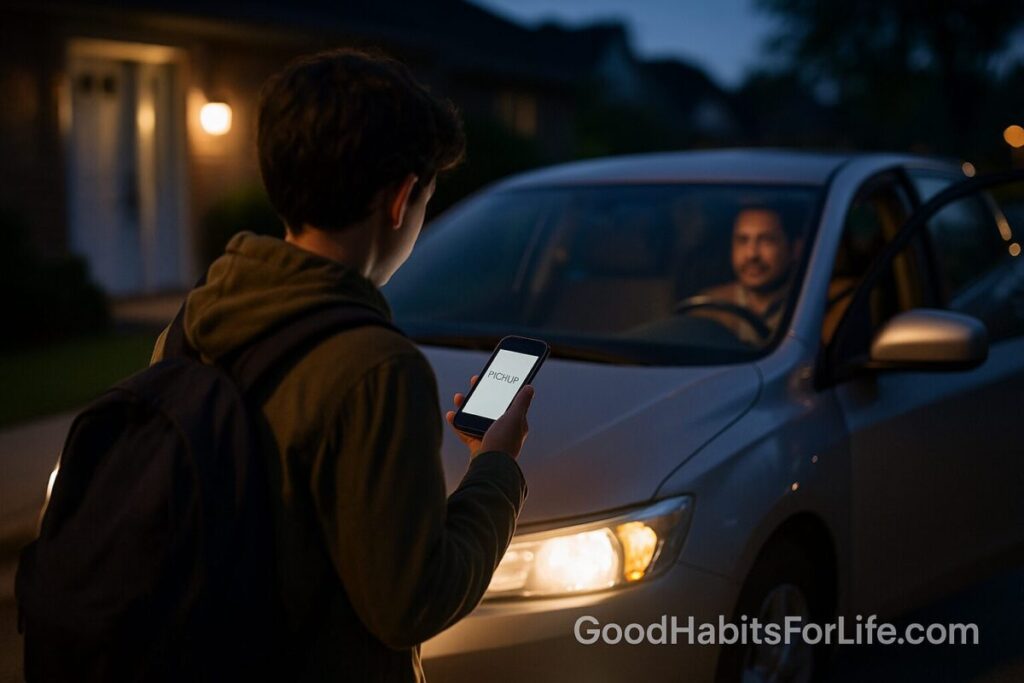
Party Plans & PickUp Protocols: Keep Kids Safe
Party Plans & Pick-Up Protocols: Keep Kids Safe
Table of Contents
🧭 What & Why
A clear “party plan” and pick-up protocol reduces risk during the most common high-risk windows for teens: evenings, weekends, and unstructured social events. Research consistently links parental monitoring/communication with lower odds of underage drinking and related harms, while rapid access to a sober ride and early help seeking lowers medical risk when alcohol or other substances are involved.1–5
Define the habit
-
Party plan: A 1-page checklist covering host details, timing, supervision, and exit options.
-
Pick-up protocol: Pre-agreed steps that make it easy to leave early or safely if plans change (code word, ride tiers, text check-ins, curbside rules).
Benefits (evidence-aligned)
-
Fewer risky situations when expectations are explicit and monitoring is warm, not harsh.1,2
-
Faster help-seeking when teens know amnesty/Good-Samaritan protections exist.3
-
Safer trips home via designated sober drivers or vetted alternatives.4,5
✅ Quick Start: Tonight’s Party Plan (10-minute set-up)
1) Lock the basics (2 min)
-
Where: Address + pin drop; apartment/house name; entrance landmark.
-
Who: Host’s name, adult supervisor contact, expected guest group.
-
When: Drop-off time; two possible pick-up times (e.g., 21:30 or 22:45).
2) Pick-up protocol (3 min)
-
Code word: “GREEN DOT” = “Pick me up now. No questions.”
-
Ride tiers: 1) Parent/guardian, 2) Pre-agreed trusted adult nearby, 3) Vetted taxi/rideshare (teen waits indoors, confirms plate, sits rear seat, shares trip).
-
Curbside rule: Teen waits inside until car arrives; parent texts “Here.” No honking, no last-minute crowding.
3) Check-ins (3 min)
-
Arrival text: “Here ✅”
-
Mid-event check-in: Photo or emoji ✅ at agreed time (e.g., 60–90 min in).
-
Departure text: “Leaving now ⏳ 15 min.”
4) Phone ready (2 min)
-
Battery ≥30% (portable power bank if <50%), ringer on, emergency SOS enabled, location sharing for the event only if both agree.
🛠️ 7-Day Starter Habit Plan
Goal: Make party planning automatic before weekend events.
Day 1 – Template
-
Download/print the 1-page Party Plan & Pick-Up Sheet (make your own or notes app). Sections: host, address/pin, adults, times, code word, ride tiers, contacts.
Day 2 – Code Word + Promise
-
Choose the code word. Parent states the No-Questions-Asked Ride promise (questions tomorrow, not in the car).
Day 3 – Transport Tiers
-
Add names/numbers for a trusted adult back-up (neighbor, aunt/uncle, coach). Vet one local taxi/rideshare provider and add it to favorites.
Day 4 – Laws & Safety Brief
-
Read a short explainer on medical amnesty/Good-Samaritan and social host rules in your region. Add 1–2 bullet notes to the sheet.
Day 5 – Phone Safety Drill
-
Enable emergency SOS, test location share, add emergency contacts, set a “pick-up playlist” and flashlight shortcut.
Day 6 – Dry Run
-
Do a mock pick-up text from teen to parent; time the response and pick-up ETA calculation.
Day 7 – Review & Reward
-
10-minute weekly review: What worked? What to tweak? Tiny reward (ice cream/movie) for completing the system.
🧠 Techniques & Frameworks that Work
The “3T” Framework: Tell, Time, Transport
-
Tell: Host, address, adult on site.
-
Time: Arrival, check-in, departure windows.
-
Transport: Ride tiers with exact steps.
Warm Monitoring vs. Policing
-
Use supportive check-ins (“Thanks for the ‘Here ✅’ text”) versus interrogations. Warm monitoring is linked to better outcomes than punitive surveillance.1,2
Medical Amnesty Mindset
-
If someone is unwell (confusion, vomiting, unresponsive, slow breathing), call emergency services immediately. Many regions have medical amnesty/Good-Samaritan protections for minors seeking help.3 Emphasize: Health over punishment.
SAFE Rideshare Checklist (for older teens where legal)
-
Share trip to parent.
-
Verify plate + driver before entering.
-
Sit rear seat; wear seat belt.
-
If uneasy, request a roadside stop at a public, well-lit place.
Curfew + Buffer
-
Set a curfew window (e.g., 22:00–22:30) to reduce last-minute rushes—rushing drives risk.
👥 Audience Variations
Teens
-
Save the plan as a phone note; pin it.
-
Practice the code word in a neutral sentence (e.g., “Forgot my GREEN DOT notebook”).
-
Keep hydration + a snack to avoid low blood sugar decisions.
Parents/Guardians
-
Say the promise out loud: “If you call or text the code word, I will arrive—no lecture tonight.”
-
Keep the car fueled; avoid alcohol yourself on party nights to remain a safe driver.
Party Hosts & Their Parents
-
Clarify supervision and house rules in invites.
-
In many places, social host laws penalize adults who allow underage drinking—know your local law.5
-
Provide water and food; set off-limits areas; consider ending time on the invite.
Coaches/Teachers/Youth Leaders
-
Share a generic Party Plan handout before big social events (dances, finals week, team parties).
⚠️ Mistakes & Myths to Avoid
-
Myth: “If I offer a ride, they’ll tell me anything.”
-
Reality: Teens need the no-questions-asked guarantee to call early.
-
-
Mistake: Only one pre-set pick-up time.
-
Fix: Offer two departure options to reduce pressure.
-
-
Myth: “Tracking is the only safety tool.”
-
Reality: Tracking without trust can backfire. Pair consent-based location share with warm monitoring.
-
-
Mistake: Waiting in the car on a dark street.
-
Fix: Teen waits indoors; parent texts on arrival.
-
-
Myth: “Friends will always look out for each other.”
-
Reality: Diffusion of responsibility is real; assign a buddy in pairs.
-
🗣️ Real-Life Scripts (copy-paste)
Ask the host’s parent about supervision
“Hi, I’m [Name], [Teen]’s parent. We’re excited for the party. Will an adult be present? What time do you expect things to wrap up? Here’s my number in case you need anything.”
Set the code word
Parent: “If you text ‘GREEN DOT,’ I’ll come. No lectures tonight—promise.”
Teen: “I’ll use it if plans shift or I’m uncomfortable.”
Leave early without drama
Teen to friend: “I’ve got an early start. Heading out now—text me later!”
Teen to parent: “GREEN DOT. Pin sent.”
Decline a ride you don’t trust
“I’m good—my ride’s 5 minutes out and I’ve already shared the trip.”
Help a friend who’s unwell
“You don’t look well. I’m calling an adult/emergency services now to be safe.”
📚 Tools, Apps & Resources
-
Phone SOS/Emergency features (iOS/Android): Fast access to emergency services and location sharing. Pros: built-in, reliable. Cons: needs a 1-minute rehearsal.
-
Maps with Location Share (temporary): Quick ETA tracking. Pros: reduces anxiety. Cons: use consensually; disable after event.
-
Notes/Checklist Apps (Apple Notes, Google Keep): Store the Party Plan template. Pros: simple, syncs. Cons: easy to forget without a pin/favorite.
-
Rideshare/Taxi Apps (where legal for age): Share trip, verify plate. Pros: predictable ETAs. Cons: age restrictions; require safety steps.
-
Parent-Teen Agreements (printable): Sets expectations kindly. Pros: clarity. Cons: needs periodic review.
🔑 Key Takeaways
-
A written plan + pick-up protocol turns vague intentions into safe habits.
-
Code word + no-questions-asked ride is the single highest-leverage step.
-
Use two departure windows, curbside indoors, and consent-based check-ins.
-
Know the gist of medical amnesty and social host laws in your area.
-
Rehearse phone safety and keep transport tiers ready every weekend.
❓ FAQs
1) What’s the best age to start using a code word?
Late primary/early secondary school works—practice on daytime events so it feels normal before high-school parties.
2) Should we always share live location?
Not always. Use temporary, consent-based sharing for the event only, paired with simple check-ins.
3) What if the host’s family allows alcohol for “a sip at home”?
House rules differ, but underage drinking is illegal in many places outside narrow exceptions. A clear plan + sober ride remains essential.1,5
4) Is rideshare safe for teens?
Follow age policies in your region. If allowed, use a SAFE checklist (verify plate/driver, rear seat, share trip). Otherwise, use your parent/trusted adult tiers.
5) How often should we check in?
Three touchpoints work well: arrival, mid-event emoji/photo, departure. Keep it light.
6) What if my teen ignores messages?
Agree on a time-based expectation (“If I don’t hear by 22:00, I’ll call the host parent.”) Keep it calm on arrival.
7) Do Good-Samaritan/medical amnesty laws really protect teens?
In many regions, yes—laws encourage calling for help in suspected overdose/alcohol emergencies.3 Learn your local specifics.
8) How can I talk about this without sounding controlling?
Lead with care and collaboration: “My job is to get you home safe. Let’s make a simple plan we both like.”
9) What if plans change mid-party?
That’s normal. Use the code word or text, choose one of the two departure windows, and switch to the backup ride tier.
10) Can hosting at home make it safer?
Adult-supervised, alcohol-free gatherings with clear rules tend to reduce risk—but check social host laws and end time.5
References
-
American Academy of Pediatrics. Talking to Teens About Alcohol & Substance Use (HealthyChildren.org). https://www.healthychildren.org/
-
National Institute on Alcohol Abuse and Alcoholism (NIAAA). Underage Drinking: Facts & Resources. https://www.niaaa.nih.gov/
-
U.S. National Conference of State Legislatures (NCSL). Good Samaritan Overdose Immunity Laws. https://www.ncsl.org/
-
Centers for Disease Control and Prevention (CDC). Alcohol and Public Health: Underage Drinking. https://www.cdc.gov/alcohol/
-
NCSL. Social Host Liability for Underage Drinking. https://www.ncsl.org/
-
World Health Organization. Alcohol and Young People: Risks & Harm Reduction. https://www.who.int/
Disclaimer
This guide is for educational purposes and does not constitute legal or medical advice; check your local laws and speak to a qualified professional where needed.