
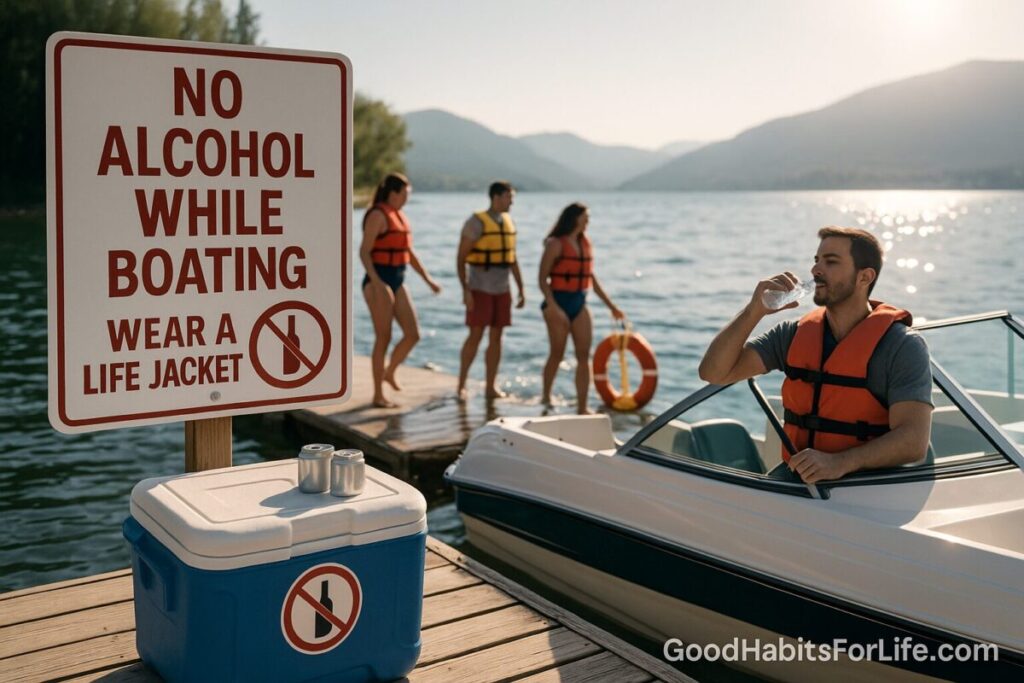
Swimming & Boating: Why Alcohol and Water Dont Mix
Swimming & Boating: Why Alcohol and Water Don’t Mix
Table of Contents
🧠 Why Alcohol and Water Don’t Mix
Alcohol changes how your brain processes balance, coordination, vision, and decision-making—the exact skills water demands.
What happens physiologically
-
Balance & coordination fall off: Small missteps become head-first slips from docks or capsizes.
-
Reaction time slows: You misjudge currents, waves, and boat traffic.
-
Judgment narrows: Risky dives, swimming beyond buoys, or ignoring changing weather feel “fine.”
-
Body-temp control drops: Alcohol can mask hypothermia symptoms and increase heat loss in cold water.
-
Dehydration worsens: Alcohol is a diuretic; sun and sweat amplify the effect, making cramps and fatigue more likely.
The multiplier effect of water
-
Sun + heat + glare increase fatigue.
-
Motion & vibration (boats, PWCs) intensify disorientation.
-
Unexpected immersion (a slip or capsize) demands instant, coordinated action—harder when impaired.
Bottom line: Even “a couple of drinks” can be the difference between a fun day and a life-altering incident. Drowning is quick and silent; impairment removes the seconds you need to recover.
⚖️ Laws: Boating Under the Influence (BUI) at a Glance
-
Many jurisdictions treat BUI like DUI, with fines, license suspensions, impoundment, and potential jail time.
-
Legal BAC thresholds for operating a vessel are often 0.08% (sometimes lower for commercial operators and people under legal drinking age).
-
Enforcement is proactive: Marine patrols can stop vessels for safety checks; refusal of testing may carry penalties.
-
Liability: If alcohol contributes to injury or death, civil and criminal consequences escalate.
Practical takeaway: Assume zero alcohol for anyone operating any vessel (powered or unpowered), spotting swimmers, or supervising kids.
✅ Quick Start: Do-This-Today Checklist
-
Name a Sober Skipper (and backup). Put the rule in your group chat.
-
Zero-alcohol window: No alcohol before or during swimming, paddling, or boating.
-
PFDs on (properly sized, Coast-Guard/standard approved). Wear them, don’t stow them.
-
Buddy system for swimmers; designate an on-shore spotter.
-
Weather & water check: Forecast, wind, currents, tides, water temp, visibility.
-
Fuel, water, shade: Pack at least 500–750 ml water per person for each 1–2 hours (17–25 oz), salty snacks/fruit, hats, SPF 30+.
-
Capability limits: Pick routes and distances all members can actually do sober-tired, not ideal-fresh.
-
Comms & safety: Charged phone/VHF, whistle, light, throw rope, first-aid kit.
-
Exit plan: If anyone drinks, end water activity and switch to shore-only fun (games, BBQ, music).
🛠️ Techniques & Frameworks to Stay Sober on the Water
The S.O.B.E.R. Boating Rule
-
Sober skipper named in writing
-
Obvious lifejackets on all riders/swimmers
-
Buddy checks (headcount every stop)
-
Environment scan (weather/waves/traffic) every 20–30 min
-
Retire early if anyone drinks or fatigue rises
PACE Decision Ladder (Prevent → Alternate → Contain → Exit)
-
Prevent: Bring great non-alcoholic options; announce zero-alcohol window.
-
Alternate: If someone wants a drink, anchor at shore and end water time.
-
Contain: Keep alcohol locked away until the vessel is docked and gear stowed.
-
Exit: If rules slip, stop operating; call a rideshare/taxi or hand off the helm to a sober adult (before anyone drinks).
Heat-smart routine
-
Hydrate every 20–30 minutes.
-
Shade breaks every 60–90 minutes.
-
Cool-down dip or wet cloths if heat index rises.
-
Watch for slurred speech, wobbling, poor decisions—treat as impairment regardless of declared drinks.
📅 7-Day Starter Plan (Swim & Sail Sober)
Day 1 — Set the Standard
Create a 1-page “Water Day Plan”: sober-skipper rule, gear list, zero-alcohol window, emergency contacts.
Day 2 — Gear Fit & Drill
Fit PFDs for all sizes; practice putting them on fast. Teach throw-rope and buddy-rescue basics.
Day 3 — Mock Run on Land
Walk through roles (skipper, lookout, swimmer lead). Do a weather-check drill; pack the kit.
Day 4 — Shore-Only Social
Host a sober-fun evening: mocktails, music, yard games—normalize celebrations without alcohol.
Day 5 — Short Water Session
A 60–90 min outing: wear PFDs, practice headcounts, rehearse “Exit if anyone drinks.”
Day 6 — Review & Upgrade
Debrief what worked; adjust the checklist (routes, drink break cadence, shade plan).
Day 7 — Full Water Day
Run the system: sober skipper, buddy checks, hydration cadence, early finish, then shore party.
👥 Audience Variations
Families with kids
-
Adult spotter per active child near water.
-
Bright rash guards; teach “reach or throw—don’t go” rescue rule.
-
Lock coolers while on water; model the zero-alcohol window.
Teens & students
-
Emphasize peer roles: designated sober operator + social host.
-
Set a text pledge in the group chat; post the plan before departure.
-
Zero tolerance for underage drinking near water.
Professionals hosting clients
-
Choose venues with NA beverage lists and shaded seating.
-
Keep boating to pre-dinner; save any alcohol for after all water gear is stowed (or skip entirely).
Seniors
-
Some meds intensify alcohol’s effects; prioritize shade, hydration, and shorter outings.
-
Use high-visibility PFDs with easy buckles.
⚠️ Mistakes & Myths to Avoid
-
“I’m fine, it was just one drink.” Impairment starts before legal limits.
-
“We’re close to shore.” Most drownings happen close to safety.
-
“I can swim it off.” Alcohol reduces cold-water tolerance and coordination.
-
“Lifejackets are for weak swimmers.” They’re for everyone, especially adults who overestimate ability.
-
“It’s only a kayak/paddleboard.” Muscle memory fails when impaired; currents don’t care.
💬 Real-Life Scripts You Can Use
-
Before the trip (group chat):
“I’m skipper tomorrow, so we’re running zero alcohol until we’re back and gear is stowed. Hydration + mocktails ready. 👍” -
At the dock (friendly but firm):
“Quick safety check: PFDs on, water bottles filled. If anyone wants to drink, we’ll call it a day on the water and hang on shore.” -
If a guest opens a beer on board:
“Hey, our rule is no alcohol while we’re on the water. Let’s save it for later—cooler will be there when we’re back.” -
If someone seems impaired:
“You’re looking wobbly. Let’s head in now. I’ll get you shade and water, and we’ll switch to shore time.”
🧰 Tools, Apps & Resources
-
Gear: Coast-Guard/standard-approved PFDs, throw rope, whistle, light, first-aid kit, dry bag, sun protection.
-
Apps:
-
Weather (hourly radar & wind): local met service, Windy/Windfinder.
-
Navigation/Notices: Local hydrographic or waterway authority app/site.
-
Checklists: Notes app or task app with a reusable “Water Day” template.
-
-
Non-alcoholic options: Sparkling water + citrus, iced tea, electrolyte mixes, NA beers/ciders.
Pros & cons (quick):
-
PFDs: Highest lifesaving impact; some bulk—choose comfortable fits.
-
Throw rope: Simple and effective; practice needed.
-
NA drinks: Socially satisfying; bring variety to avoid “just one” alcohol slide.
📌 Key Takeaways
-
Alcohol and water activities don’t mix—physiology and environment stack the risks.
-
Make a sober-skipper rule and a zero-alcohol window non-negotiable.
-
Wear PFDs, hydrate, check weather, and plan an exit if rules slip.
-
Laws on BUI are strict; treat the helm like a steering wheel.
-
End water time before drinks appear; keep the party on shore.
❓FAQs
Is it ever safe to have one drink and then go boating?
No. Even low levels of alcohol impair balance and judgment. The safest, law-aligned choice is zero alcohol before and during operation.
What about swimming after one drink at a beach or pool?
Risk rises immediately—reaction time, breath control, and coordination drop. Keep swimming alcohol-free.
Do PFDs really matter for strong adult swimmers?
Yes. Many drownings involve capable swimmers. A PFD buys critical seconds when you’re tired, cold, or unexpectedly immersed.
Are alcohol rules the same for kayaks and paddleboards?
Enforcement varies, but impairment on any watercraft is dangerous and often illegal. Apply the same zero-alcohol standard.
Can I rely on a handheld breath tester?
No. Field devices vary and do not account for impairment from heat, fatigue, or meds. The only safe policy is don’t drink.
What if someone drinks mid-day on the boat?
End water operations, return to shore, and switch to non-water activities. Never “wait it out” while afloat.
How long should I wait after drinking before swimming again?
There’s no universal safe interval. Plan water time first, then alcohol later—or skip alcohol entirely.
📚 References
-
World Health Organization — Preventing drowning (risk factors & strategies): https://www.who.int/news-room/fact-sheets/detail/drowning
-
CDC — Drowning: Facts & Prevention: https://www.cdc.gov/drowning/
-
U.S. Coast Guard — Boating Under the Influence (BUI) & Recreational Boating Safety: https://www.uscgboating.org/
-
Royal National Lifeboat Institution (RNLI) — Alcohol and water don’t mix: https://rnli.org/
-
Royal Life Saving Society — Alcohol & Aquatic Activity (Australia): https://www.royallifesaving.com.au/
-
Transport Canada — Impaired Boating: https://tc.canada.ca/en/marine-transportation/marine-safety/impaired-boating
-
NHS — Alcohol: Effects on the body (impairment & dehydration): https://www.nhs.uk/live-well/alcohol-advice/
Disclaimer: This article provides general safety information and legal context; it is not medical or legal advice.