
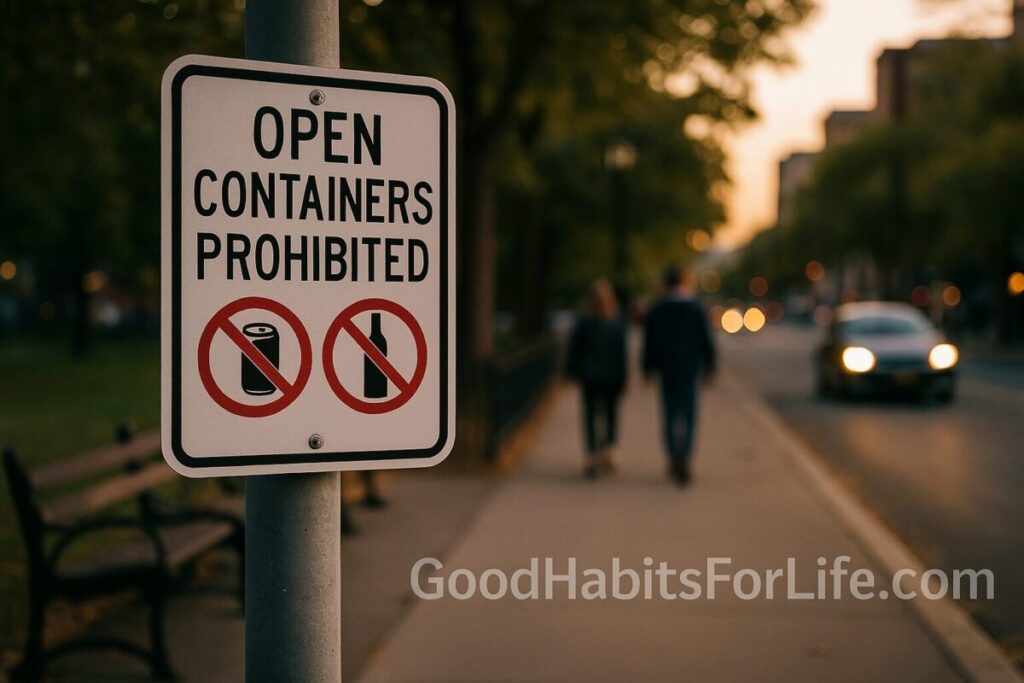
Know Local Laws: Open Containers, Public Spaces
Know Local Laws: Open Containers, Public Spaces
Table of Contents
🧭 What “Open Container” Means & Why It Matters
Plain-English definition. An “open container” typically means any alcoholic beverage in a bottle/can/cup with a broken seal or that’s partly consumed. Two contexts matter:
-
Public spaces: sidewalks, parks, beaches, plazas—rules are set by local ordinances and can change block by block.
-
Motor vehicles: many jurisdictions prohibit any open alcoholic beverage in the passenger area—even if the driver is sober. Violating either can lead to tickets, fines, or arrest.
Why it matters. Open-container rules aim to reduce public disorder and impaired driving. U.S. federal law incentivizes states to restrict open containers in vehicles; research links such laws to fewer alcohol-involved crashes. Legal Information InstituteNHTSA
✅ Quick Start: Stay Legal in 3 Minutes
-
Check the exact place. Search “[city] code open container” (see tools below). Prioritize .gov, official code libraries, or park websites.
-
Confirm container type. Many tourist zones allow plastic cups but ban glass or original cans/bottles. library.municode.com
-
Spot the permits. Festivals/parks often require a special event permit for any public drinking. National Park Service
-
Vehicles: keep open alcohol out of the passenger area; lock it in the boot/trunk if allowed at all. Legal Information Institute
-
When in doubt—don’t. Ask a nearby venue or officer; comply immediately if told to stop.
🗓️ Habit Plan: 7-Day “Know-Your-Zone” Starter
Goal: Build a repeatable routine so you never guess about legality.
-
Day 1: Save your city’s official code link + park authority page to bookmarks.
-
Day 2: Note the 3–5 places you frequent (downtown, beach, stadium area). Write the rule for each (ban/allowed/permits/containers).
-
Day 3: Add a “Cup rule” card to your phone (“plastic only here,” “no alcohol in parks,” etc.).
-
Day 4: Create a “Vehicle rule” checklist: no open alcohol in passenger area; sealed only; trunk storage if transporting. Legal Information Institute
-
Day 5: Share the rules with friends you meet out; make one person the “local code checker.”
-
Day 6: If traveling soon, repeat the check for that destination (especially tourist strips, historic districts). neworleans-la.elaws.usagenda.savannahga.gov
-
Day 7: Review once; set a quarterly reminder to re-check (laws change).
🛠️ Techniques & Frameworks (Fast Research, Safe Decisions)
The 4-Layer Check (≈90 seconds):
-
City/County Code: look for keywords: “open container,” “public consumption,” “beverage containers,” “parks alcohol.” (e.g., NYC §10-125; SF Police Code §21). American Legal Publishing+1
-
Park Authority: national/state/provincial park pages list permitted areas/hours and event permits. National Park ServiceParks Canada
-
Special Zones: tourist strips, historic districts, and pedestrian malls often have their own rules (e.g., Las Vegas Strip, New Orleans French Quarter, Savannah Historic District). library.municode.comneworleans-la.elaws.usagenda.savannahga.gov
-
Vehicle Law: many places ban open alcohol in the passenger area—fines or penalties apply regardless of driver BAC. Legal Information Institute
Pro tips
-
Prefer primary sources (official code portals) over blogs.
-
Check container material (plastic vs. glass) and distance limits (e.g., within X metres/feet of liquor stores, bus stops, schools—common in some downtowns). files.lasvegasnevada.gov
🗺️ City & Park Examples (Snap-Guide)
Always verify current text in the official code before relying on examples below.
-
New York City (ban): Drinking in public places is prohibited (Administrative Code §10-125). American Legal Publishing
-
San Francisco (ban on streets/sidewalks): SF Police Code §21 prohibits consumption on public ways. American Legal Publishing
-
Chicago (mostly ban with venue exceptions): Chicago Municipal Code §8-4-030 prohibits drinking on the public way except in permitted spaces (e.g., licensed sidewalk cafés). American Legal Publishing
-
New Orleans (allowed in plastic, glass prohibited): Glass containers are illegal on public ways; “go-cups” (plastic) are standard. neworleans-la.elaws.us
-
Las Vegas Strip (Clark County): Open containers allowed for pedestrians in non-glass containers; separate restrictions exist for parking lots and where alcohol was sold—check Clark County code and downtown LVMC rules. library.municode.comfiles.lasvegasnevada.gov
-
U.S. National Parks: Policies vary by park; many allow alcohol only in designated areas and ban open containers in vehicles inside the park. National Park Service
-
UK towns/cities (PSPOs): Councils can impose Public Spaces Protection Orders restricting street drinking in defined zones (officers can require you to stop and surrender alcohol). Legislation.gov.uk
-
Canada (Parks Canada/municipal bylaws): Alcohol commonly limited to campsites or designated zones; cities may open specific parks/hours via bylaw. Parks Canada
🧑🤝🧑 Audience Variations
Students: Campus areas and surrounding boroughs often have stricter rules; violations can affect student conduct.
Travelers/Tourists: Expect zone-specific rules in entertainment districts (e.g., plastic only, or only drinks bought from licensed venues). neworleans-la.elaws.usfiles.lasvegasnevada.gov
Professionals/Hosts: If you’re organizing a picnic or client event, check park permits and posting requirements ahead of time. National Park Service
Seniors/Parents: Family outings in parks often fall under “no alcohol except at campgrounds/designated sites.” Parks Canada
⚠️ Mistakes & Myths to Avoid
-
Myth: “If I’m not drunk, open containers are fine.” → Wrong; legality isn’t tied to intoxication.
-
Myth: “Tourist zones are free-for-all.” → Many permit only plastic and restrict where the drink was purchased. library.municode.com
-
Mistake: Assuming vehicle rules match pedestrian rules. Vehicle open-container laws are stricter. Legal Information Institute
-
Mistake: Relying on outdated blog posts. Always open the actual city code or park page.
💬 Real-Life Scripts (Copy & Use)
-
Ask a bartender: “Is this in a legal to-go cup for this street? Any areas I should avoid?”
-
At a festival gate: “Is alcohol allowed outside the event footprint, or only within the barrier?”
-
If approached by an officer: “Understood. I’ll stop now. Where can I dispose of this?”
-
Road-trip check: “Before we head out, is there any open-container rule for the passenger area or parking lot here?” Legal Information Institute
🧰 Tools, Apps & Resources
-
Official code portals:
-
Municode (library.municode.com) and American Legal Publishing (codelibrary.amlegal.com) host city/county codes (e.g., Clark County; NYC; Chicago; SF). library.municode.comAmerican Legal Publishing+2American Legal Publishing+2
-
-
Park websites: “Plan Your Visit” or “Alcohol Policy” pages (U.S. National Park Service; Parks Canada). National Park ServiceParks Canada
-
Cornell LII: Plain-language statute pages (e.g., 23 USC §154 for vehicle open container). Legal Information Institute
-
Search strings: “[city] open container code”, “[park] alcohol policy”, “[district name] pedestrian mall ordinance”.
📌 Key Takeaways
-
Know the zone: Street-level legality flips by city block; entertainment zones often allow plastic but not glass. library.municode.com
-
Vehicles ≠ sidewalks: Passenger-area open containers are widely illegal regardless of who is drinking. Legal Information Institute
-
Parks are special: Expect designated sites/hours or outright bans outside campgrounds and permitted events. National Park ServiceParks Canada
-
Primary sources win: Always confirm with official code or park pages before you carry a drink.
❓ FAQs
1) Is public drinking always illegal in the U.S.?
No. Many cities ban it; some create exceptions (e.g., Las Vegas Strip, parts of New Orleans and Savannah). Always check the local code and container rules. library.municode.comneworleans-la.elaws.usagenda.savannahga.gov
2) Can I walk with a beer if it’s in a plastic cup?
Sometimes. Several entertainment districts require plastic cups and may limit where the drink was purchased (often from licensed venues only). files.lasvegasnevada.gov
3) What about passengers drinking in cars?
In many jurisdictions, any open alcoholic beverage in the passenger area is prohibited, even if the driver isn’t drinking. Legal Information Institute
4) Are glass bottles the problem?
Often, yes—tourist areas frequently ban glass for safety, even when plastic is allowed. library.municode.com
5) Do national or provincial parks allow alcohol?
Policies vary. U.S. National Parks and Parks Canada commonly limit consumption to designated areas and often prohibit open containers in vehicles within park boundaries. National Park ServiceParks Canada
6) I saw people drinking on the street—so it must be legal, right?
Not necessarily. Enforcement varies; legality depends on the code text, not what others are doing.
7) Can I drink in a city park?
Frequently no unless a special event permit or designated zone/hours say otherwise. Always check the local parks department. National Park Service
8) I’m visiting the UK—how do PSPOs affect me?
A local Public Spaces Protection Order can restrict street drinking within mapped zones; officers can require you to stop and surrender alcohol. Legislation.gov.uk
9) Canada trip—what’s typical?
Many cities and parks allow alcohol only at campsites or specific signed areas/hours. Verify the municipality or park page. Parks Canada
10) How do I avoid tickets quickly?
Use plastic where required, don’t drink in parks unless clearly allowed, keep open alcohol out of vehicles, and comply immediately with officials’ instructions.
📚 References
-
23 U.S.C. §154 — Open container requirements (vehicles), Cornell LII.
-
NHTSA, Countermeasures That Work: Open Container Laws (overview).
-
New York City Administrative Code §10-125 — Consumption of alcohol on streets prohibited.
-
San Francisco Police Code §21 — Consuming alcoholic beverages on public ways prohibited.
-
Chicago Municipal Code §8-4-030 — Drinking in public ways; exceptions.
-
City of New Orleans Code §54-404 — Glass containers prohibited in public rights-of-way.
-
Clark County Code (Las Vegas Strip) Ch. 12.43 — Glass beverage containers and related restrictions.
-
City of Las Vegas — LVMC 10.76 pedestrian-mall/downtown notices (official PDF).
-
National Park Service — Park alcohol policy example (e.g., Big Bend).
-
UK Legislation — Anti-Social Behaviour, Crime and Policing Act 2014 (PSPO notes).
-
Parks Canada — Visitor rules: alcohol in national parks.
(See sources: Legal Information InstituteNHTSAAmerican Legal Publishing+2American Legal Publishing+2neworleans-la.elaws.uslibrary.municode.comfiles.lasvegasnevada.govNational Park ServiceLegislation.gov.ukParks Canada)
Disclaimer: This guide is for general information only and is not legal advice; check the current law or consult a licensed attorney in your jurisdiction.