
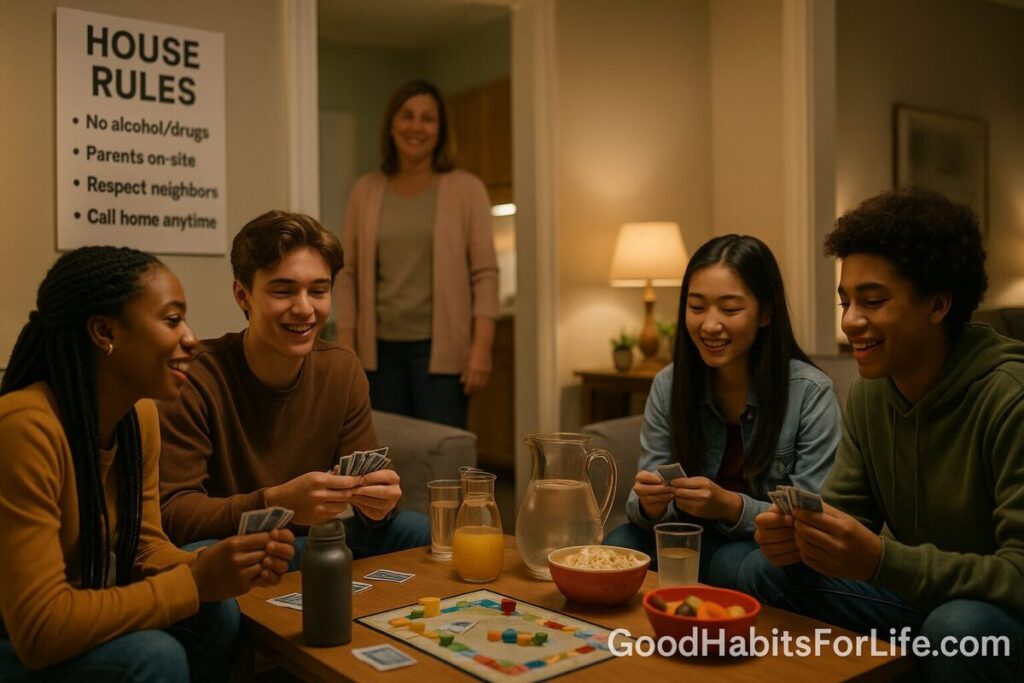
Hosting Teens: Clear Rules, Zero Alcohol, Lots of Care
Hosting Teens: Clear Rules, Zero Alcohol, Lots of Care
Table of Contents
🧭 What “Hosting Teens Well” Means
Definition: Hosting teens well is a family habit: you create predictable, written ground rules and a safe, supervised environment where teens can connect—without alcohol or drugs—while you proactively manage invitations, supervision, transport, and follow-up.
Core outcomes
-
Safety: Reduce injury, assault, impaired driving, and medical emergencies.
-
Legal protection: Social-host and supply laws can hold adults liable for underage drinking—even if “everyone brought their own.”
-
Trust building: Teens feel seen and included; parents know the plan.
-
Better fun: Clear limits prevent chaos; games, food, and music are the focus.
✅ Why Zero Alcohol (and the Law)
Health & safety: Alcohol impairs judgment, increases risk-taking, injuries, and alcohol poisoning. Early alcohol use is linked to higher odds of later substance misuse. Teens’ brains—still developing through their mid-20s—are especially sensitive to alcohol’s effects on learning, mood, and decision-making.
Law & liability: In many places, it’s illegal to provide alcohol to minors or to allow underage drinking on property you control. Civil “social host” laws in numerous jurisdictions can impose fines and lawsuits if teens drink at your home. Always check your local laws and enforce a zero-alcohol standard.
Equity & inclusion: Zero alcohol makes events safer for students who do not drink for cultural, religious, health, or personal reasons—and keeps the focus on connection.
🛠️ Quick Start: Host a Safe, Fun Teen Night Tonight
1) Set and share the rules (one message to all parents & teens).
-
House is zero alcohol / zero drugs / zero vaping.
-
Invite-only; no forwarding. No re-entry.
-
Bags stay by the front door; by attending, teens consent to a brief bag check by an adult if concerns arise.
-
Bathrooms are monitored (line visible from common area).
-
Pick-up window: e.g., 21:30–22:00. No late arrivals.
2) Confirm the roster.
-
Use a simple RSVP form (name, parent name/number, drop-off/pick-up plan, allergy info, any meds, emergency contact).
-
Call or text every parent to confirm attendance and rules.
3) Set the house.
-
Common-area only (living room/dining/yard). Bedrooms locked.
-
Put refreshments in one visible spot. Water always available.
-
Music playlist pre-approved; volume cap set.
-
Put away alcohol/meds/chemicals; lock cabinets and the garage.
-
Good lighting everywhere; outdoor paths lit.
4) Staff the event.
-
Minimum 2 supervising adults (co-hosts).
-
Assign zones: entry & bag area, common room, yard, bathrooms, perimeter/driveway.
-
Wear something identifiable (lanyard) so teens know where to go for help.
5) Plan the fun.
-
Quick-start activities: card/board games, trivia, karaoke, photo corner, table-tennis/carrom, Switch/console tourneys, creative corner (origami, mini-builds), make-your-own mocktail bar, craft dessert station.
-
Keep games inclusive and time-boxed.
6) Exit plan.
-
If a teen shows signs of substance use: move to a quiet spot with 2 adults, monitor, call parent/guardian for pickup.
-
If a ride falls through: call the listed parent; keep the teen supervised until collected.
7) After the event.
-
Text parents a quick summary (“All good. Thanks! Next time: board-game night?”).
-
Debrief with your teen: what worked, what didn’t, what to tweak.
📅 30-60-90 Day Habit Plan for Families
Goal: Build a repeatable, low-stress hosting system that teens enjoy—and parents trust.
Days 1–30: Foundations
-
Write your House Hosting Policy (1 page): rules, supervision, invite policy, bag rule, re-entry, curfew, transport, emergency steps. Print and save as a PDF.
-
Create a Parent Roundtable (WhatsApp/Signal group) with 5–10 families who share the zero-alcohol standard.
-
Template your RSVP Form (Google Forms) and Message Pack (invite, rules, reminder).
-
Home readiness checklist: lockables for alcohol/meds, lights, first-aid kit, spare phone chargers, safe waiting area for pickups.
Days 31–60: First Two Events
-
Pilot event (8–12 teens). Use the checklists and scripts below.
-
Post-event review with your teen and co-host parents; update rules.
-
Second event (12–18 teens) with one new activity (e.g., team trivia).
-
Document issues (late pickups, bathroom bottlenecks) and solutions.
Days 61–90: Scale & Sustain
-
Quarterly rotation across families (same rules, different homes).
-
Role roster: entry lead, floor lead, food lead, parent liaison.
-
Add theme variety: study hall + pizza, movie & discussion, DIY night, sports & snacks, service project prep.
-
Annual review of laws, neighborhood norms, and your teen’s maturity.
🧠 Techniques & Frameworks That Work
The Four Layers of Safety
-
Environment: lock away hazards; visible common areas; lighting; clear boundaries (no bedrooms).
-
People: two or more supervising adults; ratio roughly 1:10; backup parent on call.
-
Process: RSVPs, verified invites, arrival check-in, pickup window, re-entry ban, bag policy, bathroom line visibility.
-
Communication: pre-event scripts, in-event reminders, post-event summary, teen debrief.
“Invite Integrity” Protocol
-
Named invites only; no guest-of-guest without prior parent contact.
-
When someone shows up uninvited, the entry lead says:
“This is a closed invite. I’ll call your parent to arrange pickup.”
Bag & Bathroom Protocol
-
Backpacks at entry; coats on rack in sight of adults.
-
Bathrooms are single-use; queue remains in common area; timer if needed.
-
If there’s a concern: two adults, brief check with consent—no accusations, only safety.
Care Escalation Ladder
-
Observe → Ask → Support → Notify Parent → Medical
-
Use calm, non-judgmental language; document time and actions.
Social-Host Awareness
-
Know your local rules; when in doubt, choose the strictest interpretation.
-
Keep incident notes if anything significant happens (time, who, what, actions).
👥 Variations by Age & Context
Younger teens (12–14): shorter events (90–120 min), earlier pickup, more structured games, tighter supervision ratio (1:8).
Mid-teens (15–16): add collaborative planning with teens; more free time between structured anchors; same zero-alcohol policy.
Older teens (17–18): keep the policy; involve them in setting up, greeting guests, and post-event cleanup; discuss driving safety explicitly (no one drives themselves home from your event).
Sleepovers: keep the same rules; phones off at lights-out; designate sleeping areas; same-gender rooms unless you’ve discussed alternatives and supervision with parents.
Apartments/condos: inform neighbors; set quiet hours; use community room if available.
Cultural/religious events: respect dietary practices; provide alcohol-free celebratory drinks and inclusive activities.
⚠️ Mistakes & Myths to Avoid
-
“It’s safer if they drink at my house.” Evidence doesn’t support this; supervised underage drinking can increase overall use and related harms.
-
“If I don’t serve it, I’m fine.” Many jurisdictions hold hosts liable if underage guests drink on the property.
-
“They’re good kids; we trust them.” Trust isn’t a safeguard; systems are.
-
No parent contact. Always confirm with a real adult, not a teen-answered phone.
-
Unclear end time. Pick-up windows prevent loitering and re-entry issues.
-
Too many rooms. More doors = more risk. Keep it central and visible.
🗣️ Real-Life Examples & Copy-Paste Scripts
Invite (to parents & teens):
“Hi all—We’re hosting a teen game night this Friday 18:30–21:30. Zero alcohol, zero drugs, zero vaping, no re-entry. Bags stay by the door; bathrooms are single-use with a visible line. Please RSVP with the form below so we have emergency info and the pickup plan. Questions welcome—thanks!”
Door-check script (to unexpected guest):
“Hey, this is a closed invite for safety. I’m going to call your parent now to arrange pickup.”
Concern script (to a teen who seems unwell):
“You don’t seem quite yourself. Let’s step to the quiet room so we can check in. I’m going to call your parent to pick you up, and we’ll stay with you until they arrive.”
Bathroom reminder (to group):
“Quick reminder: one person at a time; line stays in the living room. Thanks for keeping it easy for everyone.”
End-of-night message (to parents):
“Thanks for sending them—great energy and respectful crew. Everyone left between 21:30–22:00. We’ll host another in a month with the same zero-alcohol rules.”
🧰 Tools, Apps & Resources
-
Google Forms / Microsoft Forms — simple RSVP + emergency info collection.
Pros: free, timestamped; Cons: needs setup once. -
WhatsApp / Signal Broadcast Lists — one-to-many updates to parents.
Pros: fast; Cons: ensure you use BCC-like settings to protect privacy. -
Checklists (printables): entry/bag area, food, lighting, first-aid, pickup zone.
-
First-aid kit + contact sheet: include local emergency numbers, taxi services or ride-alternatives, and backup relatives.
-
Timer or smart speaker — keeps activities moving and cues pickup window.
-
Light, signage, and lanyards — make supervision visible and friendly.
📌 Key Takeaways
-
Zero-alcohol is non-negotiable—say it, write it, enforce it.
-
Systems beat good intentions—RSVPs, verified parents, bag & bathroom protocols, two-adult coverage.
-
Connection is the goal—provide structured fun and inclusive snacks and drinks.
-
Plan the exit—clear pickup windows and a calm protocol for concerns.
-
Review and improve—debrief with your teen and co-hosts; update your policy every quarter.
❓ FAQs
Is it ever legal for teens to drink at home if parents are present?
Laws vary widely; many places prohibit serving or allowing underage drinking, and civil “social host” penalties may apply even if you didn’t supply the alcohol. Choose zero alcohol and check local laws.
What if a teen arrives with alcohol or vape products?
Secure the item out of reach, document, and call the parent for pickup. Keep interactions calm and non-confrontational; safety first.
How do I handle pushback from other parents who say it’s safer to allow drinking?
Share your written policy and point to health and legal risks. Offer inclusive, enjoyable alternatives—most parents will appreciate the clarity.
Do I need consent to check bags?
Adopt a voluntary condition of entry: “By attending, you agree to keep bags in the front area; if we have safety concerns, two adults may check your bag with you present.” If a teen declines, they can’t attend; call their parent.
How many supervising adults do I need?
Aim for about 1 adult per 10 teens, with at least two adults on site so no one is ever alone with a teen and coverage remains if someone steps away.
What about ridesharing?
Prefer parent/guardian pickup. If a rideshare is used, confirm in writing with the parent in advance and supervise curbside pickup.
Can my teen help supervise?
They can help set up and greet, but adults handle rule enforcement, safety decisions, and parent notifications.
How do I prevent gate-crashers?
No open invites; named list at the door; repeat the closed-invite line; keep an adult at the entry and the driveway.
What are warning signs of alcohol or drug use?
Slurred speech, unsteady walking, strong odors, unusual secrecy about bags or bathroom use, or sudden mood changes. Use the Care Escalation Ladder.
📚 References
-
Centers for Disease Control and Prevention (CDC). Fact Sheets – Underage Drinking. https://www.cdc.gov/alcohol/
-
National Institute on Alcohol Abuse and Alcoholism (NIAAA). Underage Drinking. https://www.niaaa.nih.gov/
-
Substance Abuse and Mental Health Services Administration (SAMHSA). Talk. They Hear You. https://www.samhsa.gov/talk-they-hear-you
-
American Academy of Pediatrics (HealthyChildren.org). Teen Parties: Tips for Parents. https://www.healthychildren.org/
-
World Health Organization. Alcohol and Young People – Health Effects. https://www.who.int/health-topics/alcohol
-
National Conference of State Legislatures (NCSL). Social Host Liability for Underage Drinking. https://www.ncsl.org/
-
StopAlcoholAbuse.gov (Interagency Coordinating Committee on the Prevention of Underage Drinking). Resources for Parents & Communities. https://www.stopalcoholabuse.gov/
-
U.S. National Highway Traffic Safety Administration (NHTSA). Zero Tolerance Laws & Underage Drinking and Driving. https://www.nhtsa.gov/
Disclaimer: This article is for general information only and is not legal or medical advice; check your local laws and consult qualified professionals for your situation.