
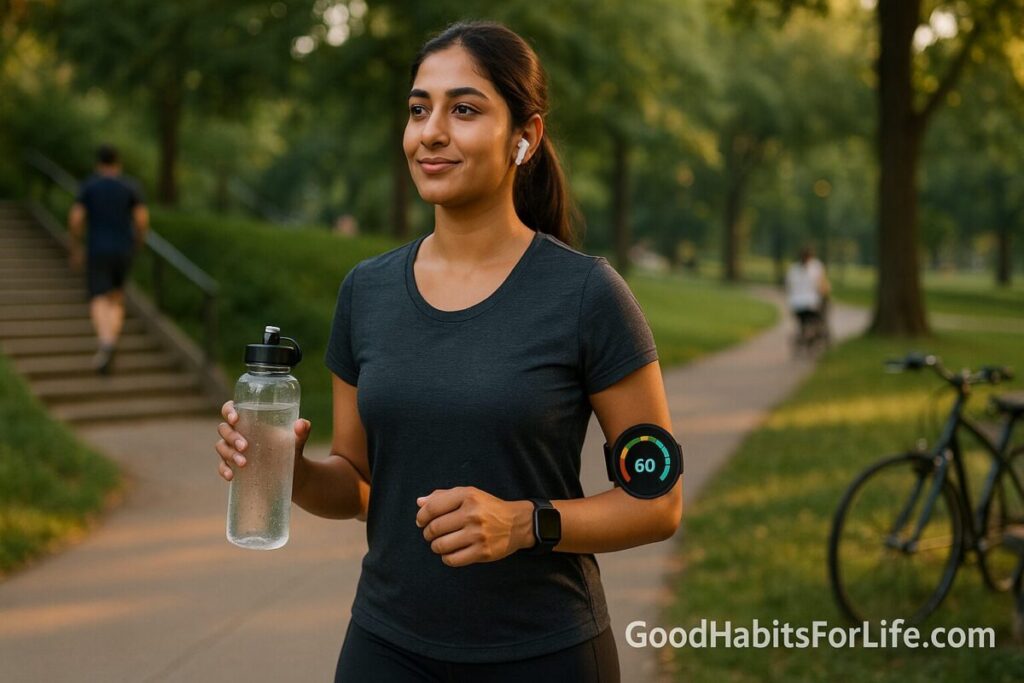
Hydration & Skin: Habits that Actually Help: Zone 2 + NEAT (2025)
Hydration & Skin: Zone 2 + NEAT Habits (2025)
Table of Contents
🧭 What & Why: Hydration, Skin, Zone 2 & NEAT
Hydration & skin basics. Your skin barrier (the outer stratum corneum) holds water with lipids and natural moisturizing factors. Drinking enough fluids supports overall physiology (circulation, temperature control, nutrient transport), but external care (gentle cleanser, moisturizer, SPF) drives day-to-day softness and glow more than simply “drinking more water.” Dermatology groups emphasize moisturizer + sunscreen first for dryness and photoaging, then lifestyle.
Zone 2 cardio. Light-to-moderate, conversational-pace exercise (roughly 60–70% HRmax; think brisk walking or gentle cycling). It improves mitochondrial and cardiovascular efficiency, insulin sensitivity, and micro-circulation—factors tied to skin vitality and even tone. You should be able to talk in full sentences, nose-breathing most of the time.
NEAT (Non-Exercise Activity Thermogenesis). All movement outside formal workouts—steps, standing, fidgeting, chores. NEAT strongly influences energy balance and metabolic health. Better metabolic health → steadier hormones and inflammation → calmer skin and less dullness.
Why the combo works.
-
Circulation: Zone 2 + NEAT improve blood and lymph flow, delivering nutrients and whisking away waste.
-
Inflammation & insulin: Regular movement reduces chronic low-grade inflammation and improves insulin sensitivity—both linked with acne severity and skin aging drivers.
-
Sweat wisely: Sweat helps thermoregulation; timely cleansing protects the barrier and prevents sweat-acne.
-
Hydration smarts: Adequate fluids support plasma volume for exercise and healthy skin function; electrolytes prevent dilution (hyponatremia) in heavy sweaters.
✅ Quick Start: Do-This-Today Checklist
-
Set a fluid floor: Fill a 750 ml bottle; finish 2–3 refills across the day (adjust for body size, climate, activity). Add one pinch of electrolytes or a low-sugar oral rehydration mix if you’re sweating.
-
10-minute Zone 2: Walk briskly post-lunch or dinner—feel warm, can talk easily.
-
NEAT bump: Add one “movement micro-burst” each hour (60–120 s: stairs, hallway lap, calf raises).
-
Sweat-care loop: After activity: rinse face, pat dry, apply lightweight moisturizer; SPF 30+ every morning.
-
Plate for skin: At least one high-water fruit/veg per meal (cucumber, tomatoes, citrus, berries) + protein + healthy fats.
-
Sleep anchor: Set an alarm to start winding down 45–60 min before bed (skin barrier repair peaks overnight).
🛠️ 30-60-90 Day Habit Plan
Days 1–30 — Foundation (“feel better” phase)
-
Hydration rhythm: 1 bottle on waking, 1 by mid-afternoon, 1 by early evening. Add a pinch of salt + splash of citrus on hot/sweaty days.
-
Zone 2 minimum: 20–25 min, 4 days/week (walk, cycle, elliptical). RPE 4–5/10; can breathe through nose most of the time.
-
NEAT target: 6,000–8,000 steps/day baseline. If you’re under that, add +1,000 steps each week.
-
Skin routine AM/PM:
-
AM: Gentle cleanse → moisturizer → SPF 30+.
-
Post-sweat: Quick rinse → moisturizer.
-
PM: Cleanse → moisturizer; consider ceramide-rich product if dry.
-
-
Checkpoint (Day 30): Energy up? Fewer late-day slumps? Skin feels less tight after showers?
Days 31–60 — Progress (“see it” phase)
-
Hydration precision: Add 500–700 ml on training days or in hot weather; include electrolytes after >45 min sweaty sessions.
-
Zone 2 progression: 30 min, 4–5 days/week. Optional: 2–3 × 30-second pickups near the end (still conversational overall).
-
NEAT ladder: 8,000–10,000 steps/day average. Add a standing task: phone calls while standing, dishes after meals, 10-min tidy.
-
Nutrition for skin:
-
Daily: 2+ servings colorful produce (carotenoids), 25–35 g fiber, omega-3 sources 2–3×/week.
-
-
Checkpoint (Day 60): Complexion less dull? Fewer “stress” breakouts? Better sleep latency?
Days 61–90 — Momentum (“lock-in” phase)
-
Hydration autopilot: Keep bottle within arm’s reach; pre-hydrate ~300–500 ml before Zone 2; replace sweat after.
-
Zone 2+ mix: 35–45 min, 4–5 days/week. Add one gentle hills or cadence day; stay conversational.
-
NEAT capstone: 10,000–12,000 steps/day average or the equivalent via bike/chores; set calendar “movement snacks.”
-
Skin care + sun: Maintain daily SPF; hats/sunglasses outdoors. If dryness persists, layer humectant (e.g., glycerin) under moisturizer.
-
Checkpoint (Day 90): Compare photos in natural light, same time of day; note changes in tone, plumpness, and under-eye look.
🧠 Techniques & Frameworks that Work
1) The “3-Sips Rule.” Every time you change context (sit/stand, open your laptop, finish a call), take 3 sips. Easy, automatic.
2) RPE + Nasal Breathing for Zone 2.
-
Talk test: Full sentences = OK; singing is hard.
-
Breathing: Prefer nasal breathing; if you need mouth breaths often, you’re above Zone 2.
-
Heart-rate rough guide: ~60–70% HRmax (estimate HRmax ≈ 220 − age). Personalize by feel.
3) NEAT Stacking. Attach movement to existing cues: kettle boils → 60 s calf raises; brushing teeth → squats; TV ad break → hallway laps.
4) Sweat-Care Loop. Move → rinse → moisturize → SPF (AM) / moisturizer (PM). Keep a travel-size kit in your bag.
5) “Plate the Glow.” Build plates with produce + protein + fat + fiber (P²F²). Carotenoids (tomatoes, carrots, leafy greens) and omega-3s (fish, flax) support skin tone and calmness.
6) Light & Sleep. Morning outdoor light anchors circadian rhythm; better sleep quality improves barrier repair and under-eye appearance.
👥 Audience Variations
-
Students: Campus walking loops, carry a bottle (750 ml fits most backpacks). Cafeteria default: water + one fruit/veg at every meal.
-
Professionals: Calendar “walk-and-talk” meetings; sit-stand desk; keep a 1 L bottle on the desk.
-
Parents: Family stroll after dinner (15–20 min), stroller hills count. Keep pre-filled bottles by the door.
-
Seniors: Prioritize joint-friendly Zone 2 (flat walking, recumbent bike, water aerobics). Maintain electrolyte balance; review meds with a clinician if swelling/dryness persists.
⚠️ Mistakes & Myths to Avoid
-
Myth: “More water = no dry skin.”
Reality: Moisturizer + SPF + gentle cleansing control dryness; fluids support health but won’t fix barrier neglect. -
Mistake: Over-drinking plain water during long, sweaty sessions → hyponatremia risk. Use electrolytes sensibly.
-
Mistake: Hard workouts only, no easy cardio. Skin often benefits from frequent steady movement.
-
Mistake: Sweating, then sitting in tight clothes → clogged pores. Rinse and change promptly.
-
Myth: Coffee “dehydrates you.” Moderate coffee/tea contribute to fluid intake for habitual drinkers.
-
Mistake: Skipping sunscreen on cloudy days; UVA ages skin year-round.
💬 Real-Life Examples & Scripts
-
Desk timer script (NEAT): “Every hour: stand, 60 s march in place, refill bottle.”
-
Walk-and-talk ask: “Mind if we do this 20-minute call as a walking meeting? I’ll send notes after.”
-
Gym post-sweat routine: “Quick rinse, pat dry, pea-size moisturizer; SPF if daytime.”
-
Hydration boundary at dinner: “I’m going for water tonight; add lime, please.”
-
Family ritual: “Plates on the table? Great—10-minute post-meal walk before dishes!”
🧰 Tools, Apps & Resources
| Tool | Best For | Pros | Cons |
|---|---|---|---|
| WaterMinder / Waterllama | Fluid tracking | Simple reminders, watch support | Manual logging unless automated |
| Google Fit / Apple Health | Steps & Zone 2 heart-rate trends | Auto-tracking, integrates with wearables | HR accuracy varies by device |
| Strava | Outdoor Zone 2 | Route, pacing, friends for accountability | Social feed can distract |
| Aloe/Ceramide Moisturizer | Barrier support | Soothes post-sweat tightness | Check for fragrance sensitivity |
| Broad-spectrum SPF 30+ | Daily photo-aging defense | Prevents hyperpigmentation & fine lines | Reapply every 2–3 hours outdoors |
| Low-sugar ORS / electrolyte tabs | Hot/sweaty days | Replaces sodium/potassium | Choose low-sugar; mind hypertension advice |
📌 Key Takeaways
-
Hydration helps health; skincare helps skin. Do both.
-
Zone 2 + NEAT are your skin’s secret allies—frequent, easy movement beats occasional all-out sessions.
-
Post-sweat care (rinse, moisturize, SPF) prevents irritation and breakouts.
-
Electrolytes matter when you sweat; avoid over-drinking plain water.
-
A simple 30-60-90 plan locks the routine and makes the glow sustainable.
❓ FAQs
1) How much water should I drink per day?
There’s no one number for everyone. Many adults do well around 2–3 L/day from beverages and foods, more with heat or exercise. Use pale-straw urine color as an easy gauge.
2) Does chugging water fix dry skin?
No. It supports health, but external moisturizers and SPF primarily fix dryness and texture.
3) What exactly is Zone 2?
Light-to-moderate cardio where you can speak in full sentences and breathe mostly through your nose—about 60–70% HRmax for many people.
4) How many steps count as NEAT?
Any movement outside workouts. A practical target is 8–12k steps/day (or equivalent activity). Start from your baseline and add +1k per week.
5) Can coffee/tea count toward hydration?
For most habitual drinkers, yes—moderate coffee/tea contribute to daily fluids.
6) I sweat a lot. Water or sports drink?
For sessions >45–60 min in heat or high sweat rates, include electrolytes (low-sugar) to replace sodium and prevent dilution.
7) I break out after workouts—what helps?
Rinse soon after, change out of tight, sweaty clothing, and apply a light, non-comedogenic moisturizer. Wash hats/headbands frequently.
8) Best time for Zone 2?
Whenever you’ll do it consistently. Many people like post-meal walks (great for glucose and skin-friendly circulation).
9) What foods help my skin look healthier?
Colorful produce (carotenoids), omega-3 fats, lean proteins, and enough calories to support activity. Ultra-processed, high-sugar foods can worsen inflammation for some.
10) Is sunscreen really necessary if I’m only walking?
Yes—broad-spectrum SPF 30+ daily. UVA that ages skin penetrates clouds and glass.
📚 References
-
National Academies of Sciences, Engineering, and Medicine. Dietary Reference Intakes for Water, Potassium, Sodium, Chloride, and Sulfate. https://nap.nationalacademies.org/catalog/10925/dietary-reference-intakes-for-water-potassium-sodium-chloride-and-sulfate
-
Harvard T.H. Chan School of Public Health — The Nutrition Source. Healthy Drinks. https://www.hsph.harvard.edu/nutritionsource/healthy-drinks/
-
American Academy of Dermatology. Dry skin relief: Tips for managing. https://www.aad.org/public/everyday-care/skin-care-basics/dry/dry-skin-relief
-
American Academy of Dermatology. Acne: Causes & tips (sports/sweat guidance). https://www.aad.org/public/diseases/acne/causes
-
U.S. Department of Health & Human Services. Physical Activity Guidelines for Americans, 2nd ed. https://health.gov/sites/default/files/2019-09/Physical_Activity_Guidelines_2nd_edition.pdf
-
World Health Organization. Guidelines on physical activity and sedentary behaviour (2020). https://www.who.int/publications/i/item/9789240015128
-
Levine, J.A. Non-exercise activity thermogenesis (NEAT). Best Pract Res Clin Endocrinol Metab. 2002;16(4):679–702. https://pubmed.ncbi.nlm.nih.gov/12468415/
-
Popkin, B.M., et al. Water, hydration and health. Nutr Rev. 2010;68(8):439–458. https://www.ncbi.nlm.nih.gov/pmc/articles/PMC2908954/
-
European Food Safety Authority (EFSA). Dietary reference values for water. EFSA Journal. 2010;8(3):1459. https://efsa.onlinelibrary.wiley.com/doi/epdf/10.2903/j.efsa.2010.1459
-
MedlinePlus (NIH). Hyponatremia. https://medlineplus.gov/ency/article/000394.htm
Disclaimer: This guide is educational and not a substitute for personalized medical or dermatology advice; consult a qualified clinician for your specific needs.