
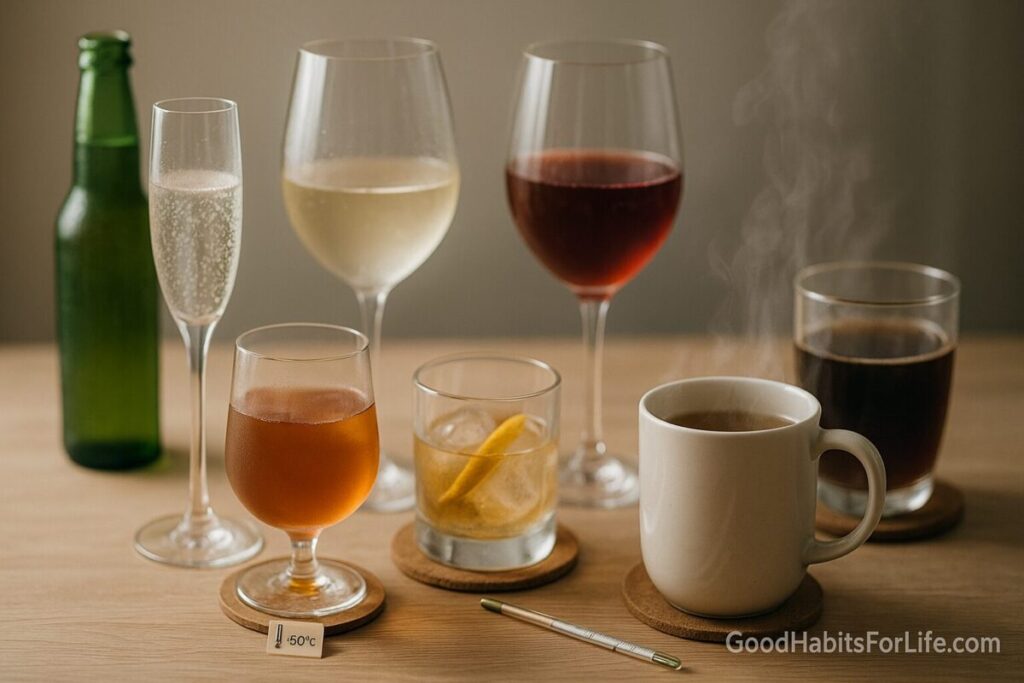
Glassware & Serving Temps: Simple Rules: Dopamine Detox (2025)
Glassware & Serving Temps: Simple Rules for Dopamine Detox
Table of Contents
🧭 What this guide covers & why it works
Mindful (“dopamine detox”) hosting is about reducing overstimulation so people savor flavors and pace their drinking. Two levers do most of the work: serving temperature (changes aroma, fizz, and perceived bitterness/sweetness) and glassware (changes aroma delivery and even drinking speed). Studies show glass shape can influence consumption rate, and larger wine glasses can increase sales/consumption—small design choices matter. PLOSBioMed Central
Very hot beverages (> 65 °C/149 °F) are also linked with higher esophageal cancer risk; serving at safer, tasty temperatures supports health without killing the vibe. IARC
✅ Quick-Start Cheat Sheet
Use this table for instant decisions at the bar or buffet.
| Drink | Ideal Serving Temp | Go-To Glass | Dopamine-Smart Cue |
|---|---|---|---|
| Champagne/Sparkling | 8–10 °C (46–50 °F) | Flute or tulip (or all-purpose wine glass for aromatics) | Offer 120–150 ml pours; top up slowly to pace. Champagne |
| White/Rosé | 10–13 °C (50–55 °F) (avoid < 6 °C) | Medium stemmed wine glass | Smaller bowl = smaller sips; keep bottle on light ice. WSET |
| Red (medium/full-bodied) | 15–18 °C (59–64 °F) | All-purpose or slightly larger bowl | If too warm, 10 min in fridge. Avoid > 18 °C. WSET |
| Beer (most styles) | 3–7 °C (38–44 °F) | Clean, dry glass; style-appropriate (pilsner/tulip) | Use straight-sided glasses to slow pace. cdn.brewersassociation.orgPMC |
| Coffee | Brew 92–96 °C (195–205 °F); drink ~55–60 °C (131–140 °F) | Ceramic mug with handle | Serve slightly cooler to avoid “very hot” risk. Specialty Coffee Associationfoodsci.oregonstate.edu |
| Tea | Drink < 60–65 °C (< 140–149 °F) after brewing | Mug with handle | Steep as usual; let cool 4–6 min before serving. PubMed |
| Sodas/Mocktails | 4–7 °C (39–45 °F) | Tall, narrow to preserve bubbles | Keep cold; CO₂ escapes faster when warm. Center for Science Education |
| Water | 10–15 °C (50–59 °F) for most guests | Clear tumbler | Keep pitchers visible as the default choice. (general hosting best-practice) |
🛠️ 7-Day Habit Plan: Set-and-Forget Serving System
Goal: Lock in temps and glassware that maximize flavor while gently pacing consumption.
Day 1 – Inventory & Label
-
Pick one all-purpose wine glass (ISO-style or similar) + one straight-sided beer glass + one water tumbler. Label shelves so guests reach for water first. ISO
Day 2 – Temperature Zones
-
Create two zones: Fridge (3–7 °C) for beer/sodas; Wine shelf/cool cupboard for reds (15–18 °C) and a door shelf for whites (10–13 °C). WSETcdn.brewersassociation.org
Day 3 – Pour Lines & Small Serves
-
Use 120–150 ml lines on wine flutes/glasses; it slows drinking without killing enjoyment. PMC
Day 4 – Coffee/Tea Timing
-
Brew hot, serve cooler: pre-heat mugs; wait 4–6 min after pour for ~55–60 °C drinking window. foodsci.oregonstate.eduPubMed
Day 5 – Water Wins
-
Put a water carafe in the center of the table with citrus slices; default top-up is water.
Day 6 – Glass Hygiene
-
Wash beer glasses detergent-free or thoroughly rinse; no residue = better head retention and flavor. cdn.brewersassociation.org
Day 7 – Test & Tweak
-
Host a small tasting; adjust your two temperature zones or choose a single all-purpose wine glass if storage is tight. ISO
🧠 Techniques & Frameworks
PACE: a simple mindful-drinking framework for hosts
-
Pour small by default (120–150 ml wine; half-pints for beer). Smaller vessels and marks help. BioMed CentralPMC
-
Aromas first: use stemmed, tulip-shaped glasses for wine/some beers; preserve head & bouquet. ISOcdn.brewersassociation.org
-
Cool correctly: aim for the ranges above; over-chilling masks flavor, too-warm flattens fizz. WSETChampagne
-
Elevate water: water jug at arm’s reach; one-for-one top-up norm.
The 3-2-1 Setup
-
3 glasses (all-purpose wine, straight-sided beer, water tumbler). ISO
-
2 temperature zones (fridge 3–7 °C; room/cool storage for reds 15–18 °C). cdn.brewersassociation.orgWSET
-
1 default: water in the center.
🍷 Beverage-by-Beverage Rules
🍇 Wine: temperature & glass shape
-
Reds: Serve around 15–18 °C; above 18 °C tastes muddled; too cold emphasizes tannin/acid. WSET
-
Whites/Rosé: 10–13 °C; avoid over-chilling below 6 °C (mutes aroma). WSET
-
Sparkling: 8–10 °C; chill 20–30 min in an ice bath (ice + water). Champagne
Why glass shape matters: The ISO tasting glass narrows at the rim to concentrate aroma; imaging studies show glass geometry and temperature alter ethanol vapor distribution above the wine—critical for aroma perception. ISOChemistry World
Dopamine-smart tip: Use all-purpose, medium bowls and smaller pours; larger glasses can nudge higher intake/sales even when portion size is fixed. BioMed Central
🍺 Beer: temperature, glass, and bubbles
-
Serve most beers at 3–7 °C; colder retains more CO₂ but too cold mutes flavor—aim mid-range. Keep glassware clean/dry; avoid frosted glasses that can cause foaming issues and mask flavor. cdn.brewersassociation.org
-
Glass curvature influences perceived flavor and aroma in some styles; tulips help aromatic ales, while straight-sided glasses can slow consumption for mindful pacing. ScienceDirectPMC
-
Physics check: Warmer liquids hold less CO₂ (Henry’s law), so keep sodas/beer cold to preserve fizz. Center for Science Education
☕ Coffee & 🍵 Tea: brew hot, drink cooler
-
Coffee brewing: 92–96 °C is standard practice. Specialty Coffee Association
-
Preferred drinking window: ~55–60 °C maximizes pleasure and minimizes scald risk; multiple reviews place preference near 57.8 °C. foodsci.oregonstate.edu
-
Safety note: Regularly drinking beverages > 65 °C is classified as probably carcinogenic (temperature effect). IARC
Dopamine-smart tip: Serve with a cool-down cue (“It’s at tasting temp in 5 minutes”), or use insulated mugs that stabilize the 55–60 °C window. foodsci.oregonstate.edu
🥤 Mocktails & 🚰 Water
-
Mocktails/sodas: Keep at 4–7 °C; use tall, narrow glasses to limit surface area and preserve carbonation. Center for Science Education
-
Water as default: Pre-pour water and top up between alcoholic rounds—it’s the easiest consumption-pacing nudge.
👥 Audience Variations
-
Students & young professionals: Straight-sided beer glasses and smaller wine pours for game nights; water carafe on table. PMCBioMed Central
-
Parents hosting family meals: Sparkling/non-alcoholic options at 4–7 °C and smaller, marked glasses for adults. PMC
-
Seniors: Favor warm-to-cool coffee/tea windows (≤ 60 °C); avoid very hot drinks that may irritate the esophagus. foodsci.oregonstate.eduIARC
-
Teens (non-alcoholic only): Emphasize water/fruit spritzers; cold preserves fizz—fun without sugar spikes. Center for Science Education
-
Professionals (work events): Default to smaller wine glasses and visible water; keep reds near 16–17 °C to reduce fatigue. BioMed Central
⚠️ Mistakes & Myths to Avoid
-
“Reds at room temperature” = often too warm; target 15–18 °C. WSET
-
Over-chilling whites/sparkling kills aroma (< 6 °C). WSET
-
Frosted beer mugs aren’t always better; they can cause over-foaming and mute flavor. cdn.brewersassociation.org
-
Brew temp = drink temp (myth). Brew hot, drink ~55–60 °C. Specialty Coffee Associationfoodsci.oregonstate.edu
-
Glass shape never matters (myth). For pacing and in some sensory measures, it can. PLOSScienceDirect
💬 Real-Life Scripts & Hosting Examples
-
“Small to start?” — “I’ll pour 120 ml to begin and top up if you’d like.” (Normalizes smaller units.) BioMed Central
-
Temperature check: “This Chardonnay’s at 11 °C—aromas should open up nicely.” WSET
-
Coffee cue: “Brewed at 94 °C; it’ll be perfect to sip in 5 minutes.” Specialty Coffee Associationfoodsci.oregonstate.edu
-
Water nudge: “I’ll top up your water between pours.”
🧰 Tools, Apps & Resources
-
Instant-read thermometer (spot-check bottle temps).
-
Wine bottle ice bath (ice + water, 20–30 min to reach 8–10 °C for sparkling). Champagne
-
Marking bands/etched lines for glasses (120–150 ml). PMC
-
Draft beer quality guide (glass cleaning, temps). cdn.brewersassociation.org
-
ISO tasting glasses for a one-glass solution. ISO
📌 Key Takeaways
-
Temperature drives aroma and fizz—use the ranges; avoid “very hot.” IARC
-
Glassware nudges behavior: smaller/straight-sided slows pace; all-purpose ISO glass simplifies. PLOSPMCISO
-
Default to water and small pours to keep nights social, flavorful, and paced. BioMed Central
❓ FAQs
What’s the simplest glass setup for a small home bar?
One ISO-style wine glass, one straight-sided beer glass, and a water tumbler handle 90% of needs. ISO
Is a flute or tulip better for Champagne?
Both work. Flutes keep bubbles lively; tulips (or an all-purpose wine glass) show more aroma. Serve 8–10 °C. Champagne
How do I fix a red that’s too warm?
Pop it in the fridge 10–15 min to drop into the 15–18 °C zone. WSET
Do larger wine glasses really make you drink more?
Field studies show larger glasses can increase wine sales/consumption even with fixed pours. Smaller pours/marks help pace. BioMed Central
What about beer “ice cold”?
Most beers are best 3–7 °C; too cold mutes flavor. Keep glassware clean/dry for good head. cdn.brewersassociation.org
Is it dangerous to drink very hot tea/coffee?
Regularly consuming drinks > 65 °C (149 °F) is linked with higher esophageal cancer risk—let them cool to ~55–60 °C. IARCfoodsci.oregonstate.edu
Do curved glasses always speed drinking?
Not always, but curved beer glasses have been associated with faster consumption in some studies; straight-sided can slow pace. PLOSPMC
Does glass temperature matter for beer?
Yes—glass temperature affects foam and experience; follow the 38–44 °F (3–7 °C) serving window. cdn.brewersassociation.org
References
-
Attwood, A. S., et al. Glass Shape Influences Consumption Rate… PLOS ONE (2012). PLOS
-
WSET. Ideal serving temperatures and top tips for wine storage (2022). WSET
-
International Organization for Standardization. ISO 3591: Wine-tasting glass. ISOIteh Standards
-
Brewers Association. Draught Beer Quality Manual (2019). cdn.brewersassociation.org
-
Comité Champagne. Opening and serving a bottle of Champagne (8–10 °C). Champagne
-
OIV. Standards for International Wine Competitions – tasting temperatures (sparkling 8–10 °C; white/rosé 10–12 °C; red 15–18 °C). OIV
-
Specialty Coffee Association. Brew temperature & quality (92–96 °C). Specialty Coffee Association
-
Abraham, J. et al. A Review of Hot Beverage Temperatures—Satisfying Consumer Preference and Safety (2019). Preferred drinking ≈ 55–60 °C. foodsci.oregonstate.edu
-
IARC/WHO. Very hot beverages (> 65 °C) and esophageal cancer (2016 press release; 2022 update). IARC+1
-
UCAR/NCAR. CO₂ solubility vs temperature (Henry’s law)—why cold preserves fizz. Center for Science Education
-
Mirabito, A., et al. Glass shape influences the flavour of beer (2017). ScienceDirect
-
Pechey, R., et al. Effect of wine glass size on wine sales (BMC Public Health, field studies). BioMed Central
Disclaimer: This guide is educational and not a substitute for personalized medical advice; avoid very hot beverages and drink alcohol responsibly.