
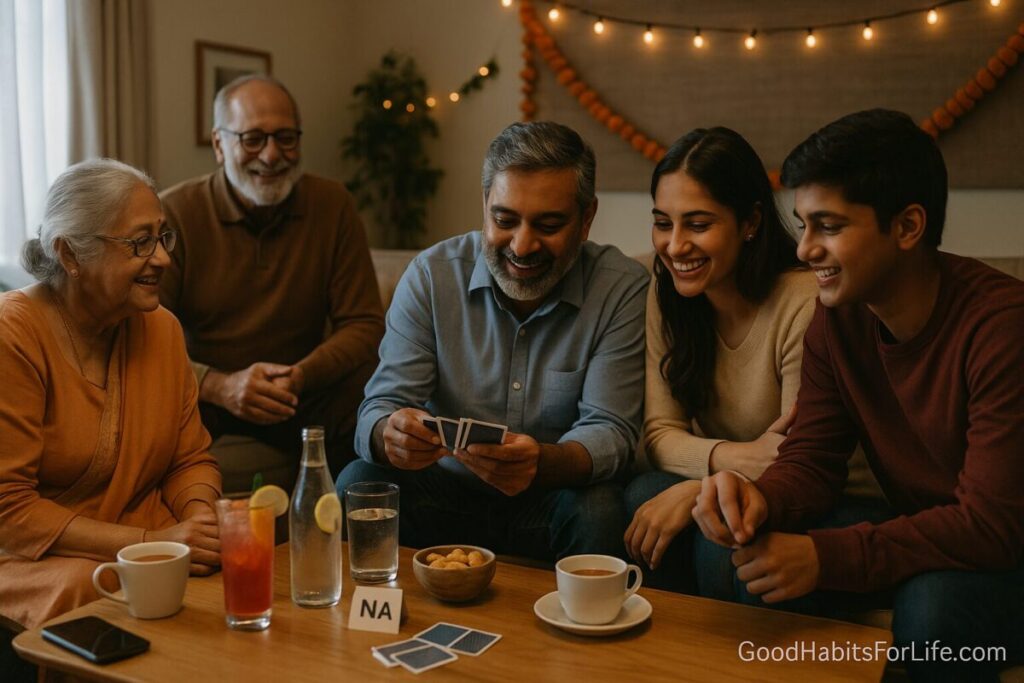
Family Functions: Elders, Youth & Respectful Choices: Dopamine Detox (2025)
Dopamine Detox at Family Functions (2025 Guide)
Table of Contents
🧭 What this guide means by “dopamine detox”
Plain English: In pop culture, “dopamine detox” usually means taking intentional breaks from high-stimulation activities (binging social media, constant snacking, heavy drinking) so your attention, mood, and motivation can reset. Neuroscience clarifies that you can’t literally “detox” dopamine, but you can change habits and contexts to reduce reward-seeking loops (alcohol, screens, junk food) and favor calmer, connection-building activities.
Why it matters at family functions
-
Inclusion & respect: Elders may prefer tradition and calm; youth may want fun without alcohol pressure; adults may be moderating or sober-curious.
-
Health & safety: Lower alcohol exposure reduces accidents, sleep disruption, and next-day mood dips.
-
Belonging > buzz: Thoughtful hosting creates genuine connection—conversation, music, games, rituals—without needing alcohol as the main event.
Evidence snapshot
-
Alcohol risk rises with dose; there’s no universally “safe” threshold, and health bodies recommend limiting intake and preventing youth exposure.
-
Motivational interviewing, social norms messaging, and choice architecture (default alcohol-optional) improve adherence to healthier choices.
(Citations in References.)
✅ Quick Start: Do this today
-
Set the house rule in the invite: “Alcohol-optional gathering. Amazing zero-proof bar, no pressure to drink. Respectful choices welcome.”
-
Create a simple zero-proof menu: Sparkling water + lime, ginger-lemon cooler, iced tea with mint, pomegranate spritzer.
-
Announce the norms early: Host welcomes everyone and states: “No one should feel pressured to drink. Elders and youth first for seating and servings.”
-
Swap high-stim loops: Lower the TV volume, keep music mid-tempo, open windows/light, arrange chairs in small circles for conversation.
-
Add one connection ritual: e.g., a 5-minute gratitude round, family quiz, photo wall, or birthday toast with sparkling water.
-
Prepare two decline lines:
-
“I’m skipping alcohol tonight—love a lime soda, please.”
-
“I’m on a reset this month. Cheers with iced tea!”
-
-
Measure success tomorrow: Any conflicts? Any pressure moments? Did people stay longer or chat deeper?
🛠️ 7-Day Starter Plan (or use the 30-60-90 Roadmap)
7-Day Starter (for an event this week)
-
Day 1 – Vision & Venue: Decide “alcohol-optional” and list inclusive activities (music, games, rituals).
-
Day 2 – Menu: Finalize 3–4 zero-proof drinks, 1 comfort snack, 1 fruit/veg platter; label allergens.
-
Day 3 – Norms & Scripts: Write a 2-sentence host welcome; share the no-pressure line with helpers.
-
Day 4 – Layout: Put the zero-proof bar first in the flow; water on every table; alcohol, if any, in a separate, supervised area.
-
Day 5 – Youth & Elders: Assign seating near exits/restrooms for elders; create a youth corner (board games, drawing).
-
Day 6 – Reminders: Send invite reminder with dress code, timing, parking, and the “alcohol-optional” note.
-
Day 7 – Event & Debrief: Run the plan; next day, note what to improve (pressure points, crowding, noise).
30-60-90 Roadmap (habit change across the family)
-
Day 0: Baseline survey (informal): did anyone feel pressured to drink last time?
-
0–30 days: Host one alcohol-optional function; standardize scripts and bar layout.
-
31–60 days: Make the default alcohol-optional; alcohol only on request, capped, supervised, or BYO with limits.
-
61–90 days: Institutionalize traditions: gratitude speech, family quiz, milestone “story circle,” and a rotating zero-proof signature drink. Publish a one-page “Family Function Charter.”
🧠 Techniques & Frameworks that work
1) Choice Architecture (Nudge)
-
Put water and zero-proof drinks at eye level and within first reach.
-
Small cups for alcohol, large jugs for water/iced tea.
-
Visible signs: “Alcohol-optional. All choices respected.”
2) Social Norms Messaging
-
Hosts and early arrivers model no-pressure behavior.
-
Short mic line: “We celebrate connection; your glass can be anything.”
3) Motivational Interviewing micro-skills (OARS)
-
Open questions: “How would you like to celebrate tonight?”
-
Affirm: “Great call choosing a spritzer.”
-
Reflect: “You’re pacing yourself.”
-
Summarize: “So you’re staying alcohol-free this month.”
4) “CALM” Stimulus Design
-
Circles: cluster chairs for talk.
-
Ambient light: warm, not glaring; noise ≤70 dB.
-
Low-tempo playlist: 80–110 BPM.
-
Mindful moments: toast, photo wall, two games max.
5) Safe-Service Protocol (if alcohol is present)
-
ID checks for youth; never serve to minors.
-
Max 1 drink/hour, with food and water; cut-off policy.
-
Encourage rideshares and designated drivers.
🧓👧 Hosting for Everyone: elders, youth, and mixed generations
Elders
-
Prioritize seating, lower background noise, offer warm drinks (ginger tea).
-
Invite a story segment: “5-minute heritage tale from Grandma/Grandpa.”
Youth & Teens
-
Clear message: zero alcohol; engaging alternatives (mocktail station, board games, music requests).
-
Create micro-roles: photo booth helper, quiz host, playlist DJ (with clean list).
-
Curfew and check-ins communicated with parents/guardians.
Adults
-
Offer sober-curious choices (bitters-free mocktails, kombucha if appropriate).
-
Provide a chill zone: soft seating, water, and fruit.
Cultural respect
-
Keep traditional welcomes (greetings, blessings) alcohol-free by default.
-
If your culture includes ceremonial drinks, offer equivalent non-alcoholic option.
⚠️ Mistakes & Myths to avoid
-
Myth: “Dopamine detox” means cutting socializing.
Reality: It’s about reducing overstimulation—connection increases, not decreases. -
Mistake: Burying the zero-proof bar behind the alcohol bar. Put it first.
-
Myth: “One drink is always safe.” Guidelines stress limits vary; youth should not drink.
-
Mistake: Publicly shaming drinkers or non-drinkers—both break trust.
-
Mistake: Loud, rapid-tempo music that pushes higher drinking speed.
🗣️ Real-Life Scripts you can copy
Host welcome (30 seconds):
“Welcome! Tonight is alcohol-optional—please choose what fits you. Zero-proof drinks are right up front. Elders and youth first for seating. No pressure either way; we’re here for stories, food, and fun.”
Polite decline (guest):
“I’m off alcohol for a bit—could I have the mint iced tea?”
“I’m driving tonight. A lime soda would be perfect, thanks!”
Redirect a pressure moment:
“Let’s raise our glasses—whatever’s in them—to the birthday star.”
“We’re keeping it inclusive; top up with water or tea if you prefer.”
Check-in with a teen:
“What’s your plan for drinks tonight?” → “I’m sticking to mocktails.” → “Awesome, I’ll try your recipe.”
Cut-off (quiet, respectful):
“Hey, I’m switching you to water for a bit. Let’s grab some food and chat on the balcony.”
📚 Tools, Apps & Resources
-
Zero-proof recipe hubs: Use any reputable cookbook site; search “no-alcohol mojito,” “ginger-lemon cooler,” “pomegranate spritzer.”
-
Habit trackers: Streaks, Loop, Habitica—track “no-pressure hosting,” “2 mocktails tried,” “gratitude round done.”
-
Focus & calm: Phone “Focus” modes; breathing apps (box breathing 4-4-4-4 for 2 minutes before toasts).
-
Event logistics: Shared family doc for menus, roles, and scripts; ride-share reminders in the invite.
✅ Key Takeaways
-
Make alcohol-optional the default; signal “all choices respected.”
-
Lead with great zero-proof options; put them first in the layout.
-
Use scripts to normalize declines and toasts with any drink.
-
Design the vibe: seating circles, mid-tempo music, brief rituals.
-
Adopt a 30-60-90 family charter for lasting change.
❓ FAQs
1) What exactly is a “dopamine detox” at a party?
A practical reset: fewer high-stim cues (heavy alcohol, blaring screens), more calm connection (conversation, music, rituals). It’s not about eliminating dopamine—just designing healthier rewards.
2) How do I avoid offending elders who expect alcohol?
Keep respect central: traditional greetings/rituals stay; alcohol becomes optional, not banned. Offer a beautiful non-alcoholic equivalent during toasts and seat elders comfortably.
3) How do I prevent drink pressure on youth/teens?
State norms in the invite and at the door. Place zero-proof first, alcohol supervised if present, and give youth meaningful roles. Make curfews/check-ins explicit with guardians.
4) Is one drink okay?
Guidelines emphasize limits vary and risks rise with dose; many adults choose to reduce or avoid alcohol, and youth should not drink. Provide supportive, no-pressure options.
5) What if some guests bring their own alcohol?
Allow within boundaries: small quantities, no service to minors, 1 drink/hour guidance, food and water nearby, and a clear cut-off policy.
6) Can I do this in a small apartment?
Yes: two beverage stations (water + mocktails; alcohol separate), mid-tempo playlist, circle seating, and a single short ritual.
7) How do I measure success?
Look for fewer conflicts, less next-day fatigue, more conversations, and positive feedback in a quick family poll.
8) What should I say to a pushy relative?
“I’m keeping it inclusive tonight—everyone’s welcome to choose what suits them. I’ll toast with sparkling water.”
9) Any quick zero-proof crowd-pleasers?
Mint-lime soda, ginger-lemon cooler, iced hibiscus tea, pomegranate spritzer, and classic lemonade with a salt rim.
10) How often should we run alcohol-optional events?
Try one this month, then make it your default for family functions. Reserve alcohol-forward events for rare, clearly framed occasions.
📚 References
-
World Health Organization. Alcohol—key facts and health risks. https://www.who.int/news-room/fact-sheets/detail/alcohol
-
U.S. Centers for Disease Control and Prevention. Alcohol and Public Health. https://www.cdc.gov/alcohol/
-
National Institute on Alcohol Abuse and Alcoholism (NIAAA). Rethinking Drinking. https://www.rethinkingdrinking.niaaa.nih.gov/
-
The Lancet (GBD 2016 Alcohol Collaborators). Alcohol use and burden of disease—no safe level. https://www.thelancet.com/
-
National Institute on Drug Abuse (NIH). The Brain’s Reward System. https://nida.nih.gov/
-
American Psychological Association. Motivational Interviewing. https://www.apa.org/
-
Harvard Health Publishing. ‘Dopamine fasting’: myth and reality. https://www.health.harvard.edu/
-
UNICEF/WHO. Adolescent health & development—risk behaviors and protective factors. https://www.unicef.org/
-
UK Chief Medical Officers. Low risk drinking guidelines. https://www.gov.uk/government/publications/alcohol-consumption-advice-on-low-risk-drinking
-
OECD. Preventing Harmful Alcohol Use. https://www.oecd.org/health/
Disclaimer
This guide is for education only and is not medical or legal advice; follow your local laws and consult a qualified professional for personal guidance.