
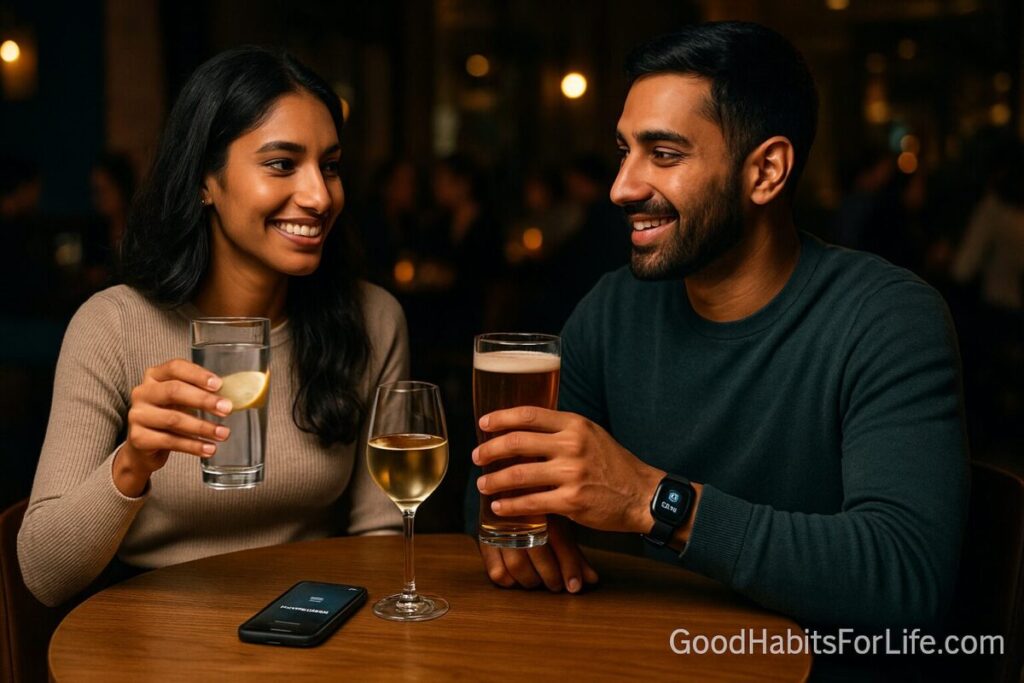
Alcohol & Nights Out: Boundaries that Keep the Fun: Zone 2 + NEAT (2025)
Alcohol Boundaries for Nights Out (Zone 2 & NEAT)
Table of Contents
🧭 What & Why
What: Alcohol boundaries are the shared rules a couple sets for nights out—how much to drink, how to pace, how to get home, and how to protect health, training, and the relationship. Boundaries reduce conflict and hangovers, keep you aligned with fitness goals (Zone 2 cardio + daily NEAT movement), and make nights out more fun—without next-day regrets.
Why it matters (evidence):
-
A standard drink contains ~14 g (0.6 fl oz) ethanol; drink sizes at bars often exceed this—so counting matters. NIAAA+1
-
Alcohol increases risk for several cancers; major agencies state there’s no “safe” level for cancer risk and recommend drinking less or not at all. World Health Organization+2World Health Organization+2
-
Driving impairment begins below 0.08% BAC; planning a ride in advance is non-negotiable. NHTSA
-
Alcohol fragments sleep (especially REM), so recovery, mood, and training quality suffer. PubMed+1
-
To support health and training, adults should target 150–300 min/week of moderate activity, with Zone 2 roughly 50–70% of max heart rate; NEAT (everyday movement) meaningfully boosts energy expenditure. Health.gov+2Mayo Clinic+2
✅ Quick Start (Tonight)
-
Set the shared limit: e.g., max 2 standard drinks each, or alcohol-free tonight. Write it in Notes/SMS so it’s explicit.
-
Pre-commit transport: Book a rideshare/taxi or designate the sober driver before leaving.
-
Pace & portion:
-
Order single pours; avoid doubles/unknown ABV.
-
1 drink per hour as an upper pacing guide, alternating with water/soda.
-
Use the standard-drink rule of thumb: beer 355 ml (12 oz) 5%, wine 148 ml (5 oz) 12%, spirits 44 ml (1.5 oz) 40%. CDC
-
-
Eat first: protein + fiber meal (slows absorption).
-
Protect next-day training: Schedule Zone 2 earlier the same day (30–45 min easy cardio), then plan a NEAT-heavy recovery walk the morning after (20–40 min). Health.gov+1
-
Sleep smart: last drink ≥3–4 hours before bed; hydrate; keep the bedroom dark and cool. PubMed
🛠️ 30–60–90 Habit Plan
Goal: Enjoy nights out while staying aligned with health, training, and relationship goals.
Days 1–30 (Starter):
-
Rule of 2: ≤2 standard drinks on going-out nights; at least one alcohol-free night between outings.
-
PACE checklist: Plan ride → Alternate with water → Count standard drinks → Exit on time (set alarm).
-
Training pairing: Log 3× Zone 2 sessions/week (30–45 min each) + daily 7–10k steps. Health.gov+1
-
Couple check-in (Sun 10 min): What worked? Any pressure points?
Days 31–60 (Builder):
-
Upgrade: One fully alcohol-free week to prove flexibility.
-
Boundary rehearsal: Practice two declining scripts (see below).
-
Sleep focus: No drinks within 4 hours of bedtime on weekdays. PubMed
Days 61–90 (Lock-In):
-
Precision: Track actual standard drinks vs. pours; adjust limits if creep appears.
-
Social swaps: Replace one bar meet-up with alcohol-free activity (walk-and-talk, dessert, live music w/ NA options).
-
Checkpoint: Compare fitness markers (resting HR, Zone-2 pace, step streak) and mood/sleep notes across weeks.
🧠 Techniques & Frameworks
-
The Boundary Ladder (Good→Better→Best):
-
Good: “2 drinks max + rideshare.”
-
Better: “1 drink then NA options; home by 11.”
-
Best: “Alcohol-free outing; early training next morning.”
-
-
The 3-F Filter (Fun-Fit-Future): If a drink doesn’t add to Fun, serves Fit goals (or at least doesn’t sabotage), or align with Future you, skip it.
-
Environment design: Sit at a table (not the bar), order NA choices first, keep water visible, close your tab early.
-
Red-flag triggers: Binge-prone rounds, doubles, empty stomach, poor sleep week, driving temptations.
-
Relationship micro-agreements:
-
“Either of us can call Exit in 10—no debate.”
-
“No pressuring for ‘one more.’”
-
“We text our ride by 10:30.”
-
👥 Audience Variations (Couples at Different Stages)
-
Newlyweds / Early Marriage: Agree norms early (e.g., weekly cap, alcohol-free weekdays). Create a shared note for limits and ride plan.
-
Parents / Sitters on the clock: Hard return time; home breath-check (for drivers); prioritize sleep so the morning routine isn’t wrecked.
-
Professionals / Client dinners: Choose venues with clear NA lists; commit to first drink NA; keep conversations sharp by staying under one standard drink per hour.
-
Seniors / Med interactions: Check medications for alcohol warnings; prioritize balance and hydration. When in doubt, go NA and enjoy the social time.
-
Students / Legal age varies: If under legal age or in zero-alcohol settings: choose NA only and focus on the social plan and safe transport.
⚠️ Mistakes & Myths to Avoid
-
“I can eyeball pours.” Reality: bar servings often exceed a standard drink. Measure at home to retrain your eye. CDC
-
“Under 0.08% means I’m safe to drive.” Impairment starts below 0.08%—don’t drive after drinking. NHTSA
-
“Alcohol helps me sleep.” It may shorten sleep onset but worsens later-night sleep and REM. PubMed
-
“Cardio cancels drinks.” Fitness helps overall health, but alcohol still carries health risks; training can’t erase them. World Health Organization+1
💬 Real-Life Examples & Scripts
-
Declining refills: “I’m pacing—sticking to two tonight. I’ll grab a sparkling water next.”
-
Ordering smart: “Single pour, please, and a water on the side.”
-
Couple boundary: “We’re cabbing home at 10:45—want to share a ride?”
-
Round pressure: “We’re doing NA this round—try the zero-lager, it’s great.”
-
Exit in 10: “This was fun! We’re heading out in ten—let’s plan a brunch.”
🧰 Tools, Apps & Resources
-
Drink tracking: Any notes app or habit tracker; look for apps that count standard drinks and show weekly totals.
-
NIAAA “Rethinking Drinking” (self-check, planning tools). NIAAA
-
Ride options: Rideshare/taxi apps; set “favorite locations” for one-tap booking.
-
NA choices: Explore zero-proof menus and NA beers/wines; order one first to anchor the night.
-
Fitness pairing: Calendar reminders for Zone 2 sessions and step goals.
📌 Key Takeaways
-
Boundaries turn “hope it goes fine” into a repeatable plan for fun, safety, and health.
-
Count standard drinks; pace with water; book the ride first.
-
Align nights out with training: Zone 2 earlier, NEAT next day, sleep safeguarded.
-
Relationship-friendly scripts reduce pressure and preserve connection.
-
The healthiest option is often drinking less or not at all; if you drink, stay within your agreed limits.
❓ FAQs
How many drinks per hour is reasonable?
As an upper pacing guardrail, no more than one standard drink per hour, alternating with water. Individual metabolism varies; when in doubt, drink less and don’t drive. CDC+1
Is “one drink a day” safe?
There’s no risk-free level for cancer; many agencies emphasize drinking less or not at all. If you choose to drink, set low limits and alcohol-free days. World Health Organization+1
What’s Zone 2 and why link it to nights out?
Zone 2 is easy-moderate cardio (~50–70% HRmax) that boosts endurance and recovery. Scheduling it earlier and keeping NEAT high helps offset sedentary time—not the health risks of alcohol. Mayo Clinic+1
Can I drive after one drink?
Impairment can begin below 0.08% BAC. The safest choice is don’t drive after any drinking—plan a ride. NHTSA
Why does sleep feel worse after a night out?
Alcohol may help you fall asleep faster but disrupts later sleep and REM, harming recovery and mood. PubMed
What if our friends pressure us?
Use a preset line and an early tab close: “We’re capping at two and heading at 10:45.” Most pressure disappears when you’re clear, calm, and consistent.
How do we track “standard drinks” with cocktails?
Ask for ABV/recipe; assume many cocktails contain >1 standard drink unless specified. When unsure, sip slowly or choose NA. CDC
Does exercise cancel out alcohol calories or risks?
Exercise brings major benefits, but it doesn’t erase alcohol-related risks (e.g., cancer). Protect your training by sleeping, hydrating, and keeping limits low. World Health Organization+1
References
-
National Institute on Alcohol Abuse and Alcoholism (NIAAA). What Is a Standard Drink? https://www.niaaa.nih.gov/alcohols-effects-health/what-standard-drink NIAAA
-
Centers for Disease Control and Prevention (CDC). Standard Alcoholic Drink Sizes. https://www.cdc.gov/alcohol/standard-drink-sizes/index.html CDC
-
CDC. About Moderate Alcohol Use. https://www.cdc.gov/alcohol/about-alcohol-use/moderate-alcohol-use.html CDC
-
World Health Organization (WHO). Alcohol — Fact Sheet (2024). https://www.who.int/news-room/fact-sheets/detail/alcohol World Health Organization
-
WHO Europe. No level of alcohol consumption is safe for our health (2023). https://www.who.int/europe/news/item/04-01-2023-no-level-of-alcohol-consumption-is-safe-for-our-health World Health Organization
-
National Cancer Institute (NCI). Alcohol and Cancer Risk (2025). https://www.cancer.gov/about-cancer/causes-prevention/risk/alcohol/alcohol-fact-sheet Cancer.gov
-
NHTSA. Drunk Driving — What impact does BAC have on my driving? https://www.nhtsa.gov/risky-driving/drunk-driving NHTSA
-
NHTSA. Lower BAC Limits—Impairment begins below 0.08 g/dL. https://www.nhtsa.gov/book/countermeasures-that-work/alcohol-impaired-driving/countermeasures/legislation-and-licensing/lower-bac-limits NHTSA
-
U.S. Health & Human Services (health.gov). Physical Activity Guidelines for Americans, 2nd ed. https://health.gov/sites/default/files/2019-09/Physical_Activity_Guidelines_2nd_edition.pdf Health.gov
-
Mayo Clinic. Exercise intensity: How to measure it. https://www.mayoclinic.org/healthy-lifestyle/fitness/in-depth/exercise-intensity/art-20046887 Mayo Clinic
-
Levine JA. Non-exercise activity thermogenesis (NEAT). PubMed (2002). https://pubmed.ncbi.nlm.nih.gov/12468415/ PubMed
-
Ebrahim IO et al. Alcohol and sleep: effects on normal sleep. PubMed (2013). https://pubmed.ncbi.nlm.nih.gov/23347102/ PubMed
Disclaimer
This guide is educational and not a substitute for personalized medical, legal, or safety advice; if you have health concerns or take medications, consult a qualified professional.