
321 Dinner Formula: Protein Veg Carb: Protein-Forward Plan (2025)
321 Dinner Formula: Protein-Veg-Carb Plan (2025)
Table of Contents
🧭 What Is the 321 Dinner Formula?
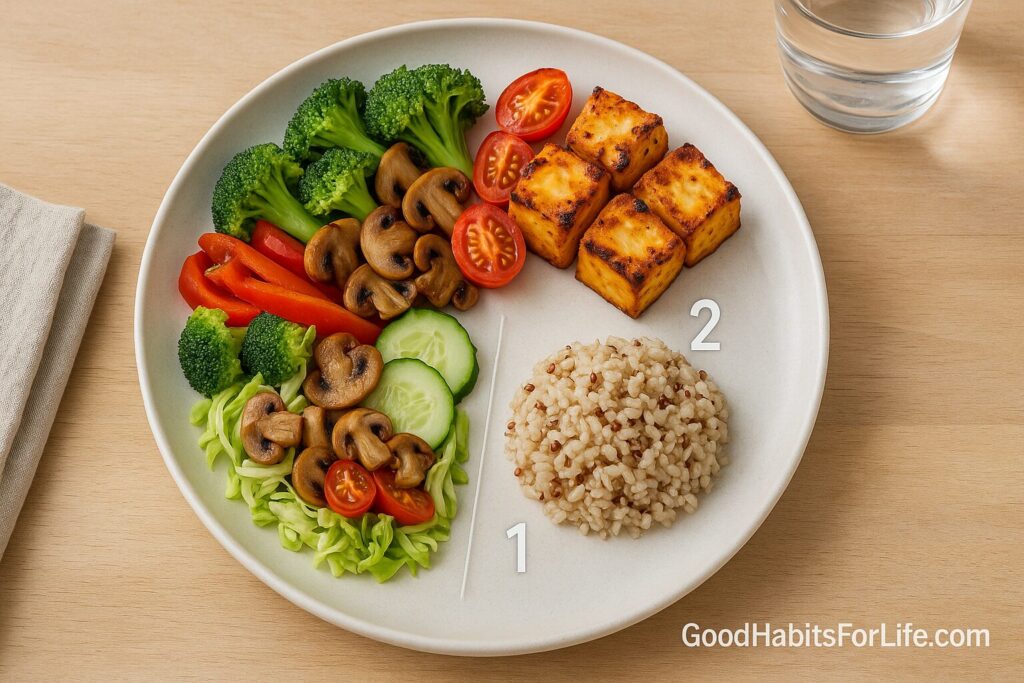
The 321 Dinner Formula is a fast way to assemble balanced meals at home or on the go:
-
3 parts non-starchy vegetables (about half your plate)
-
2 parts protein (about one-third of your plate)
-
1 part smart carbs (about one-sixth of your plate)
It’s a protein-forward variation of widely used plate methods that emphasize vegetables, quality carbs, and lean proteins for everyday eating. American Diabetes AssociationCDCThe Nutrition Source
What counts as each part?
-
Vegetables (3): non-starchy veg such as broccoli, greens, peppers, mushrooms, tomatoes, cabbage, okra. Aim for a variety and plenty of color. Diabetes Food Hub
-
Protein (2): fish/seafood, eggs, poultry, beans/lentils, tofu/tempeh, yogurt/cheese, lean meats, nuts/seeds. Prefer minimally processed options. MyPlateThe Nutrition Source
-
Smart carbs (1): whole-grain bread, brown rice, quinoa, dal+millets, potatoes/sweet potatoes, corn, whole-wheat roti. Choose whole grains and pulses most often. World Health Organization
📚 Why It Works (and the Evidence)
-
More vegetables → more fiber & micronutrients. Adults should aim for ≥400 g fruits & vegetables daily and about ≥25 g fiber; higher fiber intakes (≈25–29 g/day and up) are linked to lower risk of major chronic diseases. World Health OrganizationThe Lancet
-
Protein helps with satiety & lean-mass preservation. Higher-protein meal patterns (≈25–30% of energy for some individuals) can enhance fullness and help preserve lean mass during calorie reduction. PubMedScienceDirect
-
Better carb quality, smaller carb portions. Emphasize whole grains, legumes, and starchy veg while trimming refined carbs and free sugars. World Health Organization
-
Healthier fat pattern. Favor unsaturated fats (olive oil, nuts, seeds, fish) and limit saturated fat (<~6% of calories), which supports heart health. www.heart.org
The 321 template aligns with established plate models (half veg, balanced protein and carb) while slightly shifting toward protein to increase fullness—without abandoning vegetables or whole-food carbs. American Diabetes AssociationThe Nutrition Source
✅ Quick Start: Build Tonight’s Plate
-
Pick your veg (3): Fill ½ plate with 2–3 veg (e.g., sautéed beans + salad).
-
Add protein (2): Fill ~⅓ plate with lean protein (120–200 g cooked fish/chicken/tofu/tempeh, or 1–1½ cups beans/lentils).
-
Add smart carbs (1): Fill the last ~⅙ plate with a modest portion (½ cup cooked grains or 1 small whole-grain roti).
-
Flavor wisely: Use herbs, spices, lemon, yogurt, olive/groundnut oil.
-
Hydrate & close the loop: Water or unsweetened tea; add fruit if you’re short on daily fruit/veg. World Health Organization
Protein guide: As a general reference, adults often start around 0.8 g/kg/day and adjust for age, activity, and goals. Spread protein across meals. Consult a clinician if you have kidney or metabolic conditions. Harvard Health
🛠️ 7-Day 321 Dinner Starter Plan
All plates follow 3 veg : 2 protein : 1 carb.
-
Day 1: Tandoori salmon; stir-fried beans + carrots + spinach; ½ cup brown rice.
-
Day 2: Chana-paneer masala (½ cup chana + 80 g paneer); cabbage slaw + grilled peppers; 1 small whole-wheat roti.
-
Day 3: Lemon herb chicken (150–180 g); tomato-cucumber-onion kachumber + roasted cauliflower; ½ cup quinoa.
-
Day 4: Tofu & mushroom stir-fry; steamed bok choy + bell peppers; ½ cup jasmine/brown rice.
-
Day 5: Grilled fish tikka; leafy salad + sautéed okra; 1 small baked potato (or sweet potato).
-
Day 6: Rajma (1 cup) with sautéed greens + roasted pumpkin; ½ cup millet (bajra/jowar).
-
Day 7: Egg frittata (3 eggs) with onions, tomatoes, spinach; roasted broccoli; 1 slice whole-grain bread.
🧠 Techniques & Frameworks
-
Healthy Eating/Plate Methods: Think “½ veg + lean protein + quality carb.” The 321 variant simply shrinks the carb wedge a bit and nudges protein up. American Diabetes AssociationCDC
-
Fiber-first strategy: Aim for 25–30 g/day from veg, pulses, whole grains, fruit. Add a legume or extra veg if your plate feels low-fiber. The Lancet
-
Protein distribution: Include a decent protein source at each meal to support satiety and muscle health. PubMed
-
Fat quality over quantity: Use olive/groundnut/mustard oil lightly; add nuts/seeds for crunch; limit ghee/butter and processed meats. www.heart.orgThe Nutrition Source
-
9-inch plate rule: Visual portioning is easier on a standard dinner plate. CDC
👥 Variations for Different Audiences
-
Students: One-pan sheet-pan dinners (tofu + veg + potatoes); canned beans + frozen veg save money/time.
-
Parents: Serve family-style bowls labeled Veg / Protein / Carb so kids build their own 321 plate.
-
Professionals: Batch-cook proteins (chicken, chana, tofu) and rotate veg + carb sides.
-
Seniors: Prioritize soft textures (fish, dal, yogurt), slightly higher protein if advised, and easy-to-chew veg. Harvard Health
-
Vegetarian/Vegan: Mix legumes + soy + grains to cover amino acids; add B12-fortified foods if plant-only.
⚠️ Mistakes & Myths to Avoid
-
Myth: “Protein-forward = all meat.”
Reality: Beans, lentils, tofu/tempeh, nuts, and yogurt are excellent protein packages with extra nutrients. MyPlate -
Mistake: Skipping vegetables because you “hit your protein.” Your fiber, potassium, and phytonutrients plummet. World Health Organization
-
Mistake: Big refined-carb portions. Keep carbs smart and modest (whole grains/starchy veg). World Health Organization
-
Mistake: High saturated fat from butter/processed meats—swap to fish, legumes, and unsaturated oils. www.heart.orgThe Nutrition Source
🗣️ Real-Life Examples & Scripts
-
Grocery combo list (mix & match):
-
Protein: eggs, chickpeas, paneer/curd, tofu/tempeh, chicken breast, fish, lentils.
-
Veg: broccoli, cabbage, spinach, carrots, peppers, tomatoes, okra, mushrooms, beans.
-
Smart carb: brown rice, millets (bajra/jowar), quinoa, potatoes/sweet potatoes, whole-grain bread/roti.
-
-
Restaurant script:
“I’ll take the grilled [fish/chicken/tofu] with extra veg on the side. Please swap the fries for a small baked potato or half-cup rice.”
🔧 Tools & Resources
-
MyPlate Plan & Food Group guides for quick food swaps and portion cues. MyPlate+1
-
Diabetes Plate visuals (even if you don’t have diabetes) to practice plate-building. American Diabetes Association
-
Harvard Healthy Eating Plate for a simple graphic reminder. The Nutrition Source
🧾 Key Takeaways
-
The 321 Dinner Formula keeps things simple: ½ veg, ~⅓ protein, ~⅙ smart carb.
-
It’s protein-forward without dumping vegetables or whole-food carbs.
-
Choose quality proteins, whole-grain/starchy-veg carbs, and unsaturated fats. The Nutrition Sourcewww.heart.org
-
Use a 9-inch plate and the 3–2–1 visual to portion anywhere. CDC
❓ FAQs
1) Is 321 safe for people with diabetes?
Yes—the structure mirrors plate methods used in diabetes care: lots of non-starchy veg, lean protein, and a modest, quality-carb portion. Monitor your own targets with your clinician. CDC
2) How much protein do I personally need?
A common reference is 0.8 g/kg/day; older or very active adults may benefit from more—work with a professional. Spread protein across meals. Harvard Health
3) What counts as “1 part” carbs?
Roughly ½ cup cooked grain (rice, quinoa, millet), 1 small roti, or 1 small potato/sweet potato—choose whole-food options most often. World Health Organization
4) Can I use fruit as my carb?
At dinner, keep fruit as a side or dessert and still include a small whole-grain/starchy-veg portion for balance and fiber. World Health Organization
5) Will higher protein harm my kidneys?
In healthy people, typical higher-protein diets used for weight management are generally well tolerated; if you have kidney disease or risk factors, consult your clinician before increasing protein. Harvard Health
6) Do I need supplements (protein powders, fiber powders)?
Whole foods should come first; supplements can fill gaps but aren’t required for most people. MyPlate
7) How big is a “part” on a plate?
Visualize a 9-inch plate: ½ veg, ~⅓ protein, ~⅙ carb. Adjust portions to hunger and goals. CDC
8) What fats work best?
Olive/groundnut/mustard oil, nuts, seeds, and fish provide heart-healthy unsaturated fats; keep saturated fats low. www.heart.org
📚 References
-
WHO. Healthy diet factsheet (fruit/veg, free sugars, sodium). World Health Organization
-
WHO (2023). Updated guidance on carbohydrates, whole grains, and fiber (≥400 g fruit/veg; ≥25 g fiber/day). World Health Organization
-
American Diabetes Association. Diabetes Plate Method (visual, 9-inch plate). American Diabetes Association
-
CDC. Plate method for balanced meals (½ veg, ¼ protein, ¼ carb). CDC
-
Harvard T.H. Chan. Healthy Eating Plate (protein choices; limit processed meats). The Nutrition Source+1
-
USDA MyPlate. Protein Foods Group & daily ounce-equivalents. MyPlate
-
American Heart Association. Limit saturated fats (<~6% of calories). www.heart.org
-
Leidy et al. (2011 & review). Higher-protein patterns: appetite, satiety, lean mass. PubMedScienceDirect
-
Reynolds et al., The Lancet (2019). Dietary fiber (25–29 g/day+) and reduced NCD risk. The Lancet
Disclaimer: This article is educational and not a substitute for personalized medical or nutrition advice; consult a qualified professional for individual guidance, especially if you have medical conditions.