
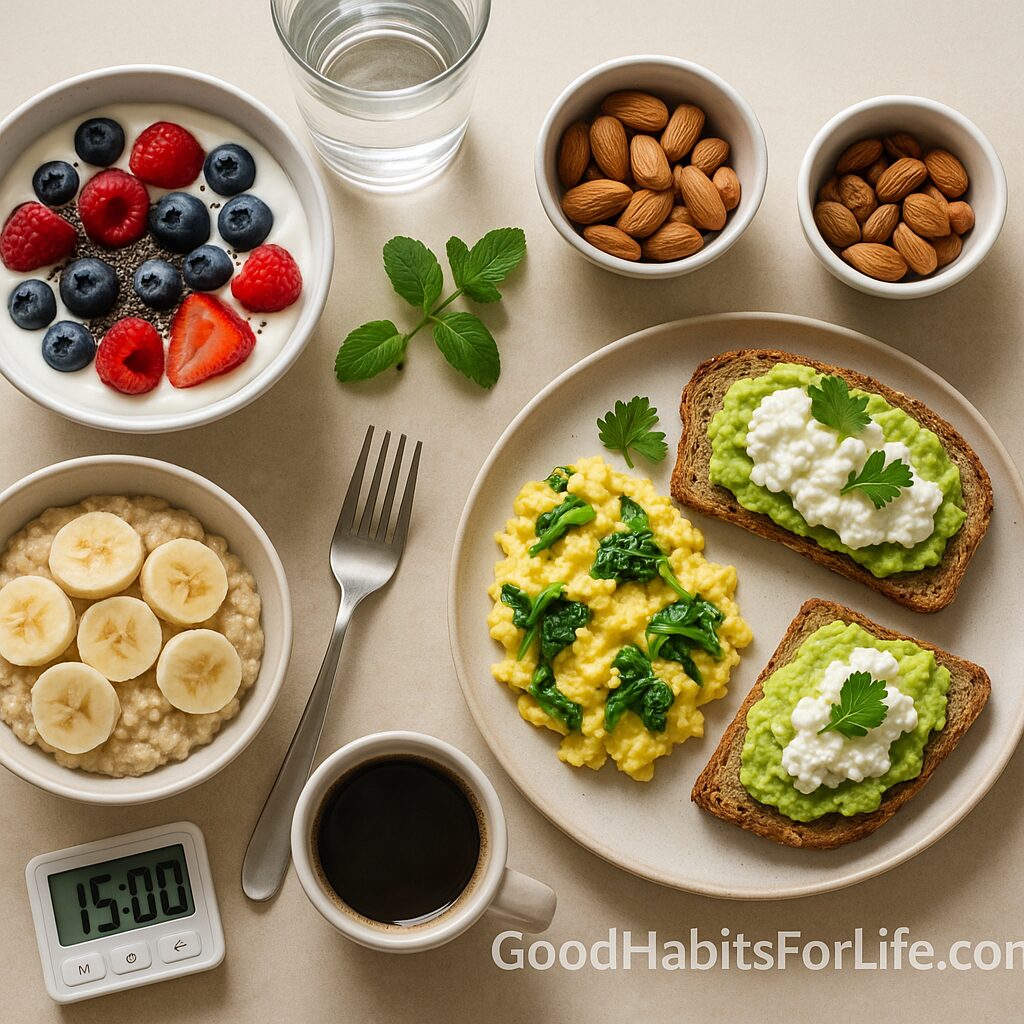
15Minute Breakfasts: Real Food, Realistic: Protein-Forward Plan (2025)
15-Minute Breakfasts: Real Food, Protein-Forward (2025)
Table of Contents
🧭 What this plan is & why it works
Protein-forward doesn’t mean “all protein.” It means centering breakfast on quality proteins plus plants and smart carbs—made fast from real, minimally processed foods.
Benefits (evidence-aligned):
-
Fullness & steady energy: Protein helps satiety and stabilizes post-meal blood sugar compared with sugary/refined breakfasts.
-
Muscle maintenance: A meaningful protein dose in the morning supports daily muscle protein synthesis, especially when evenly distributed across meals.
-
Better overall pattern: A balanced breakfast makes it easier to hit daily fiber, micronutrients, and total protein targets.
Targets and ideas below draw on widely accepted guidance from public-health and nutrition bodies (see References).
✅ Quick start: your 15-minute morning workflow
-
Start heat first (T+0:00): Put a pan on medium heat or boil water for oats.
-
Pick your protein base:
-
2–3 eggs (boiled/scrambled)
-
200 g Greek yogurt or thick dahi
-
100–150 g paneer or firm tofu (quick sauté)
-
1 cup cooked beans/chickpeas/moong (leftover or canned)
-
-
Add 2 plants: a fruit and a veg (e.g., spinach, tomato, peppers, berries, banana).
-
Add 1 smart carb (if needed): oats, whole-grain toast/roti/dosa, millets, sweet potato.
-
Flavor fast: olive/mustard oil, spices, herbs, lemon, nuts/seeds.
-
Assemble & eat: You’re done in 10–15 minutes.
Pro tip: Pre-wash/portion veg and pre-cook a grain once on the weekend. Weekdays become assembly.
🛠️ The 3-2-1 protein-forward formula
-
3 = ~3 “protein blocks” (≈8–12 g each) to land at 25–35 g total
-
2 = two plant adds (fruit + veg or two veg) for fiber, volume, and micronutrients
-
1 = one smart carb (optional on lower-carb days)
Protein quick chart (approx.)
| Food (typical serving) | Protein |
|---|---|
| 1 large egg (50 g) | ~6 g |
| Greek yogurt/dahi, 200 g | ~18–22 g |
| Paneer, 100 g | ~18–20 g |
| Firm tofu, 150 g | ~18–20 g |
| Cooked chickpeas/rajma, 1 cup (165–175 g) | ~13–15 g |
| Milk, 250 ml | ~8–9 g |
| Peanut butter, 2 tbsp (32 g) | ~7–8 g |
| Rolled oats, 40 g (dry) | ~5 g |
(Values vary by brand/variety; use a nutrition app for precision.)
🧠 How much protein do you need at breakfast?
-
A general daily minimum for adults is around 0.8–0.83 g/kg/day (varies by authority).
-
Distributing protein across meals (e.g., ~0.25–0.4 g/kg per meal) can better support muscle remodeling than back-loading at dinner, especially for active people and older adults.
-
Translating that to breakfast:
-
Most adults: ~25–35 g protein works well.
-
Older adults/very active: consider the higher end (~30–40 g) within daily totals.
-
🍳 7-Day 15-minute breakfast plan (20–35 g protein each)
(All times assume some weekend prep—notes below.)
Day 1 — Masala Paneer Scramble + Roti
-
120 g paneer crumbled, sautéed with onion, tomato, spinach, turmeric, chili; 1 small whole-wheat roti; 1 orange.
-
~28–30 g protein
Day 2 — Greek Yogurt Bowl, Berry-Banana, Nut Seed Crunch
-
200 g Greek yogurt/dahi; banana + berries; 1 tbsp chia + 1 tbsp roasted seeds; drizzle honey (optional).
-
~22–25 g
Day 3 — Egg Bhurji Wrap
-
3 eggs scrambled with peppers, onion, coriander; 1 whole-grain wrap/chapati; lemon squeeze.
-
~24–26 g
Day 4 — Moong Chilla (Savory Lentil Pancakes)
-
2 moong chillas (ready batter) with grated carrot + spinach; mint chutney; 200 ml milk.
-
~23–27 g
Day 5 — Tofu-Veg Stir & Toast
-
150 g firm tofu quickly sautéed with mixed veg + soy/ginger; 1 slice whole-grain toast.
-
~25–28 g
Day 6 — Oats-Protein Parfait
-
Rolled oats soaked overnight; in morning layer with 200 g yogurt and diced apple; 2 tbsp peanut butter.
-
~28–30 g
Day 7 — Chickpea Power Bowl
-
1 cup cooked chickpeas tossed warm with tomato, cucumber, olive oil, lemon, cumin; 1 hard-boiled egg.
-
~25–27 g
Add coffee/tea and water to taste. Swap fruits/veg freely.
🧰 Prep once, fast all week (shopping list & batch)
Weekend (45–60 min):
-
Cook once:
-
2 cups dry chickpeas/rajma (pressure cook) or buy 3–4 cans.
-
2–3 cups plain cooked grains (oats/millets/ready rice).
-
-
Batch sauces/sides (optional): Green chutney, salsa, or tomato-onion masala base.
-
Chop & box: Wash and cut onions, peppers, cucumbers, tomatoes; rinse spinach; portion fruit.
-
Protein on hand: Eggs (a dozen), 400–600 g Greek yogurt/dahi, 400–600 g paneer/tofu.
-
Pantry: Rolled oats, whole-grain wraps/roti, nuts/seeds, olive/mustard oil, spices.
Minimal shopping list (1 week for 1–2 people):
-
Eggs (12), Greek yogurt/dahi (1–2 tubs), paneer/tofu (~600 g), chickpeas/canned beans, milk.
-
Rolled oats, whole-grain bread/wrap/roti.
-
Spinach, tomatoes, onion, peppers, cucumbers, carrots.
-
Fruits (bananas, berries or seasonal), lemons.
-
Nuts/seeds, peanut butter.
-
Spices/herbs: turmeric, chili, cumin, coriander, ginger/garlic, pepper, salt.
🧪 Techniques & frameworks (make it fool-proof)
Speed moves
-
Start heat first → No idle minutes.
-
Two-pan rule → Eggs/paneer in pan; fruit/veg plated while it cooks.
-
Ready batters → Soak/blend moong or buy dosa/idli batters to cook in minutes.
-
Protein pairings → Combine two mediums (e.g., yogurt + peanut butter; eggs + milk) to hit 25–35 g fast.
Flavor templates (copy-paste)
-
Indian savory: mustard/jeera tempering + onion + tomato + turmeric/chili + lemon.
-
Mediterranean: olive oil + garlic + tomato + spinach + oregano + feta/paneer.
-
East-Asian: sesame/soy + ginger + spring onion + chili oil (tofu/egg compatible).
👥 Audience variations
Students (hostel/flat):
-
Microwave-friendly oats parfaits; egg bhurji in a single pan; keep peanut butter, bananas, and dahi. Buy pre-cut veg when deadlines hit.
Busy parents:
-
Double recipes; pack a second portion for a child/partner. Keep boiled eggs, ready chapati/rotis, and yogurt pouches.
Professionals (desk mornings):
-
Assemble-and-go jars (oats/yogurt + fruit + seeds). Keep a drawer stash: nuts, seeds, peanut butter, whole-grain crackers.
Seniors:
-
Softer textures (yogurt, tofu, poached eggs). Aim for the higher protein end (30–35 g) to support muscle, adjust fiber gradually, and sip water/tea.
Teens:
-
Higher energy appetites: add an extra roti/toast or a smoothie with milk + banana + peanut butter.
⚠️ Mistakes & myths to avoid
-
Myth: “Breakfast must be sweet.” Savory options often deliver better protein/fiber with less added sugar.
-
Mistake: Only coffee. Caffeine without food can crash later; add yogurt/eggs/nuts at minimum.
-
Myth: Protein = only meat. Dairy, eggs, soy, and legumes are excellent.
-
Mistake: Ultra-processed bars daily. Handy sometimes, but real-food choices are cheaper and more filling.
-
Myth: Carbs are banned. Smart carbs (oats, whole grains, fruit) support energy—just anchor with protein.
💬 Real-life examples & scripts
“Out the door in 7 minutes”
-
Grab-and-go: 200 g yogurt tub + banana + 2 tbsp roasted seeds in a small bag.
-
Add a boiled egg if you need more protein.
“One-pan feed for two”
-
Sauté onion/pepper → add 150 g tofu or 120 g paneer → spices → spinach → 2 chapatis. Done.
“No-cook desk breakfast”
-
Jar: ½ cup rolled oats + ¾ cup milk + 200 g yogurt + 1 tbsp chia. Top with fruit at work.
🧩 Tools, apps & resources
-
Tools: Non-stick or cast-iron pan, small pot, sharp knife, storage boxes, kettle.
-
Apps: Cronometer or MyFitnessPal (track protein/fiber), AnyList/Bring! (shopping), Streaks/Habits (consistency).
-
Pros/cons:
-
Trackers help accuracy but can be tedious—use short bursts to calibrate portions.
-
Meal-prep saves time but needs fridge space.
-
🧾 Key takeaways
-
Anchor breakfast around 25–35 g protein with plants and smart carbs.
-
Use the 3-2-1 rule to assemble in ≤15 minutes.
-
Prep once on weekends; coast on weekdays.
-
Mix cultures and flavors—keep it real, affordable, repeatable.
❓ FAQs
1) Do I need to eat breakfast at all?
No, not everyone must. If you prefer later eating (e.g., time-restricted feeding) and feel fine, that’s okay. If you do eat breakfast, make it balanced and protein-forward.
2) What’s a simple vegetarian way to hit 30 g protein?
200 g Greek yogurt/dahi (~20 g) + 2 tbsp peanut butter (~7–8 g) + seeds or a glass of milk gets you there quickly. Paneer/tofu scrambles work too.
3) Are eggs healthy for daily breakfast?
Eggs are nutrient-dense and can fit in most healthy patterns. Balance them with vegetables and whole grains; discuss cholesterol concerns with your clinician if needed.
4) Can kids/teens follow this?
Yes—just scale portions to appetite and add extra fruit or grains for energy needs.
5) I’m short on time—what’s the fastest option?
Yogurt bowl + fruit + seeds (no cook), or pre-boiled eggs + toast + fruit.
6) How do I keep costs down?
Use seasonal produce, bulk legumes, and house-brand yogurt. Batch-cook beans and grains.
7) What about smoothies?
Great when time is tight: milk or yogurt + banana + peanut butter + oats/spinach. Still aim for 25–35 g protein.
8) Is there a low-carb version?
Skip the grain and double the veg: eggs/paneer/tofu + sautéed greens + avocado/nuts.
9) How much fiber should I aim for?
Many guidelines suggest ~25–38 g/day for adults; add fruit/veg/whole grains/seeds at breakfast to chip away at that target.
📚 References
-
U.S. Department of Agriculture & U.S. Department of Health and Human Services. Dietary Guidelines for Americans, 2020–2025. https://www.dietaryguidelines.gov/
-
Harvard T.H. Chan School of Public Health. The Nutrition Source: Protein. https://www.hsph.harvard.edu/nutritionsource/what-should-you-eat/protein/
-
European Food Safety Authority (EFSA). Dietary Reference Values—Protein. https://www.efsa.europa.eu/en/topics/topic/dietary-reference-values
-
International Society of Sports Nutrition. Position Stand: Protein and Exercise. Journal of the International Society of Sports Nutrition. https://jissn.biomedcentral.com/articles/10.1186/s12970-017-0177-8
-
British Nutrition Foundation. Breakfast and Health. https://www.nutrition.org.uk/putting-it-into-practice/healthy-eating/breakfast/
-
World Health Organization. Healthy diet—Fact sheet. https://www.who.int/news-room/fact-sheets/detail/healthy-diet
-
USDA FoodData Central. Food composition database. https://fdc.nal.usda.gov/
-
NHS. The Eatwell Guide. https://www.nhs.uk/live-well/eat-well/food-guidelines-and-food-labels/the-eatwell-guide/
-
National Institute on Aging. Protein and Older Adults (nutrition guidance). https://www.nia.nih.gov/health (search “protein”)
Disclaimer: This article is general education, not medical advice; consult a qualified professional for personal nutrition guidance.